Ashraf AboArafe
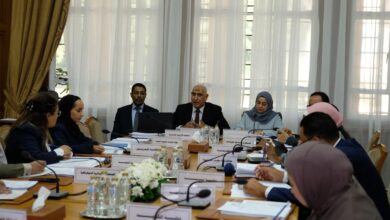
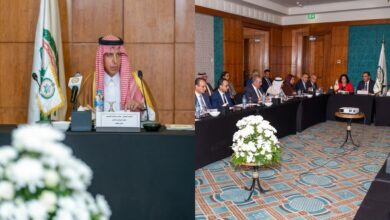
The Chinese Embassy in Cairo and Egypt’s Cabinet Information and Decision Support Center jointly hosted today (Monday) the Forum on the “Comprehensive Strategic Partnership between Egypt and China.”
Held under the theme “The Comprehensive Strategic Partnership between Egypt and China in a Changing World: Towards Maximizing Development and Innovation,” the event brought together senior officials from both countries, alongside an elite group of thinkers, experts, business leaders, and stakeholders in bilateral relations.
In his remarks, Chinese Ambassador to Egypt Liao Liqiang emphasized that the Fourth Plenary Session of the 20th Central Committee of the Communist Party of China had reviewed and approved the proposal for the 15th Five-Year Plan—a blueprint outlining China’s high-level vision for development and its march toward Chinese-style modernization over the next five years.
He noted that this plan reaffirms China’s firm commitment to reform, openness, and mutually beneficial cooperation.
“The coming five years,” he said, “will be decisive for laying robust foundations and accelerating comprehensive efforts to realize socialist modernization. They also coincide with the final phase of Egypt’s Vision 2030, which is already yielding tangible results.”
At this “historic crossroads,” he affirmed China’s readiness to support the stability of the Egyptian–Chinese strategic partnership, jointly advance modernization efforts, and continue driving bilateral relations toward the creation of a shared future community in the new era.
From the Egyptian side, Osama El-Gohary, Assistant to the Prime Minister and Head of the IDSC, highlighted that relations between Egypt and China stand as a steadfast model of a comprehensive strategic partnership—rooted in ancient civilizations, harmonized developmental visions, and a stable political will that values multilateralism and respects national paths.
El-Gohary stressed that the achievements of the Egyptian–Chinese partnership over past decades now provide “a solid platform from which we can move toward broader horizons of cooperation.”
He added that the forum offers a practical space for collective thinking and an opportunity to explore new avenues of collaboration in modern industry, artificial intelligence, digital governance, renewable energy, food security, and the integration between the Belt and Road Initiative and Egypt’s Vision 2030—fields that lie at the heart of global development debates and represent genuine strategic opportunities for both nations.
El-Gohary expressed confidence that the forum would produce concrete outcomes enhancing the comprehensive strategic partnership and supporting a shared vision for a more prosperous and stable future.
He noted that the world is experiencing rapid transformations that place greater responsibilities on the Global South and make deeper partnerships essential for building a more balanced international order.
China’s medium- and long-term development plans—focused on high-quality growth, innovation, and openness—align closely with Egypt’s national priorities under Vision 2030, offering practical opportunities to deepen the strategic partnership, implement joint development projects, and strengthen Egypt’s economic capabilities.
Egypt’s Deputy Minister of Communications and Information Technology, Ghada Labib, affirmed that cooperation between Egypt and China in the ICT sector continues to gain momentum. It now spans optical fiber and mobile phone manufacturing, data center construction, cloud computing, AI development, digital infrastructure, and nationwide digital capacity-building programs, in addition to the establishment of tech labs supporting Egypt’s digital generations.
She stressed that such cooperation contributes significantly to cultivating Egyptian digital talent, expressing Egypt’s aspiration for further economic and investment cooperation with China across fields of mutual interest.
Labib described the forum as an important platform for dialogue and experience-sharing, helping uncover new prospects for a future-oriented partnership grounded in innovation and development.
She also highlighted the recent visit of Minister of Communications and IT Dr. Amr Talaat to Beijing during the 2024 Forum on China–Africa Cooperation, marking a new phase in ICT collaboration. The visit saw the signing of five MoUs to establish three factories in Egypt that will produce four million kilometers of optical fiber cables and advanced communication equipment.
Throughout the forum, participants engaged in extensive discussions on strengthening economic ties, expanding investment channels, promoting scientific and technological innovation, enhancing cooperation in new and renewable energy, and addressing regional and international issues.