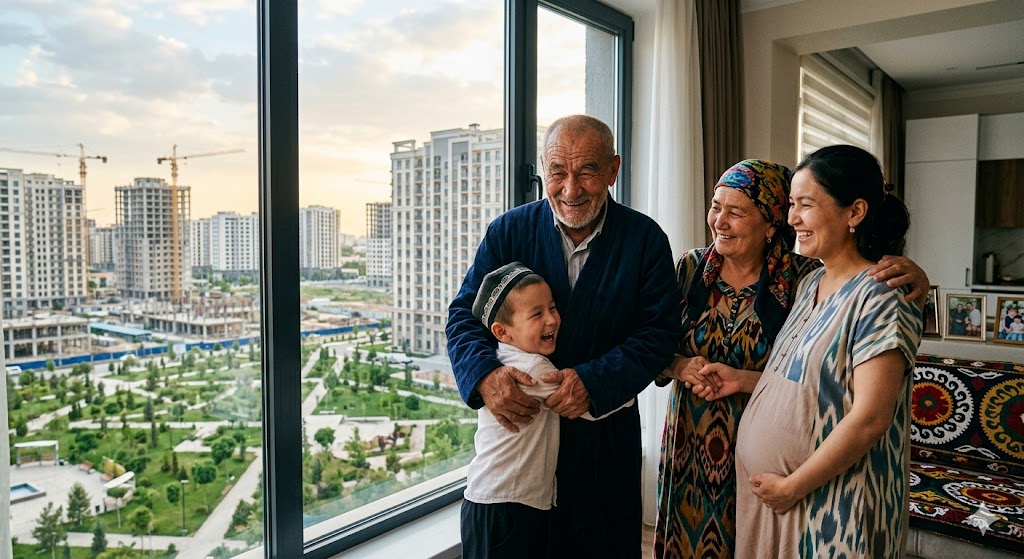
Ashraf AboArafe analyzes
UZBEKISTAN has transitioned urban planning from a matter of necessity into a sophisticated instrument of national strategy. This multifaceted approach harmonizes rapid demographic growth with modern, sustainable living through the following pillars:
1. The Demographic Engine
The country is navigating a significant “youth bulge,” adding roughly 800,000 people annually.
-
The Challenge: With 250,000 new families forming every year, the demand for housing requires a departure from traditional construction speeds.
-
The Strategic Response: Targets are set to build 421,000 units annually by 2040. This shift recognizes a $1:1$ correlation between urbanization growth and GDP expansion, treating housing as a primary economic driver.
2. From “Chaotic Horizontal” to “Integrated Vertical”
A striking shift in policy is the departure from low-rise, sprawling developments toward “Vertical Growth.”
-
Efficiency of Space: By replacing older 2–3 story buildings with modern structures of 7 stories or more, the state is conserving limited land resources.
-
The “15-Minute City” Concept: Projects like “New Tashkent” prioritize human proximity. A strict legal mandate ensures that schools, clinics, and utilities are built before or alongside residential units, preventing the creation of isolated “dormitory districts.”
3. Institutional Trust and the “Escrow” Revolution
To stabilize the housing market, the government has introduced high-level financial safeguards:
-
Escrow Accounts: For the first time, buyer funds are held securely in banks until the keys are delivered. This eliminates the risk of “unfinished constructions,” a common pitfall in emerging markets.
-
Regulatory Reform: Cutting permitting stages by 300% and replacing 420 outdated norms with 140 modern standards reflects a move toward a transparent, managed industry.
4. The Green Mandate
Environmental sustainability is treated as a non-negotiable standard rather than an afterthought:
-
The 30% Rule: In major Tashkent investments, nearly a third of the area must be dedicated to green spaces.
-
Ecological Infrastructure: The focus on “green belts,” electric buses, and bike lanes in the “New Uzbekistan” districts suggests a vision that leapfrogs traditional industrial urbanization.
5. Social Equity in the Ascent
To ensure urbanization does not lead to exclusion, the strategy incorporates Automated Subsidies:
-
Through the “subsidiya.idm.uz” platform, the mortgage subsidy process is fully digitized. This targets low-income families, young people under 30, and migrants, ensuring that the new urban skyline remains accessible to all segments of society.
Conclusion
Uzbekistan is engineering a New Social Contract. By combining strict urban criteria, “green” certifications, and modern financial protections, the country is positioning itself as a regional blueprint for managing population pressure while actively enhancing the quality of life. The transition toward a 60% urbanization rate represents a deliberate move toward a modern, service-oriented, and climate-resilient economy.