Analysis by: Ashraf AboArafe
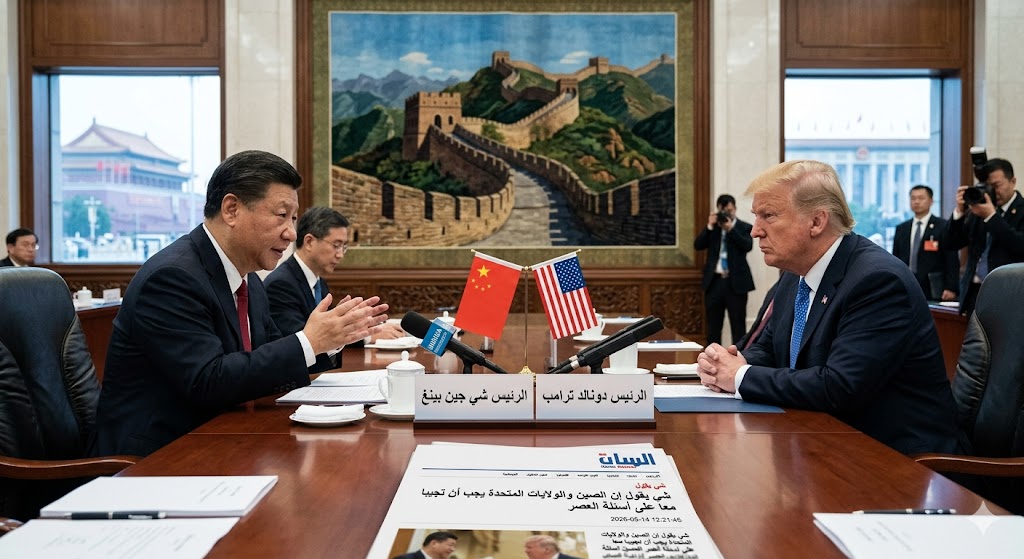
COMMENTING on the reports published by the Chinese News Agency (Xinhua) titled “Xi says China and the United States must together answer the questions of the era,” we present this analytical reading:
This meeting, held on May 14, 2026, embodies a strategic Chinese attempt to redefine the rules of engagement and cooperation with the United States. Through the statements of President Xi Jinping, the core pillars of Beijing’s vision for the future of the world can be distilled:
1. 2026: The Great Historical Turning Point
-
President Xi expects 2026 to be a “landmark and pivotal year” that opens a completely new chapter in bilateral relations.
-
The Chinese leadership believes that success in one country is an opportunity for the other, and that common interests outweigh differences.
-
Xi called for the necessity of the two countries being “partners rather than rivals” to achieve shared prosperity in the new era.
2. Taiwan: The Red Line and the Safety Valve of Stability
-
President Xi emphasized that the Taiwan issue is the “most important issue” in China-U.S. relations.
-
He considered that protecting peace and stability across the Taiwan Strait is the “greatest common denominator” that must be maintained between Beijing and Washington.
-
He clearly warned that “Taiwan independence” and peace across the strait are “incompatible, just like fire and water”.
-
He stressed that proper handling of this file ensures general stability for relations, while failure will lead to conflicts that put the entire relationship at great risk.
3. Decoding the “Questions of the Era” and Surpassing the Inevitability of Clash
-
Xi confirmed that the world is undergoing a “transformation unseen in a century” which is currently accelerating, placing major powers at another “crossroads”.
-
He posed a fundamental question regarding the ability of both countries to “surpass the Thucydides trap” and create a new model of relations that spares the world from traditional clashes.
-
He considered that answering the “questions of our era” is not an option, but rather a responsibility of the leaders of major countries toward the welfare of peoples and the future of humanity.
4. Economy as a Basis for Mutual Benefit
-
The Chinese President explained that economic and trade ties between the two countries are “mutually beneficial” by nature.
-
This vision aims to solidify the idea that a stable bilateral relationship is a global interest that contributes to providing greater stability for the international community.
Conclusion
The analysis of Xinhua‘s data reveals China’s desire to “steer the giant ship” of relations toward safety. Beijing presents a clear equation to Washington: full respect for vital interests (led by the Taiwan issue) in exchange for a strategic and economic partnership that ends the era of anxiety and answers the century’s challenges with lasting stability and a bright future.