Pope Tawadros II signs three declarations to support family planning and combat female genital mutilation and violence against women with the European Union, UNFPA


Ashraf AboArafe
Pope Tawadros II, Pope of Alexandria, and Patriarch of the See of St Mark signed three declarations to support family planning and combat female genital mutilation (FGM) as well as confirm a zero tolerance approach to all forms of violence against women in an event under the EU Support to Egypt’s National Population Strategy project.
The EU Support to Egypt’s National Population Strategy project aims to increase the use of voluntary, rights-based family planning, with the support of an EU-grant of €27 Million, in cooperation with UNFPA.
The event took place on April 15 at the Seat of the Coptic Orthodox Pope, St. Mark’s Coptic Orthodox Cathedral and was chaired by Pope Tawadros II, Pope of the Alexandria and Patriarch of the See of St. Mark and HG Bishop Yolious, the Bishop and director of the Bishopric of Public, Ecumenical, and Social Services (BLESS).
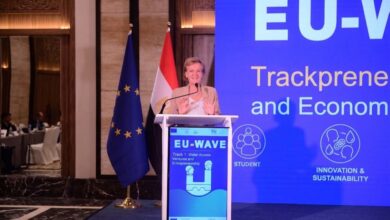
The signing also brought together President of the National Council for Women Dr Maya Morsy, Secretary General of the National Council for Childhood and Motherhood Dr Sahar al-Sonbaty, Ambassador Christian Berger, Head of the European Union Delegation to Egypt, Head of Development and Business Cooperation at the Norwegian Embassy in Cairo Counsellor Arild Oksnevad, and UNFPA Representative Mrs Frederika Meijer.
“We reject violence against women, in all its forms,” Pope Tawadros II said at the event, “FGM is a crime and all parties involved in it should be punished. Lastly, family planning is part of planning of the whole community.”
In its declaration, the Coptic Orthodox Church recognized the importance of family planning, essential to confront the population problem, which threatens Egypt’s economy, resources and future. The church also stipulated that family planning methods should not be harmful to the mother or baby’s health.
The church also said it regards FGM as “an evident violation of human rights,” in its other declaration, posing a serious threat to girls’ and women’s health that may have long-term physical, psychological and social impact.
The third declaration also confirms the Coptic Orthodox Church’s position on the principles of gender equality as stated in the Bible, and rejects all forms of physical, psychological and sexual violence against women and girls. The Church also stipulates that all women have the right to healthy and safe lives free from all forms of violence whether at home, at work or in public spaces.
In this declaration the Church also says that “all forms of domestic and partner violence are not tolerated,” and that each wife, daughter and mother has the right to feel protected and supported by her male family members, who are the primary source of well-being and stability of the household.
“The first question we are always asked is about the view of religion … Today we celebrate six years of partnership with the church, working in different governorates and undertaking visits with outreach workers. This is a perfect example of national collaboration,” Dr Maya Morsy said.
On her part, Frederika Meijer stressed that “religion is an integral part of the sociocultural fabric of many communities.”
“Religious leaders can dispel cultural misconceptions that are wrongly attributed to religion, and can shed light on the benefits of improved quality of life, the well-being of families and communities, improved maternal and new-borns’ health, reduced poverty and girls’ education,” she added.
The declarations will be circulated among the public, as well as posted around 120 churches.
Under the EU Support to Egypt’s National Population Strategy project, UNFPA partners have worked closely with faith-based organizations such as the Bishop and director of the Bishopric of Public, Ecumenical, and Social Services (BLESS) and Al-Azhar University’s International Islamic Center for Population Studies and Research to engage religious leaders to amplify the project’s mandate among their communities.
During the ceremony, Ambassador Christian Berger, Head of the European Union Delegation to Egypt, lauded the outstanding commitment of Pope Tawadros II, Pope of Alexandria, and Patriarch of the See of St Mark, and the diligent efforts of BLESS for the strong messages and actions to support family planning as well as to fight all forms of Violence Against Women in general and Female Genital Mutilation in particular.
“The European Union is committed to supporting the implementation of Egypt’s National Population Strategy through increasing awareness on family planning and population issues in support of Egypt’s Sustainable Development strategy,” he said. Ambassador Berger reiterated that the EU is one of the key supporters worldwide to combat Female Genital Mutilation (FGM) and Violence Against Women (VAW). “I commend every significant effort exerted to combat all forms of violence against women in particular the ones led by the National Council for Women, line ministries, religious institutions in Egypt like the Coptic Church and Al Azhar, UN Organizations, and civil society for their avid commitment and strong actions towards an environment free from gender based violence.”
During the first three years of the project, around 4000 male and female both Muslim and Coptic religious leaders participated in different activities under the project, including 1000 reached by campaigns, over 800 participated in ToT workshops, resulting in the training of around 2000 other leaders, who ultimately reached 16,000 members of their communities.
Around 200 Muslim and Coptic religious leaders also participated in joint sessions advocating for family planning.
In a pilot phase in 2020, 1000 community members in Cairo, Qaliubiya and Assiut also engaged in the local carnivals organized by BLESS to discuss forms of violence against women and gender discrimination in the household. An estimate of 500 female members of the Women Community Clubs (in Aswan, Alexandria, Cairo, Minya, Beni Suef and Sohag) attended handcrafts, awareness-raising discussions to learn about forms of domestic violence and empowerment for women subjected to forms of violence.
Over the past years, the EU has been committed to ending violence and harmful practices against women and girls in Egypt. Through the EU-funded bilateral cooperation projects with Egypt and in the framework of the UNFPA-UNICEF Joint Programme for Eliminating FGM, the EU supported reinforced capacities of national and civil society partners to address various issues of gender-based violence. EU funded actions have been implemented in partnership with different UN agencies and in close cooperation with national partners, including the National Committee for the Eradication of FGM.
For six years, Norway has been supporting BLESS in implementing interventions to combat violence and harmful practices against women and girls, including FGM. Norway also prioritizes women empowerment and enables girls to build a better future.