Ashraf AboAraf
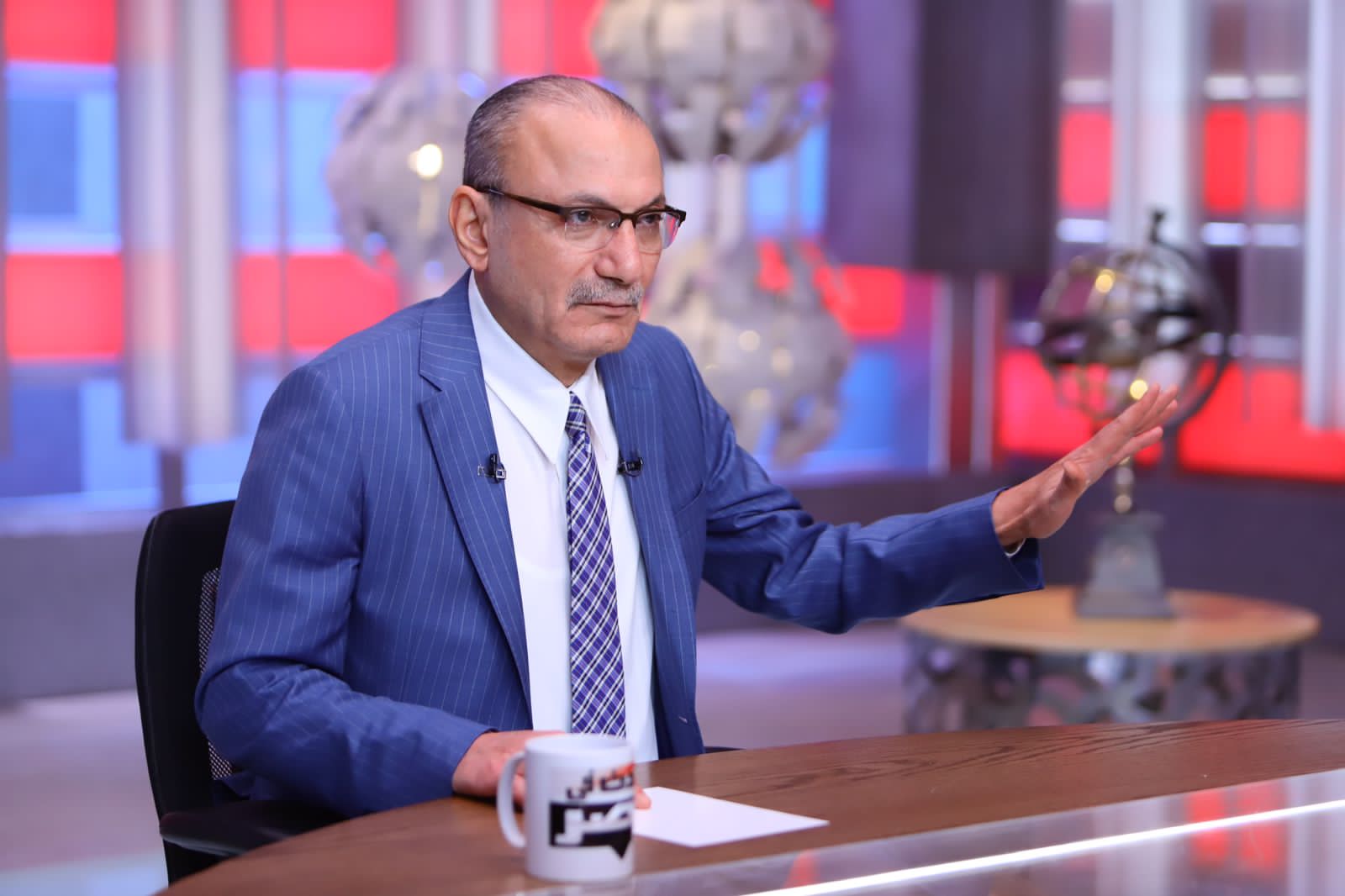
Turkish Ambassador to Cairo as a guest of MBC Egypt
Ambassador Salih Mutlu Shen: Turkey, as a country that shares a 911-kilometer border with Syria, as a country that hosts nearly 4 million Syrian refugees, and as a country exposed to a terrorist threat from eastern Syria, has always maintained its interest and continued calm in Idlib, defending the ceasefire.
Ambassador Shen: Only the Syrians can determine the future of Syria and the threads of Syria are in the hands of the Syrians.
Ambassador Salih Mutlu Shen: A third of the Syrian lands were in the hands of the terrorist organization PKK-YPG
Ambassador Salih Mutlu Shen: The regime in Syria, which could not give anything to its people, was separated from its people and saw it as a competitor, was collapsing internally.
Ambassador Shen, what worries Turkey most is the division of Syria and our greatest goal is the unity and integrity of Syria.
In order to ensure the reconstruction of Syria, we must work hand in hand, arm in arm, shoulder to shoulder with the Arab countries and the countries of the region. Our motto is that we, as a country in the region, are the most interested in Syria and should help it.
Turkish Ambassador to Cairo Salih Mutlu Şen was a guest on the program “What’s Happening in Egypt” presented by Sherif Amer on MBC Masr channel last Tuesday, and discussed Turkey’s participation in the D8 Summit as well as the developments in Syria.
At the beginning of the meeting, Ambassador Salih Mutlu Şen said that our primary duty, our primary mission, as you know very well. Strengthening, improving and deepening relations between Turkey and Egypt for the benefit of the region and the two peoples.
Because Turkey and Egypt are two great and indispensable countries and two great nations in the region. However, since you have entered the subject in this way, I want to give the following answer immediately. The future of Syria can only be determined by the Syrians
And the threads of Syria are in the hands of the Syrians. This is certainly the case because the Syrian people have suffered greatly since 2011. They have suffered greatly.
Ambassador Saleh Mutlu continued his speech by saying, “I want to mention some facts because when I meet with my Egyptian friends, I see that some simple facts that we witness closely are not followed closely of course. I know this and I want to draw attention to it. Syria, 10 million of our brotherly Syrian people have been displaced. 4 million of them, about 4 million, are in Turkey. 2 million in Lebanon, 2 million in Jordan, 1 million in Egypt, and hundreds of thousands of them have been displaced to Saudi Arabia and the Gulf States, 1 million of them to Germany. Since 2011, many of the Syrian people have been away from their villages and cities.
I want to emphasize this. 4 million of our Syrian brothers, a large part of them from Aleppo, Hama and Homs. They were stuck in the Idlib region in northwestern Syria.
So they were displaced. By concluding an agreement with Russia and Iran, Turkey ensured that our 4 million Syrian brothers who were stuck here and had to migrate here would not be touched. The ceasefire took place. This has achieved 2017.
Likewise, there is another fact. One third of the Syrian territory was in the hands of the terrorist organization PKK-YPG. The regime, that is, the Assad regime, could not reach there and enter there and one third of the oil resources were in the hands of the so-called self-administration and slowly, step by step, plans to dismantle Syria were being implemented there. That separatist terrorist organization was oppressing the Arab people, the local Kurdish people and other peoples.
Therefore, we are facing great pressure on Turkey from Idlib, that is, from the northwest. There were a large number of people, most of whom settled in Aleppo, Hama and Homs, and they were ready to migrate to Turkey in case of any conflict at any time.
On the other hand, in the east there was a terrorist separatist organization that the regime could not reach and wanted to connect with a separate state. In other words, in the face of such a scene, the people in other regions either completely collapsed economically and socially and lost hope.
In such a situation, as a result of a historical development, the regime collapsed internally.
In response to Sharif Amer’s question “How did Turkey help Assad fall?” Ambassador Salih Mutlu Shen said: “Turkey had absolutely nothing to do with the fall of Bashar Assad. As I mentioned, the regime was in a state of internal collapse.
In other words, it cannot interfere in the affairs of the separatist terrorist organization that is on its way to establishing a separate state in the east. It does not interfere or care in any way. Despite all our warnings, it is constantly greedy and harassing the Idlib region, where 4 million Syrians live in the northwest. These harassments have increased recently.
The regime had no bread, no money to give to its soldiers, no trust in the regime, and no hope left. The Arab League accepted the Syrian regime as a member, but it was fed up with that Syrian regime that did not implement any of its conditions.
That is why it was on the way that happened and Turkey saw it. Because the fighting phase was over. The adrenaline, as our esteemed minister said, has now reached its minimum. The regime had to take care of its people and give them hope.
And when it could not provide that, it collapsed. The internal regime that depended on Iran and Russia for its survival and saw the people as its competitor.
When the attack on Idlib began, as we have already seen, we saw the power there, Hayat Tahrir al-Sham, that the power of the regime weakened and began to advance.
And when they began to advance, there was no resistance force against it. It advanced towards Aleppo, and there was no serious conflict. It took Aleppo without firing a single bullet. Because the regime could not defend itself.
Ambassador Shen said in response to Sharif Amer’s question, “And while we are talking about Aleppo, Hama and Homs, the Turkish president made a remarkable statement where he said that there is a new scene in Syria that is being managed quietly, and also the US President-elect Donald Trump said that Turkey holds all the strings in Syria. How do we see this?” This of course reflects Trump’s own point of view.
Of course, this is his own point of view. Turkey, as a country that shares a 911-kilometer border with Syria, and as a country that hosts nearly 4 million Syrian refugees in Turkey, as a country that is under terrorist threat from eastern Syria, has been constantly monitoring the situation of non-conflict and ceasefire in Idlib. To ensure this, we have been negotiating with Iran and Russia so that people in Idlib can protect themselves and stay in their natural places there. So this impression may have been created because Syria is still interested. Because we are fully intertwined with Syria.
But Turkey has no direct or indirect relationship with this movement that was started by Hayat Tahrir al-Sham. But of course we are following what is happening, and we are aware of it. And as soon as Hayat Tahrir al-Sham and all the opposition forces started advancing towards Damascus south and north, because Damascus started to collapse, the collapse happened from within, and there was no resistance. There is no resistance from the regime in Damascus, they are slowly advancing towards Damascus without facing any resistance.
And when Hayat Tahrir al-Sham, that is, the opposition forces, started advancing towards Damascus without any resistance slowly, we talked to Russia and Iran and told them that a lot of blood was shed in the past when you stood behind the regime.
And when they advanced, we talked to Iran and Russia. We told them, look, in the past, even though the regime was about to fall, even though it was about to fall, you tried to silence this opposition and silence the people with Hezbollah and the pro-Iranian militias and Russia with their special forces. Military forces, and the regime used chemical weapons mercilessly. Great blood was shed. This time it will not be like that, but it will be bloody again. The opposition is advancing and this time Damascus could be destroyed and you could bomb civilian areas, the regime will not be able to resist this time, and it will be too late. Do not invest in this man. And they knew that nothing would come from Assad. In Iran and Russia they understood this very well. Because there were two or three factors in their understanding here, just like the Arab League. First, Assad did not evaluate the period since 2017 as free of conflicts. He did not talk to the opposition. He did not take the slightest step to help refugees abroad return to Syria. The conditions that the Arab League put forward. No refugee was allowed to return voluntarily from Jordan to Syria. They did not do that. They are dealing in Captagon. And they are making money from it. Jordan has big concerns. Saudi Arabia has big concerns. Captagon is a big threat.
He didn’t take any action. That’s why Iran and Russia reached out to Assad and even in Turkey, Mr. President reached out to Assad three times. Our president said let’s meet. Let’s protect the unity of Syria and all of Syria together. But he said no. Mr. President of the great Turkish Republic invited him three times and said come and let’s meet. He refused and said no. So Iran and Russia realized that nothing would come of this man when they invested in him, so they contacted him and Assad left. Assad left. So, when Iran and Russia withdrew their support, Assad left.
Sharif Amer asked Ambassador Salih Mutlu Şen, “Is Turkey reassured about the situation in Syria and is it reassured that any division of the map of Syria will harm Turkey?” The ambassador answered, saying:
What worries Turkey the most is the division of Syria, and our greatest goal is the unity and integrity of Syria. But I could not fully feel Turkey’s sensitivity in the Arab world. I never understood this. In other words, the unity, integrity and territorial integrity of Syria, as an Arab country, as a sister Arab country, is in danger. Turkey’s efforts so far have focused on the unity and integrity of Syria.
Today, the so-called terrorist organization that is trying to establish a statelet in northeastern Syria to divide Syria is led by terrorists from Europe, Iraq, Iran and Turkey.
They are pursuing exceptional plans and programs towards the authentic Kurdish people, the oppressed Kurdish people in Syria. They are using Syrian oil, using natural gas, obtaining weapons and heavy weapons from various sources and creating a separatist state for themselves there.
In other words, there was a very serious danger of dividing Syria, the state Distinguished Arabic. And Turkey, as in Iraq, we have completely rejected it. Turkey is the country that stands against that position more than others.
Our country will continue to face this danger from now on. And if necessary, we will take all kinds of precautions in this regard. For the safety of Syria. For its unity and territorial integrity. So this is our greatest concern.
Ambassador Salih Mutlu Şen said in response to the question of the journalist Sherif Amer, “Turkey’s relations with the Arab countries have become good. Will Turkey coordinate with the Arab countries such as Egypt, Saudi Arabia, the Emirates and Iraq to clarify its point of view regarding the events in Syria?” Turkey’s current focus is on the countries of the region, and primarily the Arab countries of course, including Jordan, Iraq, Saudi Arabia, the United Nations, Qatar and Egypt. To establish a unity of understanding and coordination with them. Because we know that these countries, these brotherly countries in the region, are the only ones who can revive Syria together.
The issue that we attach the utmost importance to and focus on with the greatest sensitivity is the reconstruction of Syria, the smooth passage of this transitional period in Syria, and helping the Syrian people together using our resources and capabilities and starting the reconstruction.
“We cannot do this alone. We will not be able to do it anyway. Because the Turks, who are connected to the Syrian people, are also relatives, and have rights over us, and the Egyptians and Syrians are also relatives, and Egypt and Saudi Arabia have Syrian relatives. Our main goal and priority is to complete this transitional period in Syria, and we are working side by side, arm in arm, shoulder to shoulder with the Arab countries and the countries of the region to ensure peace, and two to ensure the safety of Syria. And two to ensure the reconstruction of Syria, and we say our slogan is this and that. And we must all, as the most interested country, help.
And now this is an opportunity. Hope was born. Let us not waste this hope. It says enough pain, suffering, loss and destruction. In fact.
Ambassador Saleh Mutlu Shen said in response to Sherif Amer’s question about the summit agenda:
The D8 countries held in Cairo with the participation of leaders and heads of state? As I said from the beginning, my specialty is primarily the relationship between Turkey and Egypt. This is my point of view. So, of course, since Syria concerns the entire region, that is why you started your program by talking about Syria. I tried to explain the Turkish point of view and approaches.
What is our real agenda? Our main agenda is to end the period of instability that the peoples of the region are experiencing. What should Turkey, the Arab countries and all the peoples of the region focus on now, with full confidence in each other, by protecting, maintaining and defending each other’s sovereignty and security?
And their focus now is on development, not on welfare. The purpose of this summit is actually an organization that was founded and developed by one of the former prime ministers of Turkey, the late Necmettin Erbakan.
I personally know this very well. President Mr. Abdel Fattah attaches great importance to this organization that we call D8. Because it is something that envisions that important Islamic countries and major Islamic economies come together and cooperate with a focus on development. But of course it is very important for us that Egypt hosts the summit of the organization, that is, that it sponsors the organization of the activities of this organization and that President Abdel Fattah el-Sisi assumes its presidency during the coming period.
Because the idea of this project was conceived by Professor Dr. Necmettin Erbakan. The idea and project of Necmettin Erbakan, and Mr. el-Sisi’s embrace of it with such interest, and his relationship with our leader at this time, and his meeting with the leaders, are all very important indicators of Egypt’s development policy.
We welcome this effort with pleasure. And of course, the goal of the summit is economic cooperation, development and projects, that is, increasing trade. By the way, I would like to point this out. The leaders will come, and also His Excellency the Minister, and all the leaders will meet in the new capital, the new face of the new Egypt, the new republic. This is a great opportunity and environment.
Combining development-oriented policies, which indicates the cooperation of the countries to achieve this purpose. We in Turkey are already expecting to achieve a record in our trade with Egypt this year, as political developments will be positively affected. In other words, we expect our trade volume to rise to 9 billion dollars. Our free trade agreement is working very well. Turkish industrialists are trying to establish new industrial zones here. The head of the Turkish Federation of Industries and Stock Exchanges was here. He called me and talked to me. They also have a lot of experience in establishing industrial zones. They discussed these issues. These projects will come to the fore. I personally went to the opening ceremony in Qantara during the last three months.
I have laid the foundations for two separate investments for two different companies with a total value of $ 100 million. Both will be opened next year. Speaking of Syria, it happened recently, there is a Syrian brother, who is originally Syrian but came from Turkey, to Egypt, to make big and successful investments. We have seen how successful the businessman is in investing in Egypt. It produces for the biggest brands in the world like Versace. Likewise, I will go in January, there is a textile company in Egypt called Sherbaty.
It is considered a Turkish company but of Syrian origin. He came to Egypt and made the biggest textile investment in Egypt. In other words, these things should be highlighted and guided in the new era. In other words, the entrepreneurship of our Syrian brothers and their identities that connect Syria, Turkey and Egypt are close to Turkey and close to Egypt. Now is the time of trade, transportation, prosperity, development, trade and investment. So we have to look at these. I hope that there will be such an organization in the G8 these days, and after the problem in Syria is solved, let us focus fully on trade, investment, prosperity and development. This time is coming. Let this be our focus.
Regarding Syria, Sherif Amer asked, “Some Egyptians may be afraid of the rise of a new model of political Islam. How do you respond to these concerns?” Ambassador Saleh Mutlu Shen said, “I would like to point out that we are certainly aware of the concerns about the possibility of the emergence of extremist movements and similar extremist movements in the region, which could lead to destabilization in the region.
In other words, we know extremism and extremist practices and these concerns, and we are aware of them and we listen to them. What do we say in our dialogue with Hay’at Tahrir al-Sham, which has a great influence in Damascus today?
We say that you need to trust your neighbors. Syria will be a government that does not pose any danger or threat to its neighbors. There will be no terrorism coming from Syria. Women’s rights must be respected.
In other words, we also convey the views of the international community. We try to do so in a friendly, brotherly and trustworthy way. Because we are doing this for the well-being of the Syrian people. For their safety. There will be unity and integrity in Syria. That is, the Alawites, the Nusayris, the Kurds, the Turkmen, and the Arabs. No community will be oppressed. Everyone will be in that Administration. You will maintain the state institutions. Look, I have entered Damascus. All the state institutions are working. The Syrian embassy here is working. I even met these Syrian brothers in Egypt. They told me and I ask you to understand this. They said these are Syrians who came from Turkey and settled here. They said is the embassy working? They said we have gone. And their behavior towards us has changed. They approach us with a smile more, with positivity and with greater warmth.
So, I am sure that the state institutions in Syria are working. So, as Turkey, our recommendations and messages are certainly in this direction, and as far as we can see, the effective administrators and influential people in Damascus are using a very diplomatic language.
They are very sensitive about these issues and they know what they are doing. They even talk about garbage, street cleaning, hospitals and services because of their experiences in Idlib. This is a very good sign.
So the indicators are positive and I believe that after the transitional period, Syria will have a government that is sensitive, accurate, inclusive and participatory. It will embrace and surround all Syrians. We are receiving positive signals in this regard, and I believe that Syria will show a very mature and responsible administration, God willing. But that is why I want to say it again, Syria needs help.
The influential groups and administrations here need help. We should not leave them alone. As Turkey, Egypt, Jordan, Saudi Arabia, we have to support with our minds, ideas, experience, money and funds. They need help and we have to help them.