Dr. Ahmed Moustafa
Director and Owner of Asia Center for Studies & Translatio, Egypt
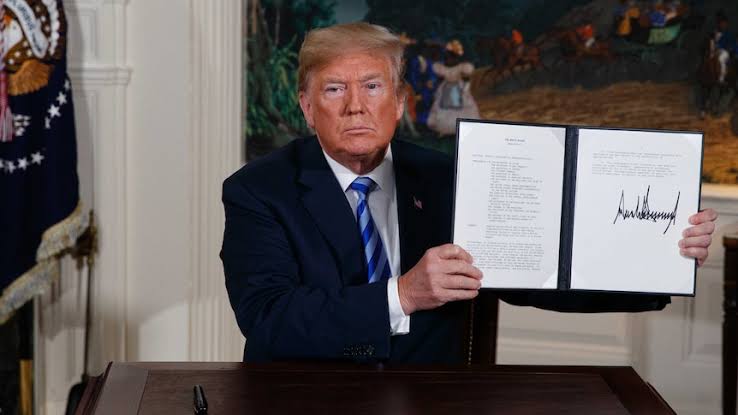
President Donald Trump has reinstated a “maximum pressure” campaign against Iran, following a visit from Israeli Prime Minister Benjamin Netanyahu. The executive order instructs the Treasury Department to execute sanctions aimed at sinking Iran’s oil exports. The US believes Iran is “close” to developing a nuclear weapon, but will stop a “strong” Tehran from obtaining one.
Lawmakers are also interested in exerting more pressure on Iran, with Sens. Lindsey Graham and John Fetterman introducing a resolution affirming all options should remain on the table in dealing with Iran’s nuclear threat. Trump signaled some optimism about securing a nuclear deal with Iran in January when asked if he backed Israel striking Iran’s nuclear facilities. Other executive orders signed on Tuesday include pulling the US out of the United Nations Human Rights Council and cutting funding for the United Nations Relief and Works Agency for Palestine Refugees (UNRWA).
However, the U.S. “maximum pressure” campaign on Iran’s nuclear program will be failed to achieve its objectives for the following:
The Failure of Maximum Pressure on Iran’s Nuclear Program
Similar to North Korea, Iran has intensified its nuclear activities in reaction to sanctions, enriching uranium to levels close to weapons-grade (60% purity) and limiting its collaboration with the International Atomic Energy Agency (IAEA). When states perceive their nuclear programs as vital for their regime’s survival, sanctions alone are insufficient to persuade them to abandon these ambitions. Sanctions tend to bolster hardline factions within Iran, such as President Raisi, who are resistant to engaging in negotiations with Western powers.
In response to external pressures, Iran has increased its support for militant organizations like the Houthis and Hezbollah, while also strengthening its alliances with Russia and China. The U.S. exit from the 2015 nuclear agreement (JCPOA) has eroded trust, leading Iran to seek irreversible assurances before considering any new negotiations.
The $150 Billion Frozen Assets Myth vs. Reality
The current situation in the USA presents a curious case. The country finds itself in a peculiarly insolvent position, unable to unfreeze the more than US$ 150 Billion owed to Iran. As one economic analyst humorously put it, “It seems the only thing frozen faster than those funds is the U.S. economy’s ability to thaw its financial troubles.” With an indebtedness of US$ 40 Trillion, exacerbated by the California wildfires and a tech stock market nosedive post the DeepSeek versus U.S. AI companies crisis, the U.S. is facing a financial winter that’s anything but fleeting.
Meanwhile, Iran has deftly navigated this geopolitical chessboard, ratifying full strategic partnership agreements with both Russia and China. This move not only bolsters its economic position but also adds a layer of security in an increasingly unstable global arena. As Iran’s Foreign Minister quips, “While some countries are busy counting their IOUs, we’re building alliances.” These partnerships serve as a significant counterbalance to the U.S.’s financial woes, proving that sometimes, the best financial strategy is to diversify your friends, not just your portfolio.
Iran’s Strategic Partnerships with Russia and China is the Firewall anti Western Sanctions
Iran’s strategic partnership with Russia is characterized by significant military-technical cooperation, with Russia providing advanced drones and missiles to enhance Iran’s military arsenal and secure Iranian drones for its operations in Ukraine. This 20-year strategic agreement solidifies their alliance and ensures continued cooperation in defense and security. The exchange of technology and resources between Iran and Russia demonstrates their commitment to each other’s strategic goals.
Iran’s relationship with China is characterized by economic and diplomatic support, which is crucial for its resilience in the face of international sanctions. China acquires Iranian oil at discounted rates through covert shipping operations and integrates Iran into the Belt and Road Initiative via a 25-year contract. China’s steadfast diplomatic support at the UN Security Council shields Iran from potential punitive measures.
Trump’s Allegations and the Netanyahu Factor
President Trump has made alarming claims that Iran intends to assassinate him as a form of retribution for the 2020 assassination of General Qasem Soleimani. However, Trump lacks concrete evidence to support these claims, a pattern that has often characterized his public statements. Such unverified claims can have significant geopolitical repercussions, potentially inflaming existing hostilities and destabilizing the region. The lack of proof undermines the credibility of these statements and their potential impact on diplomatic efforts.