Ashraf AboArafe
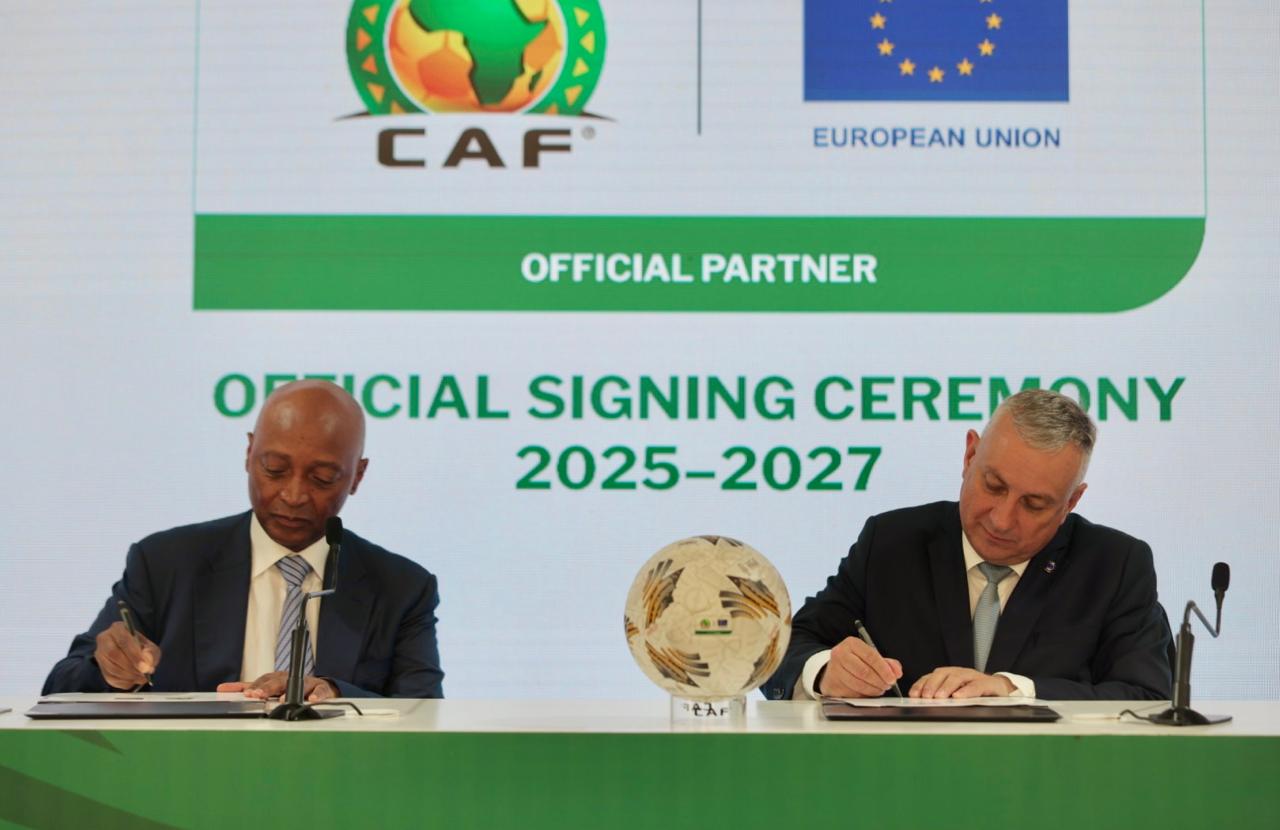
In a historic move that bridges sport and sustainable development, the European Union (EU) and the Confederation of African Football (CAF) have signed a three-year strategic partnership aimed at empowering African youth and expanding developmental initiatives across the continent. The agreement falls under the EU’s flagship “Global Gateway” initiative.
The deal was signed by EU Commissioner for International Partnerships Josef Sikela with CAF President Patrice Motsepe on the sidelines of the U-20 Africa Cup of Nations Final held in Cairo, Egypt.
Beyond the Game: A Multi-Dimensional Partnership
This partnership sets a precedent for EU-Africa cooperation, leveraging football not only as a sport but as a powerful vehicle for education, social cohesion, youth empowerment, and gender equality. The EU and CAF share common values such as inclusion, fair play, and equal opportunities, which form the foundation of this cooperation.
One of the cornerstones of this partnership is the African Schools Championship, which has already engaged over 880,000 students and is set to expand to reach 33,000 schools across Africa. The championship integrates football with education, leadership development, and community participation, creating a direct and measurable social impact.
Protecting Talent and Promoting Opportunity
The agreement also includes support for CAF’s player protection program, which aims to ensure a safe and professional transition for young African players from amateur levels to professional careers, shielding them from fraudulent agents and exploitation.
Additionally, the EU will work with CAF to promote the Africa Cup of Nations among African diaspora communities in Europe, strengthening cultural ties and representation.
Global Gateway: Europe’s Vision for Africa
This collaboration is a key component of the EU’s Global Gateway strategy, which aims to mobilize €150 billion in public and private investment across Africa by 2027. The investments target critical sectors such as digital infrastructure, energy, transport, education, and research.
EU Commissioner Joseph Sikela emphasized Africa’s youth potential, stating:
“Africa is the youngest continent in the world, with an average age below 20. The potential here is immense. Together, we must transform that energy into real opportunities.”
Sikela highlighted that football is not only a sport but a unifying force, and when combined with targeted investment in skills and education, it becomes a powerful tool for social transformation.
CAF: Football as a Force for Education and Unity
CAF President Patrice Motsepe described the agreement as a historic milestone, noting:
“We at CAF believe football is not just a game—it’s a vehicle for education, development, and social responsibility.”
Motsepe also revealed that the Motsepe Foundation has donated $10 million to support African schools, reaffirming CAF’s commitment to reinvesting in the continent and creating hope for millions of children.
Highlighting Africa’s demographic advantage—with nearly 500 million young people aged 15–24—Motsepe warned that failure to invest in this demographic could lead to social and economic instability. He concluded:
“Investing in youth, education, and football is not just a moral obligation—it is a strategic imperative for Africa’s future.”
CAF’s recent AFCON tournament drew a staggering 2.4 billion viewers from 180 countries, underlining the global appeal of African football. Motsepe expressed confidence that African teams can soon compete for and win the World Cup, joking:
“We may face a European team in the final—but we’re one family, and the victory will be shared.”
EU Delegation: A Transformational Moment
EU Ambassador to Egypt Angelina Eichhorst described the partnership as a transformational moment, the first of its kind between CAF and a major international organization. She emphasized that the agreement transcends sport, reflecting the EU’s commitment to sustainable development, education, and social impact.
Conclusion: Sport as a Catalyst for Africa’s Future
This groundbreaking partnership exemplifies the evolving relationship between Europe and Africa—one based on mutual respect, shared goals, and long-term collaboration. It demonstrates how football, when coupled with strategic investment and values-based programming, can be a catalyst for change, empowering millions of African youth and building a more inclusive and resilient future for the continent.