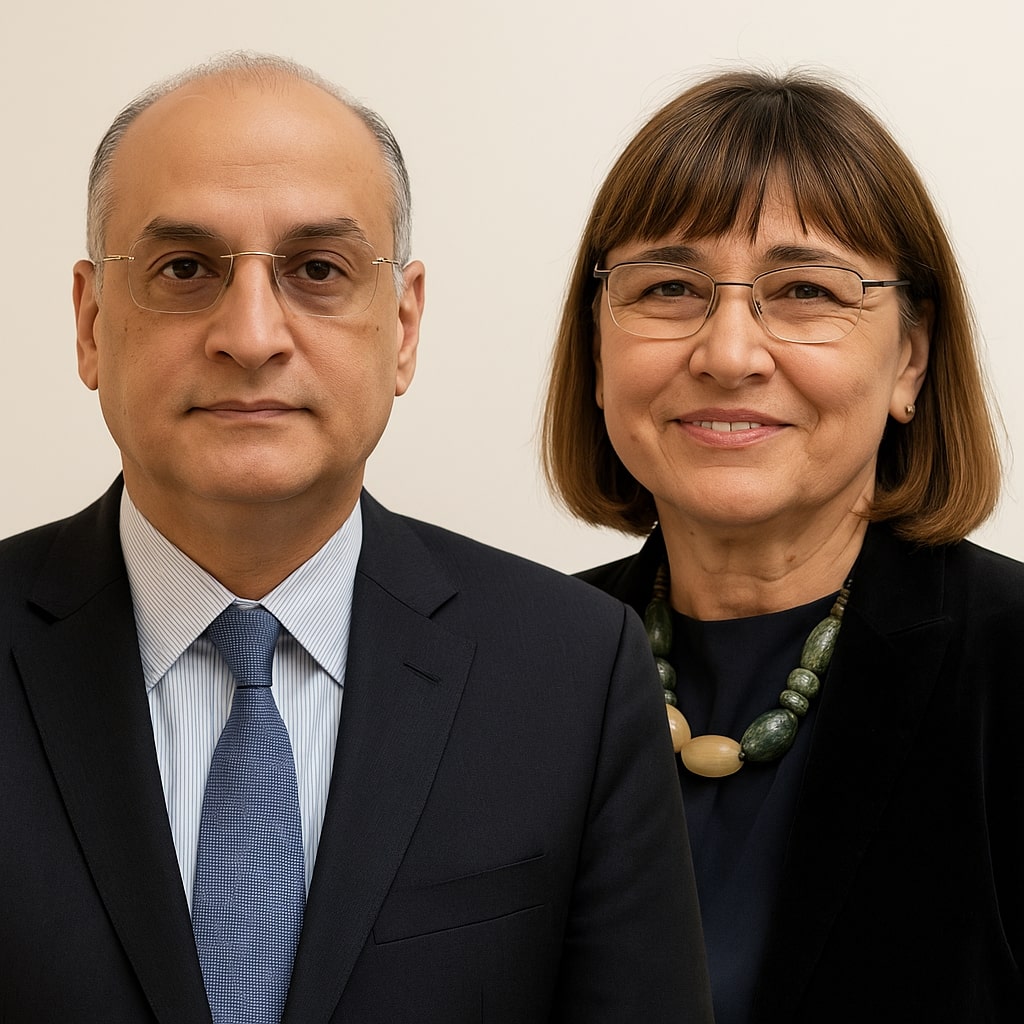
A joint opinion piece by:
Ambassador Khaled El-Bakly, Assistant Foreign Minister for Multilateral Affairs and International Security
Elena Panova, United Nations Resident Coordinator in Egypt
This year, the United Nations marks the 80th anniversary of its founding, with UN peacekeeping operations at the heart of its mission — a powerful symbol of multilateral international cooperation.
Over nearly eight decades, the efforts and sacrifices of the Blue Helmets have saved lives and transformed communities, helping nations navigate the difficult path from war to peace.
Today, over 76,000 civilians, military personnel, and police serve in 11 missions worldwide — from Cyprus to Lebanon, from the Central African Republic to South Sudan and the Democratic Republic of the Congo — bringing life-saving support to millions in some of the world’s most fragile political and security contexts.
However, the growing pressures demand a rethink of peacekeeping’s role in the broader international peace and security architecture. As President Abdel Fattah El-Sisi rightly emphasized, “Peacekeeping is a vital tool, but it should not be seen as the sole means to preserve peace.” He further stressed that peacekeeping “cannot replace preventive diplomacy, mediation efforts, peacebuilding, or the political, economic, and social measures required to address root causes and heal societal divisions.”
This year’s theme for the International Day of UN Peacekeepers — “Peacekeeping for the Future” — could not be more timely.
Peacekeepers face growing, unprecedented threats. Conflicts are becoming longer, more violent, and more complex. They frequently spill across borders and are compounded by terrorism, organized crime, cyber warfare, disinformation, and the increasing use of technology in warfare. Climate change further exacerbates instability in already fragile regions.
Meanwhile, divergent positions within the UN Security Council have made consensus difficult, slowing response at a time when urgent action is needed.
UN Secretary-General António Guterres has bluntly stated, “There is a lack of trust — within countries, regions, and between them… A grim diagnosis, but we must face the facts.”
One of the most urgent challenges is the growing gap between peacekeeping mandates and available resources, which undermines missions and often leaves them where there is “no peace to keep.”
The Pact for the Future, adopted at the Summit of the Future in 2024, offers a chance not only for reflection but also for action. It recognizes that peace operations succeed only when backed by political will and comprehensive strategies that tackle the root causes of conflict. It also rightly stresses the need for adequate, sustainable, and predictable funding for peacekeeping.
The Pact enables a comprehensive review of UN peacekeeping operations — a unique opportunity to rethink and reform the model.
Given today’s high-risk contexts, peacekeeping missions must be equipped with the right tools, partnerships, and strategies to protect civilians and support sustainable peacebuilding.
This year, Egypt marks 65 years of dedicated participation in UN peacekeeping. Since first contributing to the Congo mission in 1960, Egypt has deployed over 30,000 peacekeepers in 37 missions across 24 countries, making it one of the largest troop-contributing countries to the UN.
Today, 1,205 Egyptian peacekeepers, including women, serve in five missions across Africa.
Egypt’s contributions have earned global recognition, including its re-election as Rapporteur of the UN Special Committee on Peacekeeping Operations, its recent election to the UN Peacebuilding Commission, and its appointment as co-facilitator of the 2025 Peacebuilding Architecture Review in both the General Assembly and the Security Council.
Egypt’s role goes beyond troops: it is shaping strategic thinking on peacekeeping reform. Through the Cairo International Center for Conflict Resolution, Peacekeeping and Peacebuilding (CCCPA) — an African Centre of Excellence — Egypt promotes context-specific, inclusive, and innovative approaches.
The CCCPA focuses on prevention, civilian protection, regional partnerships, and women’s participation, aligned with the Women, Peace, and Security Agenda.
Via the Aswan Forum, Egypt champions African solutions and bridges the gap between peacekeeping and peacebuilding.
In close cooperation with the UN in Egypt, this represents a model of South-South cooperation and regional innovation.
Egypt also trains African and international peacekeepers through specialized facilities managed by the Ministry of Interior and the Ministry of Defense.
Egypt is a strong supporter of the Secretary-General’s “Action for Peacekeeping” (A4P) initiative. In 2018, Egypt hosted a landmark high-level conference to enhance peacekeeping effectiveness, which resulted in the “Cairo Roadmap for Peacekeeping”, later adopted by the African Union in 2020.
This year, as we honor the 4,430 UN peacekeepers who made the ultimate sacrifice, including over 60 Egyptian martyrs, we must do more than commemorate. We must act to uphold the principles they died to defend and ensure they are never left without the means to fulfill their mission.
Egypt reaffirmed its commitment at the 2025 UN Peacekeeping Ministerial in Berlin (May 2025) with pledges to deploy highly trained personnel, provide specialized capabilities, and use technology to enhance efficiency. Egypt also highlighted the importance of gender parity and aims to exceed UN goals for women’s participation.
As the UN navigates immense global challenges and a region plagued by conflict, Egypt stands firm as a reliable, stable partner in promoting international peace and security.
Egypt has also offered full support for the UN 80 Initiative, including hosting UN agencies, offices, and programs seeking relocation.
Egypt’s strategic location — at the crossroads of Africa, Asia, Europe, and the Middle East — makes it a natural hub for coordination and cooperation.
Its proximity to crisis zones, access to the Red and Mediterranean Seas via the Suez Canal, and modern infrastructure make it ideal for crisis response, diplomacy, peacekeeping, and humanitarian aid.
Egypt hosts numerous regional and international offices, including the League of Arab States, with over 140 embassies in Cairo — reinforcing its role as a geopolitical center with strong UN presence and security.
As the UN Secretary-General declared, “The world needs the United Nations more than ever — and the UN needs peacekeeping to be fully equipped to meet today’s realities and tomorrow’s challenges.”
With renewed multilateral commitment, adequate resources, and bold reforms, we can empower peacekeepers to remain an indispensable force for stability, peace, and hope in a turbulent world — and Egypt will remain at the forefront of that effort.