Ashraf AboArafe reports
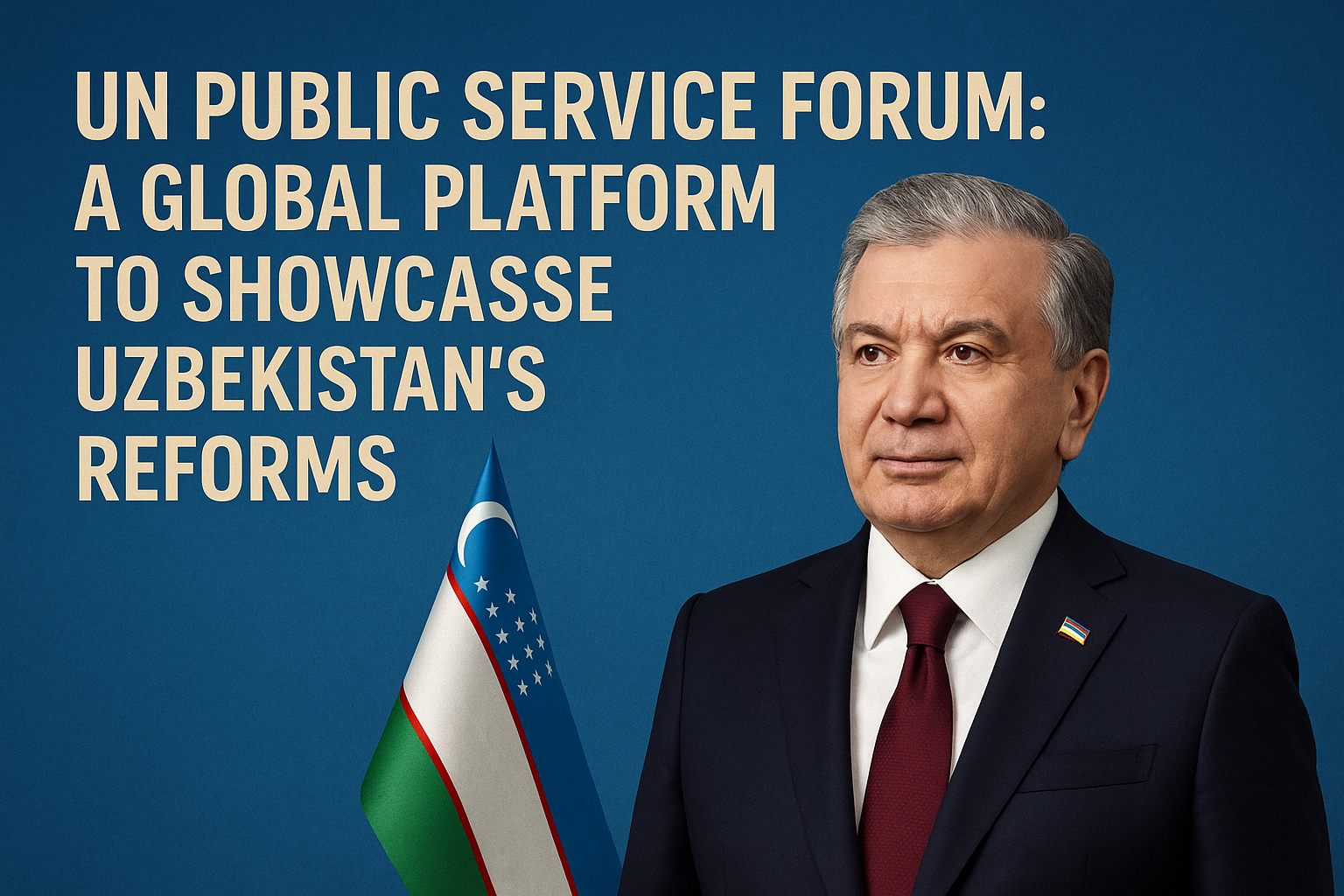
In recent years, Uzbekistan has embarked on an ambitious reform agenda, aimed at transforming public administration and civil service systems. The overarching goal has been to establish an efficient, transparent, and citizen-centric governance model. These achievements will be in the global spotlight at the United Nations Public Service Forum, set to take place in Samarkand in June 2025 — marking the first time Uzbekistan hosts this prestigious event. This milestone reflects the deepening cooperation between Uzbekistan and the United Nations in strengthening public service delivery.
A Forum of Global Significance
The UN Public Service Forum plays a key role in advancing the Sustainable Development Goals (SDGs) by strengthening public sector capacity, human capital, and technological innovation. The 2025 edition is expected to gather senior government officials, international and regional organizations, civil society leaders, academics, and innovation pioneers from across the globe.
We are proud to contribute to this global dialogue, as the forum offers a vital platform for exchanging innovative practices and fostering international cooperation in public service reform.
Why Uzbekistan?
Meaningful and sustained reform is essential for long-term national development. Under the leadership of President Shavkat Mirziyoyev, Uzbekistan launched a comprehensive modernization program known as “New Uzbekistan.” From the outset, priority was placed on improving public institutions and building a professional, citizen-focused civil service.
A cornerstone of this effort is the guiding principle that “the state should serve the people” — not the other way around. This shift toward people-centered governance is now enshrined in the Constitution and institutional practices.
To make public institutions more accessible and responsive, platforms such as the Virtual Reception Office and People’s Receptions were established. These mechanisms allow every citizen to raise concerns directly with the country’s leadership and relevant authorities.
Structural and Legal Reforms
In 2019, the government created the Agency for the Development of Public Service to unify and oversee human resource policies across the public sector. This body spearheaded reforms to improve the recruitment, performance, and professional development of civil servants.
In 2022, the adoption of the Law “On Civil Service” laid the legal groundwork for further reforms. Since then:
- Over 160 regulatory acts related to HR policy have been issued.
- A merit-based recruitment system was established, ensuring open competition for public roles.
- A talent pool for senior positions was introduced.
- A performance evaluation system for civil servants was implemented.
To bring the state closer to society, the “Mahalla Seven” initiative was launched. This innovative structure enhances early problem identification, community engagement, and preventive action at the local level.
Digital Transformation and Efficiency
Driven by a goal of building a more efficient public sector:
- The number of ministries was reduced from 25 to 21.
- Independent executive bodies decreased from 61 to 28.
- The number of administrative staff and executive agencies was cut by 30%.
- Over 30 licenses and permits were abolished; 70+ public services were streamlined.
- More than 60 document types are no longer required for government services.
The “e-government” system, now used by over 4 million citizens, integrates more than 130 government databases and provides nearly 350 online services via the Unified Portal of Interactive Public Services.
A Landmark Event in Samarkand
Hosting the UN Public Service Forum in Samarkand — a city rich in cultural and historical significance — marks a defining moment in Uzbekistan’s journey toward modern governance. It underscores the country’s commitment to digital transformation, international cooperation, and public service excellence.
Most importantly, the forum serves as a tribute to the dedication and professionalism of civil servants who work tirelessly to implement reforms and improve the daily lives of citizens.
In conclusion, the 2025 UN Public Service Forum is more than a global event — it is a recognition of Uzbekistan’s achievements, a platform for collaboration, and a springboard for future innovation in governance.