Ashraf AboArafe
*Islamabad, 2 June 2025* — In response to a series of recent remarks by Indian political leaders, including statements made in Bihar, and the comments issued by the Indian Ministry of External Affairs on 29 May, Pakistan has strongly condemned what it described as “antagonistic rhetoric” emanating from New Delhi.
A spokesperson for Pakistan’s Ministry of Foreign Affairs stated:
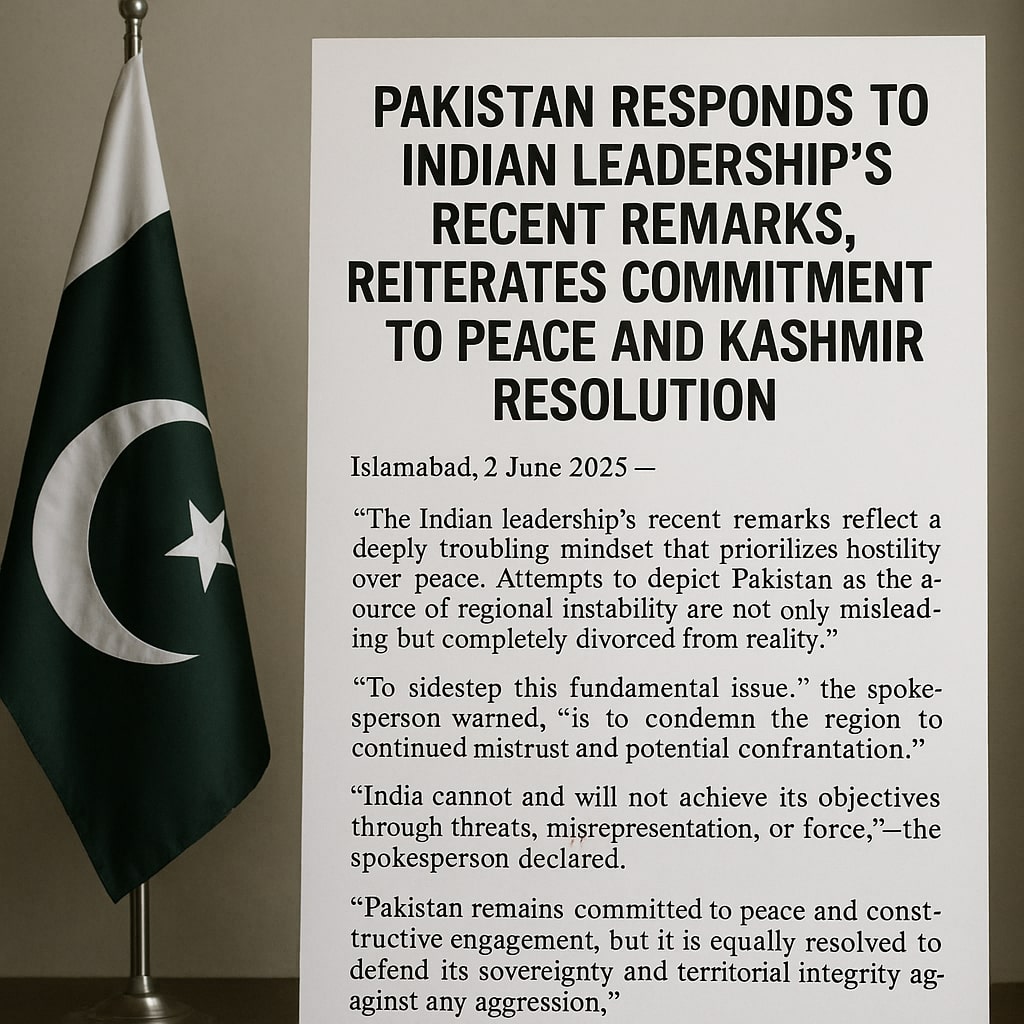
> “The Indian leadership’s recent remarks reflect a deeply troubling mindset that prioritizes hostility over peace. Attempts to depict Pakistan as the source of regional instability are not only misleading but completely divorced from reality.”
The spokesperson emphasized that India’s track record, including “documented support for terrorist activities within Pakistan,” is well known to the international community, and accused Indian officials of using “hollow narratives and diversionary tactics” to deflect from pressing regional issues.
Central to Pakistan’s response was a reaffirmation of its stance on the Jammu and Kashmir dispute, which it described as the “core issue threatening peace and stability in the region.” The statement reiterated Pakistan’s commitment to a just and lasting resolution in accordance with United Nations Security Council resolutions and the aspirations of the Kashmiri people.
“To sidestep this fundamental issue,” the spokesperson warned, “is to condemn the region to continued mistrust and potential confrontation.”
The statement further criticized what it termed India’s “jingoism and coercion,” asserting that such strategies are ultimately futile.
> “India cannot and will not achieve its objectives through threats, misrepresentation, or force,” the spokesperson declared.
Reaffirming Islamabad’s position, the spokesperson concluded:
> “Pakistan remains committed to peace and constructive engagement, but it is equally resolved to defend its sovereignty and territorial integrity against any aggression.”
The statement ended with a call for “maturity, restraint, and a willingness to address the root causes of conflict,” warning against the pursuit of “narrow political gains at the expense of regional harmony.”