 Chief editor wonders and analyzes
When Oil Fields Burn, the Suez Shuts Down, and the World Inches Toward a Global Blaze
Special Analysis – AldiploMasy | June 2025
In the early hours of a tense Friday morning, Israeli missiles struck an Iranian nuclear facility, igniting not only fire on the ground but rage in Tehran — and possibly, the collapse of any hope for regional de-escalation. Now, all eyes turn toward the looming question:
Has the era of mediation ended? Are Iran and the U.S.–Israel axis headed toward direct confrontation — or worse, a regional war with global consequences?
🛑 Tehran’s Rage: Mediation Under Fire
Following the strike, Iranian President Masoud Pezeshkian made no effort to conceal his fury. In an emergency cabinet session, he declared:
“The Zionist entity does not move without Washington’s permission. The attack was supported directly, though Western media tries to obscure that fact.”
In Tehran’s view, what was presented as diplomatic mediation — led by Oman, Qatar, and others — was, in reality, a strategic cover for betrayal. This sentiment has already reshaped Iranian strategic calculations:
No more negotiations under fire. No more talks under treachery.
🛰️ U.S. Targets in the Line of Fire
Iran possesses the tools for retaliation — and may no longer limit itself to asymmetric warfare. Among potential direct targets:
- Al Udeid Air Base in Qatar
- U.S. Fifth Fleet HQ in Bahrain
- Critical energy infrastructure in the UAE and Kuwait
While a direct strike on U.S. assets would mark an irreversible escalation, Iranian rhetoric suggests that, if provoked further, it is no longer off the table.
🇪🇬 Egypt Sounds the Alarm — and Pays the Price
From the earliest days of the Gaza War in October 2023, Egyptian President Abdel Fattah El-Sisi warned of an impending catastrophe:
“Those who believe this is a contained conflict are delusional. The world is on the brink of a much larger war.”
He was right. As Red Sea tensions surged, global shipping giants rerouted away from the Suez Canal — once Egypt’s economic lifeline — choosing instead the much longer Cape of Good Hope route. The consequences:
- Billions in lost revenue for Egypt
- Escalating import costs and economic pressure
- A direct impact on food security and inflation for millions
Egypt, which had tried to mediate peace, now finds itself among the conflict’s economic casualties.
🔥 When Oil Becomes Fire: Who Pays the Price?
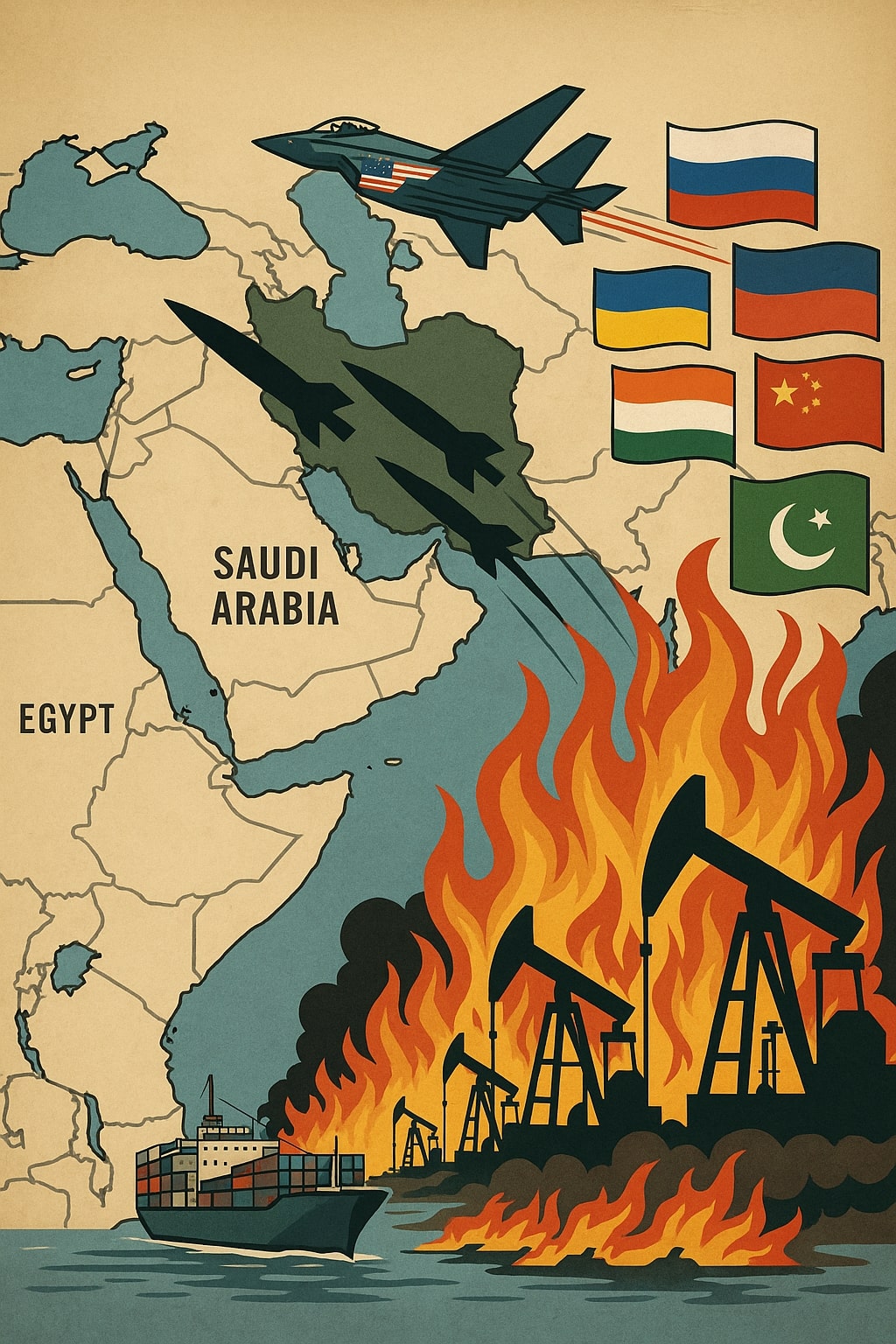
If the confrontation escalates, Gulf oil fields will be the first to suffer:
- Saudi Arabia’s Abqaiq facility
- UAE’s Zakhoom and Habshan
- Qatar’s and Kuwait’s export infrastructure
Even a partial disruption — 20% of Gulf output — could send oil prices soaring past $200 a barrel, triggering:
- Severe inflation in Europe
- Recession in the United States
- Market collapse in Asia
- Political and humanitarian crises across the Global South
🌍 The World’s Powder Keg: Global Greed, Local Flames
What makes the current situation even more volatile is the proxy behavior of global powers:
- U.S.–Russia tensions reignite over Ukraine
- China presses Taiwan
- India–Pakistan friction reaches new highs
- The Middle East becomes both battlefield and bargaining chip
This is not just Iran versus Israel. It’s a global system on edge, with superpowers fueling conflicts for strategic gain.
✋ Final Warning: Playing with Fire
Iran no longer trusts the process — nor the mediators. It may not wait for approval to strike back. But it also knows: an all-out war will burn everyone.
If oil fields go up in flames, ports freeze, missiles rain down on bases, and the Suez closes for good…
then the world will pay. And pay dearly.
The real question is: Who will stop the chain reaction… before it consumes the planet?