 Chief editor wonders?!
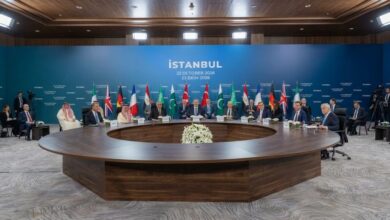
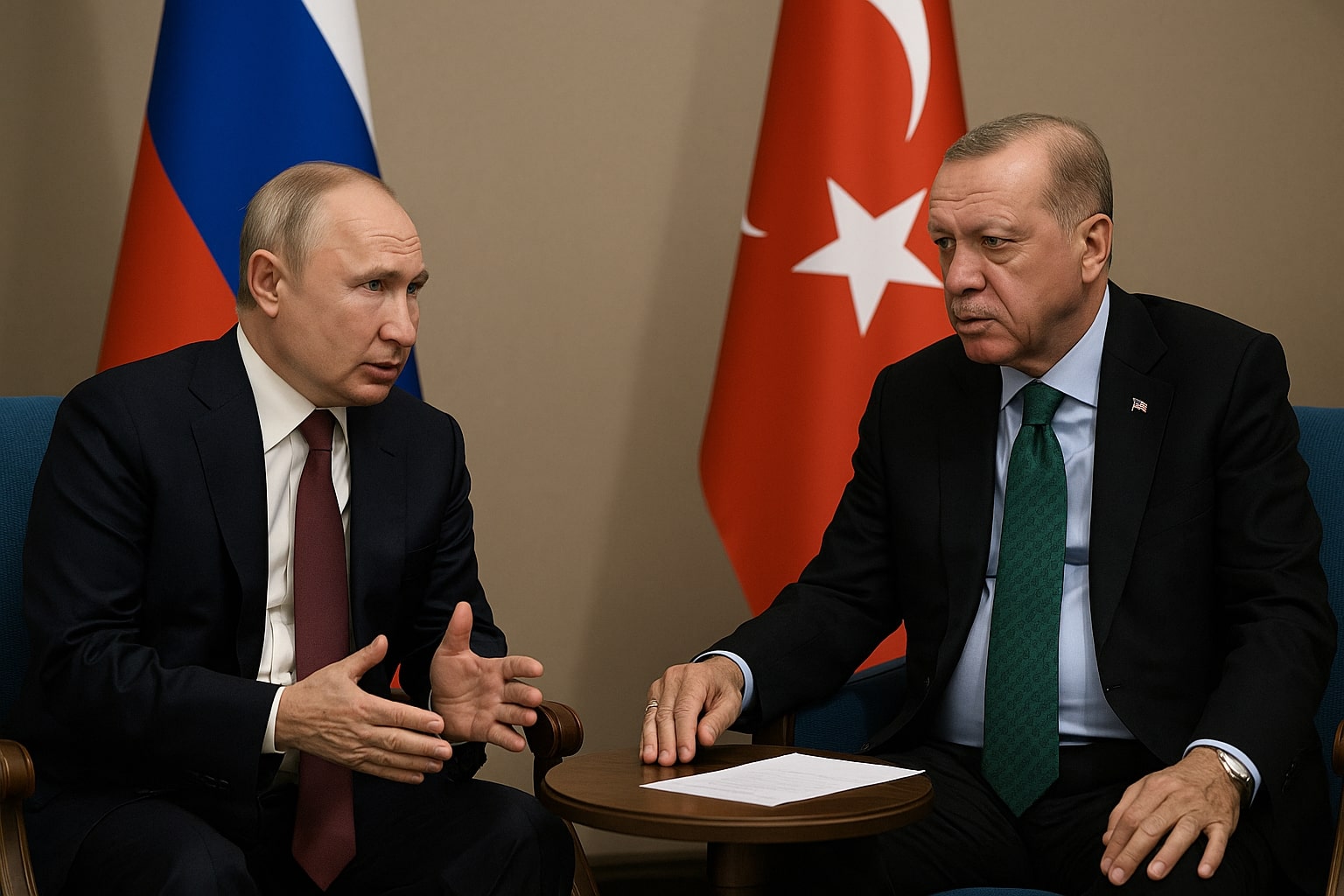
As the Middle East smolders under Israeli aggression and Iran’s forceful retaliations, Presidents Vladimir Putin and Recep Tayyip Erdoğan have jointly announced an agreement to “resolve outstanding issues” surrounding Iran’s nuclear program.
But why now? And why from these two specifically?
▪ Is This a Setup for Iran?
The timing is suspicious. Such mediation efforts often mask deeper strategic motives. This move could very well be an opportunity for Israel to regroup and rearm after suffering unprecedented blows from Iran that nearly toppled Netanyahu’s far-right government.
We must ask:
- Where were these mediators during the years of Israeli assassinations of Iranian scientists and commanders?
- Where were they when President Ebrahim Raisi and Foreign Minister Amir-Abdollahian perished under mysterious and unresolved circumstances?
- What was their stance as Israel launched deep military strikes inside Iran and targeted leaders across the region—Hamas, Hezbollah, and the IRGC?
Today’s mediation may be a carefully crafted trap, orchestrated by Netanyahu and Trump through seemingly neutral actors, to prevent Iran from capitalizing on its global momentum and public support.
▪ Mediation Must Come with Conditions
If this initiative is genuinely aimed at peace, then it must start with justice. Any meaningful negotiation should include:
- Israel’s formal apology and full compensation to the Palestinian people for decades of suffering, and recognition of a two-state solution based on the 1967 borders—starting with the dismissal of Netanyahu’s extremist government.
- Israel’s admission of its role in the assassination of Iranian and resistance leaders, including President Raisi, Abdollahian, Haniyeh, Nasrallah, and many others.
- Direct compensation to Egypt for losses in the Suez Canal due to Red Sea disruptions caused by Israeli aggression and regional instability.
- A binding UN Security Council resolution to sanction Israel for its crimes in Palestine, Iran, and elsewhere, and enforce international resolutions such as 242 and 338 without bias.
Yet let’s be realistic: none of this will be delivered. Instead, these mediations aim to pressure Iran into giving up its sovereignty, its nuclear aspirations, and its role as a regional power.
▪ A Shaky Triangle: Russia, Turkey, Iran
The so-called strategic alliance between Iran, Russia, and Turkey is under quiet strain.
- Russia, despite public support, maintains open communication with Israel and has shown alarming neutrality on recent assassinations.
- Turkey plays a double game, occasionally coordinating with Israel and remaining disturbingly silent as Iranian commanders are picked off—some even from within Turkish-controlled zones.
- Meanwhile, leaks of a potential political reshuffle in Syria, with talk of replacing Assad with a “Sunni Golan-based figure” (possibly to appease Western or Israeli circles), raises red flags about betrayal.
Iran must be cautious: trusting allies who ignore your wounds is political suicide.
▪ A Defining Equation: Iran or Occupation
The situation facing Iran is not political—it’s existential. And the choices are stark:
Either Iran continues its decisive strikes, maintaining its strategic edge and resistance legacy,
or it surrenders to seductive diplomacy, is stripped of sovereignty, loses its nuclear program, and has its system dismantled from within.
Disturbingly, the tone of President Pezeshkian and Deputy FM Araghchi seems tepid and bureaucratic, failing to rise to the gravity of the moment. Where is the urgency? Where is the defiance?
▪ Conclusion: Beware the Silk Trap
Not every mediation is peace. Sometimes, it’s a velvet noose.
This one may be part of a carefully engineered process—designed not to stabilize the region, but to:
- Rehabilitate Israel’s military footing,
- Shield Netanyahu’s extremist coalition, and
- Ensure Iran does not rise as a sovereign global power.
If Tehran fails to grasp the moment, the target won’t just be its nuclear program—it will be the very foundation of its independence, influence, and future.