Dr. Ahmed Mostafa ✍️
In a turbulent scene of military escalation, media warfare, and geopolitical entanglements, Iran today stands at a critical crossroads—testing its sovereignty, regional influence, and internal cohesion. The confrontation with Israel is not just about missiles and drones; it is equally a battle of narratives, alliances, and identities. And at the heart of this unfolding drama emerges a powerful symbol of feminine courage: Sahar Emami.
Sahar Emami: The Woman Who Defied Airstrikes with Words
Sahar Emami, a prominent Iranian anchor at Khabar News, was not just a journalist delivering headlines on June 16, 2025—she became a national symbol of courage. As Israeli airstrikes targeted the station, Emami remained on-air, broadcasting calmly amid crumbling walls and chaos. Her unwavering voice became the voice of defiance, embodying the spirit of Iranian womanhood and Islamic resilience. In that moment, she was not merely reading the news; she was rewriting history with dignity and grace—a modern-day heroine who refused to be silenced by fear.
Iran’s Strategic Depth: A Fortress Not Easily Breached
Iran’s vast geography, akin in size to Algeria, provides natural defense—mountains, deserts, and deep infrastructure make a full-scale invasion nearly impossible. But geography is not the only challenge for adversaries; Iran’s strategic alliances and ideological cohesion make it even harder to subdue. Yet, reports have surfaced of neighboring countries—India, Jordan, Iraq, and Azerbaijan—allegedly providing logistical support to Israeli or Anglo-American forces. These developments reflect a fragile regional environment where betrayal may come cloaked in diplomacy.
Rafael Grossi: The Biased Custodian of Nuclear Oversight
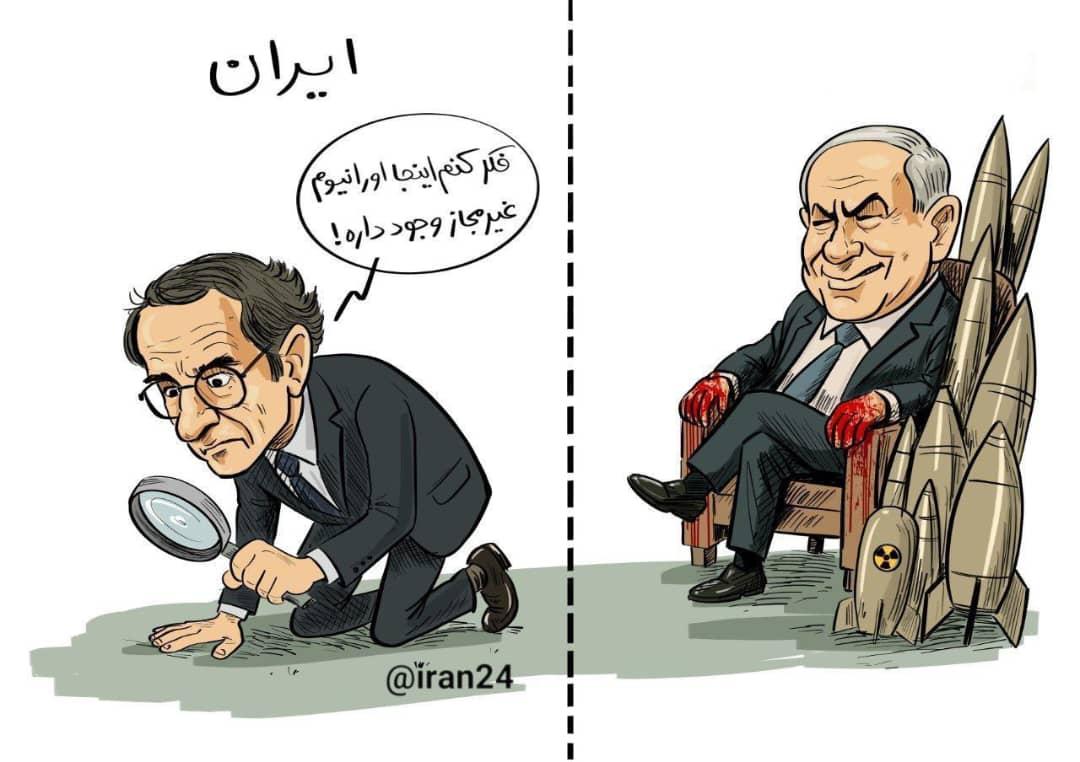
Rafael Grossi, Director General of the International Atomic Energy Agency (IAEA), has increasingly come under fire for politicizing nuclear inspections. His agency seems ever-vigilant when it comes to Iran’s peaceful program, yet remains conspicuously silent on Israel’s undeclared nuclear arsenal. This double standard erodes the credibility of global institutions and underscores a grim truth: neutrality in the West’s international apparatus is often a façade. For Tehran, Grossi’s rhetoric is no longer technical—it is strategic pressure in disguise.
The G7’s Declining Relevance in a Multipolar World
The latest G7 summit in Canada coincided with the Iranian-Israeli flare-up. Yet the bloc’s response was disappointingly predictable: more sanctions, more condemnation, and little regard for the complexity of the situation. As the West clings to outdated power structures, emerging powers in the Global South—led by China, Russia, and BRICS+—are quietly redrawing the map of global influence. While the G7 issues statements, Iran signs gas and defense deals with Beijing and Moscow. The world is changing; the West is not.
Escalation or Prudence? The Cost of a Wider War
Should the U.S. or Israel push the envelope further, the cost could be catastrophic. The Houthis’ unprecedented strike on the USS Harry Truman was a warning shot—America’s air dominance is no longer assured. Iran, with its missile capabilities and naval control over the Strait of Hormuz, can upend global oil trade in days. Any attempt to subdue Iran militarily could provoke a wider anti-Western coalition—from Pakistan and China to North Korea and beyond—transforming a regional crisis into a global inferno.
Resistance Over Capitulation: A Strategic Doctrine
Iran has learned the hard lessons of history. The Libyan precedent—where disarmament led to destruction—is etched into its doctrine. Thus, Tehran clings tightly to its peaceful nuclear program and economic self-reliance. Its strategy is clear: no surrender, no illusions. The concept of “resistance economy” isn’t just about surviving sanctions; it’s about fostering autonomy and resilience in a hostile world. For Iran, submission will not buy peace—it only invites exploitation.
Gulf Media and the Battle of Narratives
In the information war, some Gulf-based outlets—most notably Al Arabiya and Sky News Arabia—have echoed the Israeli-Western narrative with alarming uniformity. Rather than report impartially, these platforms often serve as mouthpieces for geopolitical agendas, blending sectarian bias with selective journalism. This distortion deepens divisions in the Arab world and contributes to a broader campaign to delegitimize Iran’s regional role, regardless of the truth on the ground.
Conclusion: Between Sahar Emami and the Strait of Hormuz, Resistance Takes Shape
This is more than a military standoff—it is a struggle over who gets to define the future. Between the steadfast Sahar Emami and the strategic bottleneck of the Strait of Hormuz lies a nation refusing to be cornered. Iran is not isolated; it is forging alliances, asserting identity, and challenging hegemony. Emami’s defiance on live television wasn’t just a personal act of bravery—it was a national statement. In this age of collapsing empires and rising multipolarity, Iran isn’t just surviving—it is resisting, recalibrating, and rewriting the rules.