Chief editor writes ✍️
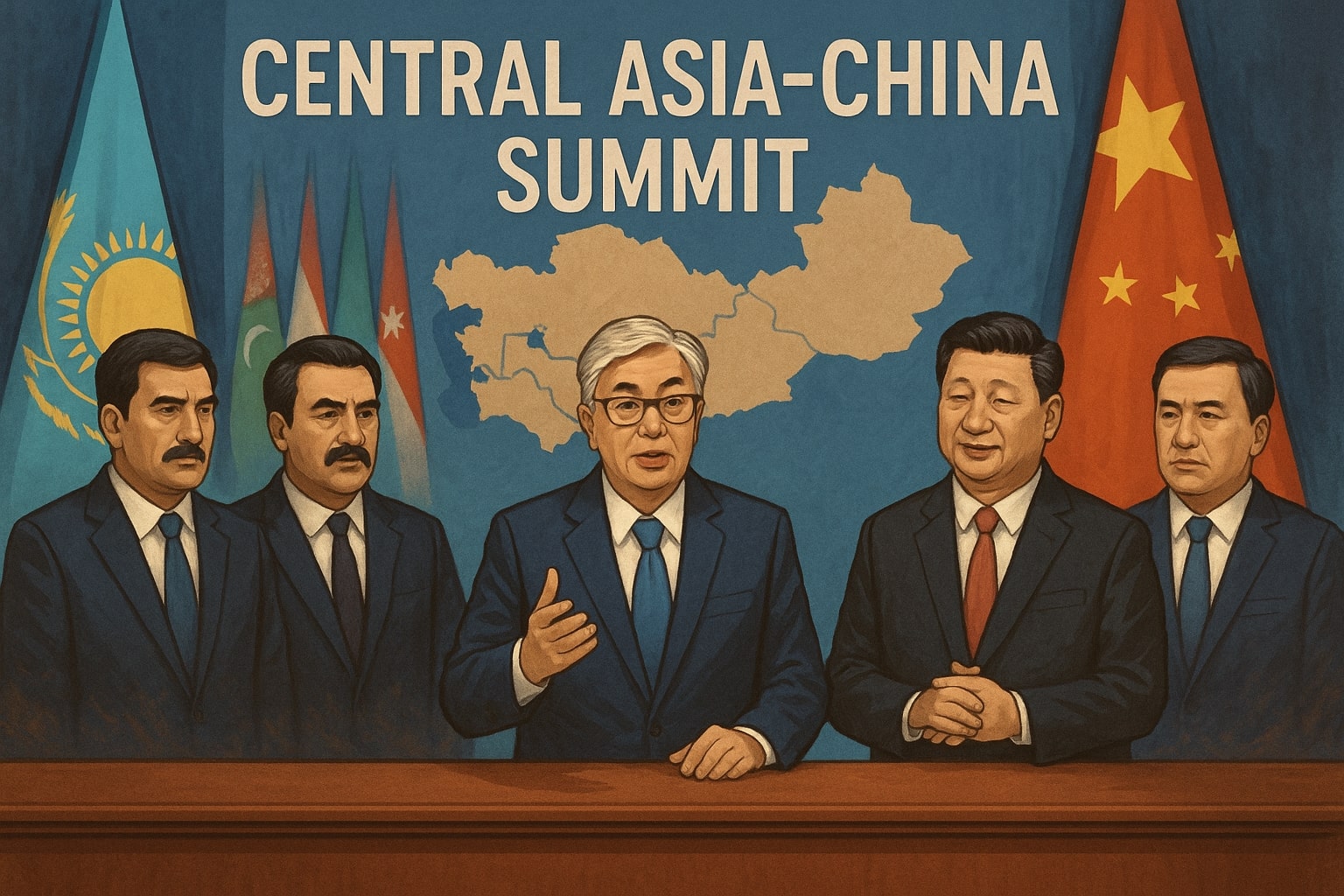
At the Second Central Asia–China Summit, held on June 17, 2025 in Astana, Kazakh President Kassym-Jomart Tokayev delivered an opening address that reflected his country’s ambition to serve as a central node in the evolving Eurasian architecture of cooperation.
Tokayev praised China’s regional engagement as “peace-oriented and progressive”, directly associating it with sustainable development and enhanced regional cooperation. This statement subtly distances Kazakhstan from narratives of Chinese coercion and reaffirms its preference for balanced, multipolar relations.
Referencing the inaugural 2023 Xi’an summit, Tokayev described the regional engagement as the beginning of a new civilizational format, suggesting a modern revival of Silk Road connectivity grounded in mutual respect and cultural partnership.
By highlighting the presence of Sun Weidong, Secretary General of the Central Asia–China Secretariat, Tokayev signaled a shift from symbolic summits to institutionalized regional governance, with permanent mechanisms to ensure continuity and follow-through.
The Kazakh president emphasized a broad cooperation agenda spanning political, economic, trade, and cultural-humanitarian domains, indicating a commitment to regionalism that improves citizens’ lives through education, infrastructure, digital inclusion, and mobility.
Through hosting and shaping the summit’s discourse, Kazakhstan reinforces its image as a diplomatic stabilizer and regional facilitator, promoting cooperation while preserving its strategic autonomy and aligning regional goals with long-term development.