 M. General Mohamed Hussein ✍️
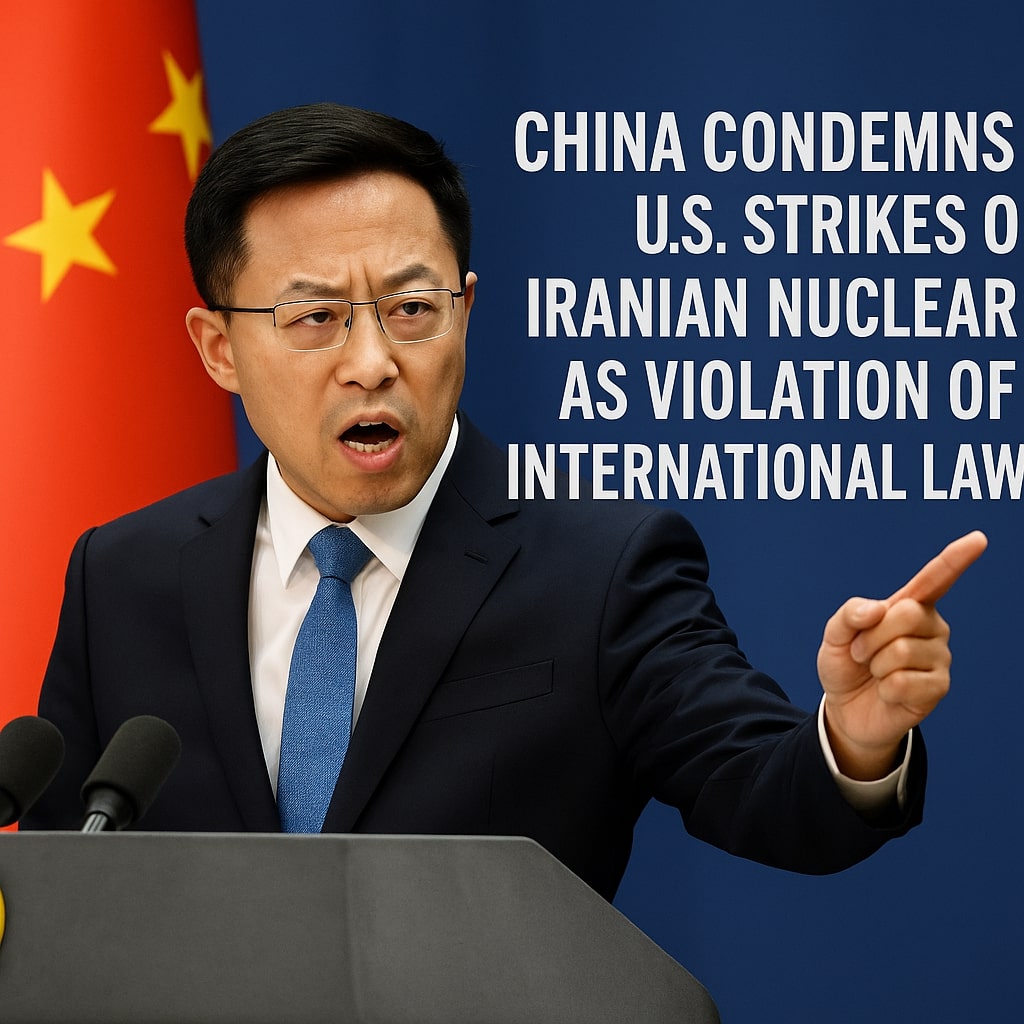
Beijing – In its first official reaction to the U.S. military strikes on three Iranian nuclear sites in Fordow, Natanz, and Isfahan, China has issued a strong condemnation of what it described as a blatant attack on facilities under International Atomic Energy Agency (IAEA) safeguards. The Chinese Foreign Ministry warned that the strikes represent a serious violation of international law and could further destabilize the Middle East.
Speaking at a routine press briefing, the spokesperson for the Ministry of Foreign Affairs stated, “The actions of the United States seriously violate the purposes and principles of the UN Charter and international law.” He expressed Beijing’s deep concern over the growing volatility in the region amid ongoing escalations between Tehran and Tel Aviv.
The spokesperson urged all parties, particularly Israel, to immediately cease hostilities, ensure civilian safety, and reopen channels for dialogue and negotiation. “China stands ready to work with the international community to rally efforts, uphold justice and the rule of law, and contribute to restoring peace and stability in the Middle East,” the statement added.
The Chinese response came just hours after U.S. President Donald Trump confirmed that American forces had conducted targeted airstrikes on what he called “dangerous nuclear infrastructure threatening global security.” The strikes follow an intense period of escalation between Iran and Israel, drawing in global powers and raising fears of wider conflict.
🧭 Reading Between the Lines: China’s Consistent Posture Against Unilateral Military Action
China’s remarks reflect more than just rhetorical opposition to U.S. strikes; they reinforce a broader strategic stance against the use of force outside the boundaries of international consensus. Beijing’s language underscores its alignment with multilateralism, non-interference, and the sanctity of international institutions like the IAEA.
By explicitly calling out Israel and the United States, China positions itself as a defender of international norms and a potential mediator amid rising chaos. The emphasis on “facilities under IAEA safeguards” also signals a rejection of Washington’s narrative that Iran’s nuclear program justifies military intervention.
🔍 Broader Implications: China’s Expanding Footprint in Middle East Diplomacy
The timing and tone of China’s statement also highlight its growing interest in Middle Eastern stability as vital to its energy security and global strategic ambitions. From brokering a landmark détente between Iran and Saudi Arabia to deepening ties with Gulf countries, China has quietly emerged as a diplomatic counterweight to U.S. dominance in the region.
This latest development may further embolden Beijing’s efforts to craft an alternative vision of international order — one rooted in dialogue, sovereignty, and legal consensus rather than preemptive strikes and great-power coercion.