 Chief editor writes ✍️
In a rapidly transforming global economy, landlocked countries continue to face significant structural barriers to development—limited market access, rising logistical costs, and underdeveloped infrastructure. In this context, Uzbekistan is taking a leadership role by advancing a compelling agenda to tackle these shared challenges with bold, cooperative solutions.
1. Tackling Transport Inequality through Integration and Innovation
Uzbekistan underscores the urgent need to reduce the risks and disparities in global logistics. Enhancing communication systems and transport safety is no longer optional—it is essential for economic equity. To address this, Uzbekistan proposes the establishment of a UN-backed Fund for the Promotion of Logistical Integration among landlocked countries. This fund, drawing resources from donor states and global financial institutions, could unlock nearly $40 billion annually needed for regional transport infrastructure across Central Asia.
2. A Global Vulnerability Index: Measuring What Matters
Another key proposal is the development of a Global Vulnerability Index specifically tailored for landlocked nations. Such an index would not only provide objective metrics for assessing the transit and trade limitations these countries face but also ensure fair access to international financing and development programs. Crucially, it would recalibrate how competitiveness and business climates are measured globally—pushing back against one-size-fits-all evaluations that neglect geographic disadvantages.
3. Turning the Arid into Arable: Innovation in Agriculture
Agricultural sustainability is at the heart of Uzbekistan’s forward-looking strategy. By establishing an Innovation Hub for Agricultural Development, the country aims to promote climate-resilient farming, smart irrigation technologies, and food security initiatives. This hub would serve as a center for knowledge transfer and cooperation, ensuring that rural economies are not left behind in the tech-driven global economy.
4. Strategic Thinking for Strategic Futures
Recognizing that ideas shape policies, Uzbekistan calls for increased involvement of think tanks and expert communities in shaping regional strategies. International forums and roundtables are proposed to address key themes such as:
- Integration into global production chains
- The ethical and practical use of artificial intelligence
- Cross-border investments and start-up ecosystems
Uzbekistan also expresses its intent to join the International Analytical Centre for Landlocked Countries, reaffirming its dedication to collaborative, data-driven policy solutions.
A Call for Equal Access to Global Markets
Access to global markets must not be dictated by geography. Uzbekistan’s proposals emphasize that equitable connectivity is not just an economic issue—it is a moral imperative and a foundation for lasting peace, sustainability, and international trust.
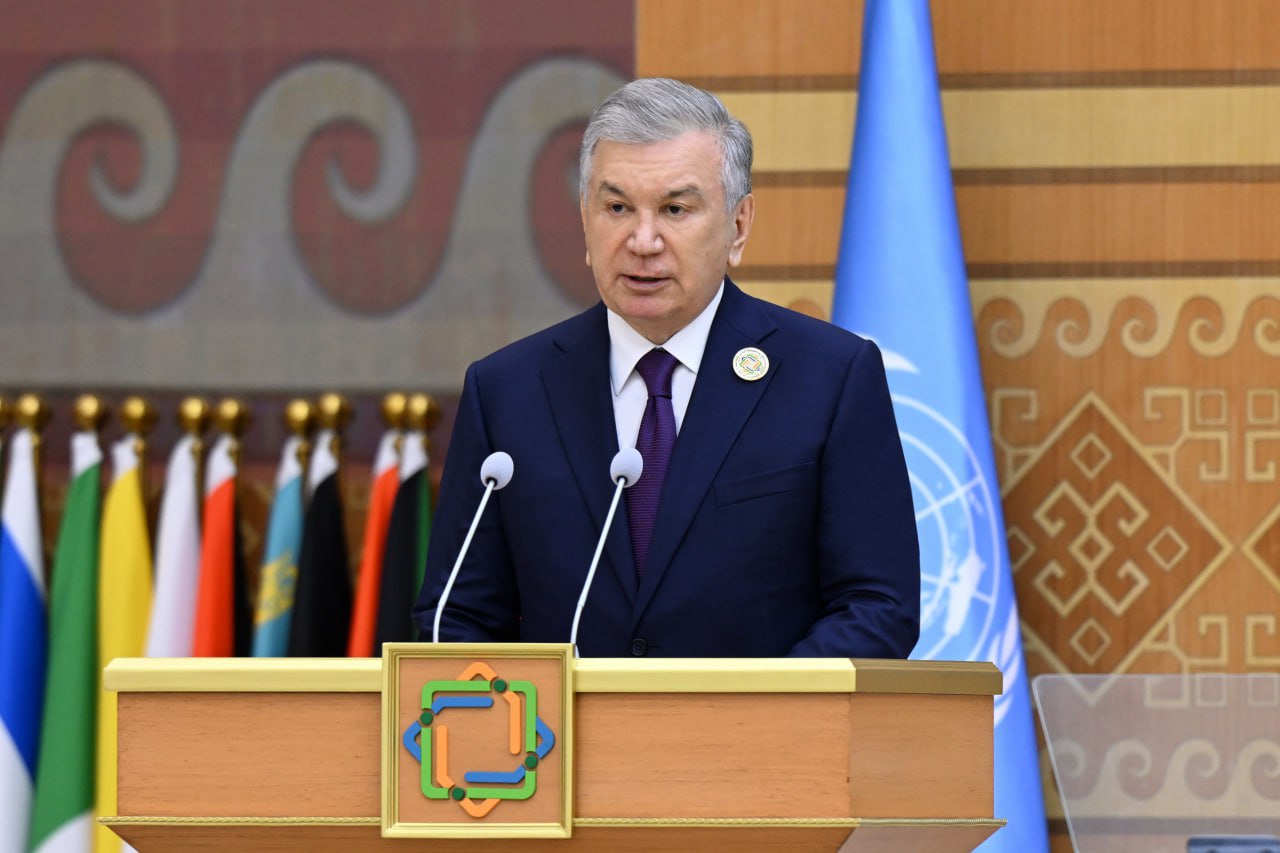
President Mirziyoyev’s message is clear: Uzbekistan is ready to lead, collaborate, and innovate—for a fairer global architecture that leaves no country behind.