Ashraf AboArafe
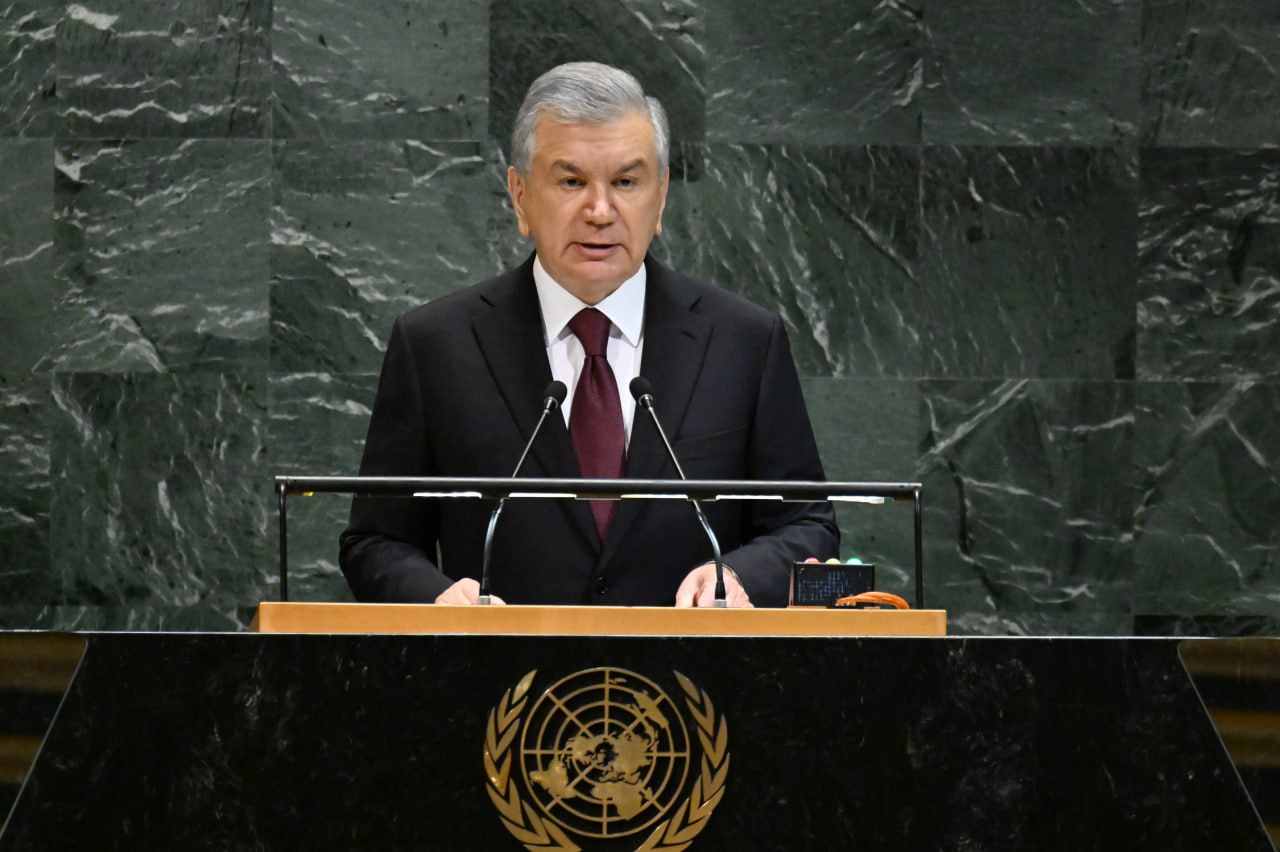
At the historic 80th session of the UN General Assembly, President Shavkat Mirziyoyev of Uzbekistan delivered a speech that wove together domestic transformation, regional cooperation, and global responsibility. His message positioned Uzbekistan not only as a nation pursuing ambitious reforms at home but also as a regional leader and global partner in addressing pressing challenges.
1. Domestic Renewal – Building the “New Uzbekistan”
Mirziyoyev highlighted sweeping reforms that have reshaped Uzbekistan over the past years. Poverty has fallen dramatically from 35% to 6.6%, driven by education reforms, high-tech industry growth, and green energy investments. Major strides were noted in education access, healthcare development, women’s empowerment, and youth opportunities. Uzbekistan’s goal, he reaffirmed, is to join the ranks of upper-middle-income countries by 2030, rooted in human dignity and sustainable development.
2. Central Asia’s Transformation – From Divisions to Unity
The President proudly declared that Central Asia has entered a “new era.” Formerly marked by closed borders and disputes, the region is now a platform of stability, cooperation, and integration. Mutual trade, investment, and infrastructure projects have grown fivefold, while consultative summits among regional leaders have become institutionalized. He proposed new UN-supported initiatives, including a green technology hub, water management programs, and economic forums under ECOSOC and UNCTAD.
3. Global Security and Humanitarian Challenges
Mirziyoyev’s speech extended beyond regionalism to urgent global crises:
- Afghanistan: He urged against isolating the Afghan people and proposed a UN resolution to support transport and energy corridors through Afghanistan.
- Gaza: He called for an immediate ceasefire and reaffirmed Uzbekistan’s commitment to the two-state solution.
- Ukraine: He welcomed dialogue and diplomacy as the only viable path forward.
- Terrorism: He proposed transforming Uzbekistan’s Regional Council on Rehabilitation and Reintegration into a global competence center.
4. Climate, Water, and Migration – The Human Dimension of Global Threats
Environmental issues stood at the heart of his appeal. The revival of the Aral Sea through large-scale reforestation, plans for a World Forum on Water Saving, and calls for a Global Pact on Climate Migration underscored Uzbekistan’s climate agenda. His emphasis reflected both local vulnerability and global solidarity.
5. Technology, Youth, and Civilization
The President also recognized inequalities in artificial intelligence access, proposing an international AI cooperation mechanism for education, healthcare, and culture. He championed the establishment of a World Youth Movement for Peace with its headquarters in Uzbekistan, and announced the opening of a Center of Islamic Civilization in Tashkent. By invoking thinkers like Imam Bukhari and Imam Maturidi, he sought to position Uzbekistan as a bridge between spiritual heritage and modern enlightenment.
Conclusion
President Mirziyoyev’s address blended pragmatism with vision: a New Uzbekistan intertwined with a New Central Asia that aspires to shape global solutions. His proposals—from AI cooperation to climate migration pacts—signal an ambition for Uzbekistan to be both a reformer at home and a convener abroad.
In a fractured world of escalating conflicts and crises, Uzbekistan’s voice at the UNGA resonated with a call for solidarity, reform, and shared human dignity.