Ashraf AboArafe
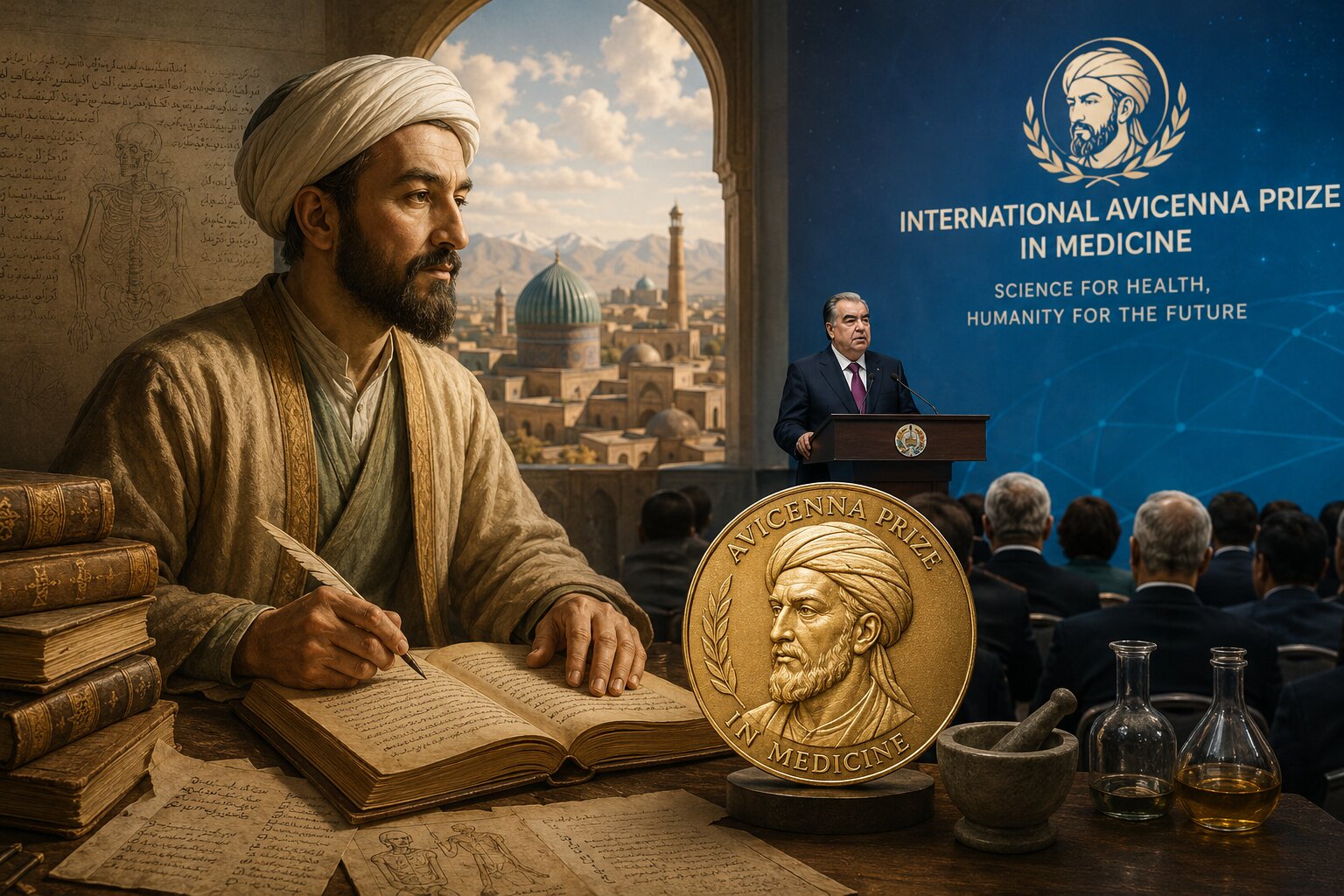
IN an era marked by growing global health challenges—from cross-border epidemics to inequalities in healthcare access—Tajikistan has chosen to revive the legacy of one of humanity’s greatest scholars, Avicenna, not merely as a historical figure, but as a beacon for the future. The decree issued by Emomali Rahmon establishing the International Avicenna Prize in Medicine represents far more than a commemorative gesture; it is a statement of scientific diplomacy and a commitment to the advancement of global health.
Avicenna: A Legacy Beyond Time and Borders
Avicenna is not remembered solely as a Tajik or Islamic scholar; he stands among the most influential figures in the history of human knowledge. His medical masterpiece, The Canon of Medicine, served as a foundational text in medical education across both East and West for centuries.
By creating an international prize bearing his name, Tajikistan bridges classical scholarship with modern scientific innovation, reaffirming that transformative ideas transcend generations and continue to shape humanity’s progress long after their creators are gone.
From National Heritage to Global Recognition
One of the most significant aspects of this initiative is its ambition to move beyond national commemoration and transform Avicenna’s name into a global platform for recognizing excellence in medical science.
The prize serves as an instrument of scientific soft power, enabling Tajikistan to contribute to international discussions on healthcare, research, and innovation. In this sense, history and culture become strategic assets, enhancing a nation’s global profile through intellectual and humanitarian leadership.
A Health Message for the Age of Pandemics
The vision behind the prize places particular emphasis on prevention and public health—areas that occupied a central place in Avicenna’s writings centuries ago.
This focus is especially relevant in the aftermath of recent global health crises, which demonstrated that investment in scientific research, disease prevention, and public health infrastructure is as important as medical treatment itself. The prize therefore celebrates not only scientific achievement but also a holistic philosophy of health that connects human well-being, environment, and society.
Dushanbe’s New Chapter in Scientific Diplomacy
The initiative reflects Tajikistan’s broader aspiration to strengthen its international presence through science and knowledge. Just as some nations are recognized for economic or military influence, Tajikistan seeks to highlight its intellectual heritage and its contribution to the development of world civilization.
The establishment of a dedicated prize fund and an institutional framework suggests that this is not a symbolic event but a long-term project designed to promote medical excellence and international cooperation.
When History Becomes a Partner of the Future
At its core, the International Avicenna Prize is not only about honoring a legendary physician; it is about demonstrating how nations can transform historical heritage into a force for future progress.
The prize revives the connection between knowledge and human responsibility, between cultural identity and international collaboration, and between the wisdom of the past and the innovations of tomorrow. In a world seeking collective solutions to increasingly complex health challenges, Avicenna’s legacy serves as a reminder that enduring wisdom can still inspire groundbreaking discoveries.
Conclusion
The establishment of the International Avicenna Prize in Medicine represents more than a tribute to a celebrated scholar. It is a strategic and humanitarian vision that places science, health, and international cooperation at the center of global development. Through this initiative, Tajikistan reintroduces Avicenna to the world—not merely as a physician of the past, but as a timeless symbol of humanity’s enduring pursuit of knowledge, healing, and progress.