ECONOMY

Analysis| Echoes of Resistance, Shadows of Power: China’s 80th Anniversary PARADE and the Politics of MEMORY

Listen to this article

Ashraf AboArafe

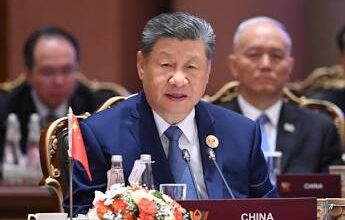
On the 80th anniversary of the victory in the War of Resistance against Japanese Aggression, President Xi Jinping declared that the struggle marked China’s first complete triumph over foreign invasion in modern history. His speech, delivered against the solemn backdrop of Tiananmen Square and amplified by the spectacle of military parades, was more than a commemoration of sacrifice—it was a reminder of how history, memory, and power are interwoven in China’s national narrative.

History as a Strategic Asset

By recalling the enormous sacrifices of the Chinese people in defeating fascism, Xi positioned China not only as a victim of past aggression but also as a savior of humanity. This framing serves dual purposes: it reinforces the legitimacy of the Communist Party as the architect of victory and casts China as a defender of peace in a turbulent international order.

The parade, showcasing everything from hypersonic missiles to cyberwarfare units, symbolized the transformation of China’s military—from a people’s army of resistance to a global force with nuclear, aerospace, and digital capabilities. The transition from bayonets to algorithms, from guerrilla bands to strategic “triads” of land, sea, and air power, embodies the arc of China’s rise.

The Politics of Peace Through Strength

Xi’s insistence on a “community of shared future for mankind” resonates as both idealistic and strategic. While he pledged China’s adherence to a path of peaceful development, the display of military might suggested an unspoken doctrine: peace is guaranteed only when backed by power. In this sense, the parade was a paradox—celebrating peace through the choreography of war machines.

Memory as Mobilization

The choreography of flags, chants of “Justice will prevail, peace will prevail, the people will prevail,” and aerial formations spelling “80” were not only patriotic rituals but instruments of political mobilization. They tied the memory of resistance to the contemporary project of “national rejuvenation,” asserting that the rebirth of the Chinese nation is irreversible.

Global Implications

Internationally, the parade conveyed three messages:

  1. To the Chinese people: the Party remains the guardian of sovereignty and dignity.
  2. To neighbors and rivals: China is a power capable of defending its interests across land, sea, air, cyber, and space.
  3. To the global order: China’s vision of peace is inseparable from its expanding strategic footprint.

Conclusion: Memory as Power

The 80th anniversary parade was not merely a tribute to the past but a projection into the future. By binding the story of resistance to the machinery of modern power, Xi crafted a message both poetic and political: that China’s destiny is forged in memory, sustained by unity, and secured by strength.

The echoes of resistance thus resound as both a reminder of sacrifice and a declaration of resolve—a narrative where history is weaponized not to repeat tragedy, but to fortify China’s place in the unfolding century.

aldiplomasy

Transparency, my 🌉 to all..

Related Articles

Back to top button