Ashraf AboArafe ✍️
The death of six U.S. Air Force personnel following the crash of a KC-135 aerial refueling tanker over western Iraq highlights the often-invisible dangers behind modern air warfare.
According to a report by The Washington Post, the aircraft went down during a combat-support mission linked to ongoing U.S. operations against Iran. The tanker was reportedly involved in an apparent midair incident with another KC-135 aircraft, which managed to land safely. All six service members aboard the crashed aircraft were confirmed dead.
The report notes that the aircraft was operating in “friendly airspace” over Iraq, and U.S. officials stressed that the crash was not caused by hostile or friendly fire, though the incident remains under investigation.
The Backbone of Air Power
The aircraft involved, the Boeing KC‑135 Stratotanker, plays a critical role in modern military operations.
Aerial refueling allows fighter jets and bombers to remain airborne for extended periods, enabling long-distance strike missions that would otherwise be impossible. In large-scale operations, tankers function as the logistical spine of the air campaign, ensuring continuous combat capability.
As reported by The Washington Post, tanker aircraft have been in exceptionally high demand since the escalation of the U.S. war with Iran, with American forces conducting thousands of strikes against missile sites, air defenses, and weapons facilities.
The Risk Behind the Mission
Aerial refueling is considered one of the most technically demanding and dangerous operations in aviation.
Two large aircraft must fly extremely close together while maintaining precise speed and altitude. The boom operator then guides the refueling probe into the receiving aircraft. Even a small miscalculation can cause structural damage or midair collision.
This operational complexity becomes even more challenging during wartime, when missions are conducted at high tempo, often at night and under operational pressure.
A Wider Pattern of Wartime Friction
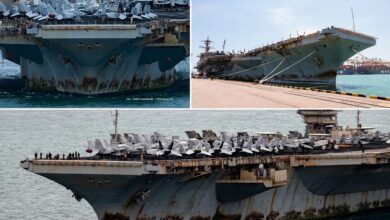
The tanker crash occurred amid a series of incidents linked to the expanding conflict. The same day, a fire was reported aboard the aircraft carrier USS Gerald R. Ford, injuring two sailors.
Earlier in the conflict, additional casualties were reported following Iranian drone strikes and operational mishaps, illustrating the unpredictable nature of large-scale military campaigns.
Such incidents often characterize the early stages of major wars, when multiple forces, technologies, and alliances operate simultaneously across a crowded battlefield.
The Unseen Cost of War
Beyond the battlefield headlines, the crash serves as a reminder that the cost of war is not measured solely in destroyed targets or strategic victories.
It is also measured in the logistical strain, operational hazards, and human risks faced daily by the crews who sustain military operations behind the scenes.
As highlighted in the report by The Washington Post, the tragedy reflects the harsh reality of modern warfare:
even far from the front line, the sky itself can become a battlefield.