Ashraf AboArafe
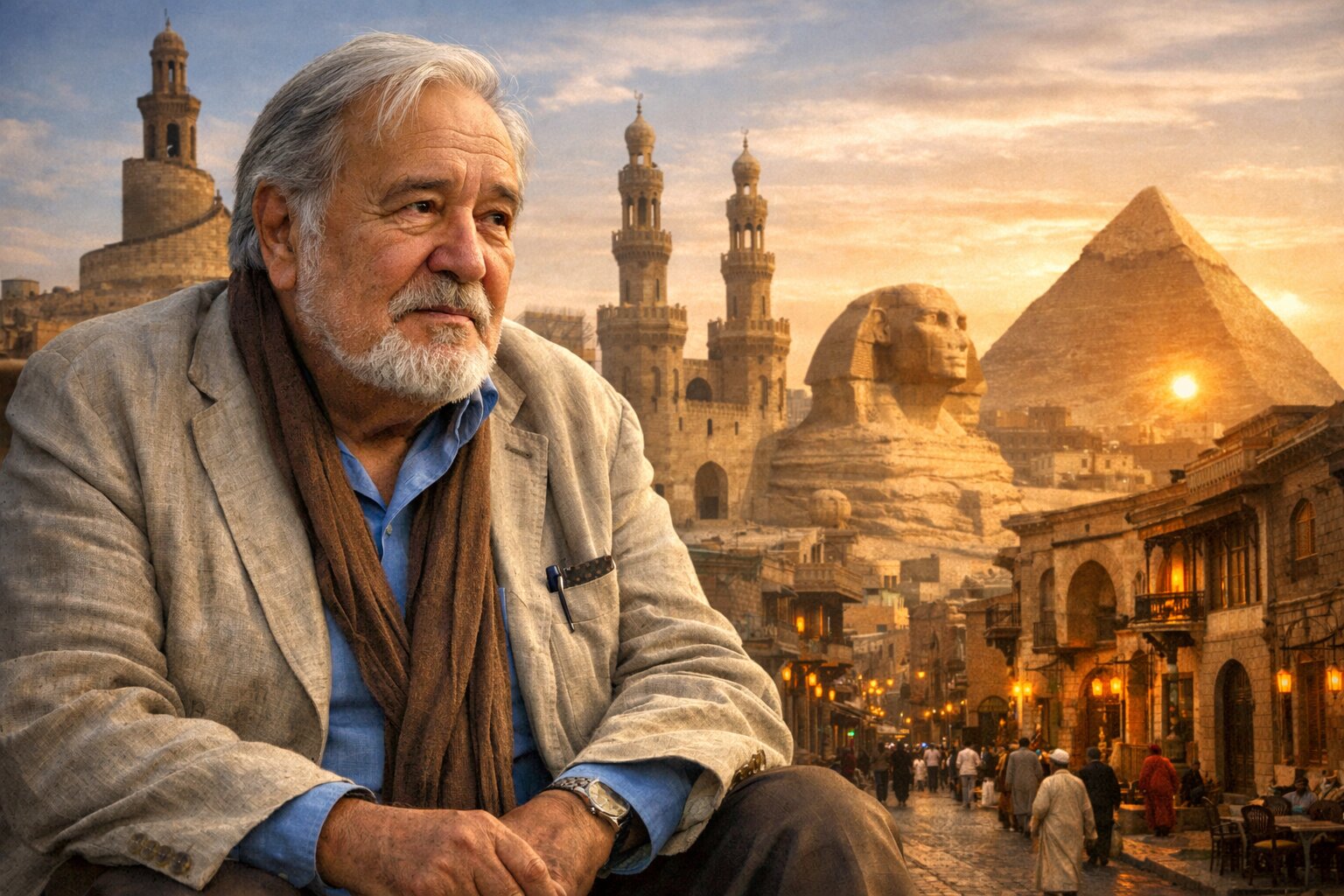
The late Turkish historian İlber Ortaylı left behind profound reflections on Egypt—thoughts that reveal not only admiration, but also a deep civilizational understanding of a land that has shaped the course of human history.
“I have not been able to visit Egypt for five years,” he once remarked. “Every time I go there, the fatigue, frustration, and melancholy I feel somehow transform—from the very moment I leave—into longing and nostalgia. There is no doubt that Egypt truly is ‘Umm al-Dunya’—the Mother of the World—and indeed the mother of the modern world.”
Long before the arrival of the Abrahamic religions, the ancient Egyptians had already developed complex ideas about the afterlife, mythology, and the rituals of death. Their intellectual achievements were remarkable: they performed the four basic mathematical operations and geometry using methods that were often simpler and more practical than those of the Greeks. Even the word “chemistry” traces its origins to “Khemia,” the ancient name of Egypt itself.
Egypt, Ortaylı argued, was also one of the earliest architects of public health and hygiene. In ancient Egyptian society, everything was regulated with striking precision, from manicures and pedicures for cleanliness to carefully organized dietary lists. The scientific study of anatomy through cadavers—often associated with medieval European universities such as University of Padua and University of Bologna—was in fact practiced much earlier by Egyptian priests, who examined the human body during the sacred process of mummification.
When the Roman Empire eventually took control of Egypt, it did not merely conquer territory; it inherited a functioning administrative and financial system. The Romans themselves learned land measurement and taxation systems from the Egyptians, acquiring from them key elements of a structured and organized state.
Contrary to the common narrative that civilization began in Greece, Ortaylı emphasized that civilization’s earliest roots lie in Mesopotamia. Yet the extraordinary continuity and stability provided by the Nile River and its fertile delta created something unique: a magnificent and enduring civilization—Egypt.
“In truth,” he said, “whether you wish it or not, whether you realize it or not, we are all Egyptians—because this is ultimately a question of civilization.”
Egypt, he believed, possesses an almost mystical capacity for renewal.
“Egypt knows how to rise again,” he wrote. “It is a country that never truly dies.”
Signs of this renewal appear even in the most unexpected corners of the country.
In the historic neighborhoods of Cairo, restoration efforts continue to breathe life into centuries-old architecture. Among the most notable examples is the restoration of Mosque of Ibn Tulun, a monument dating back to the ninth century.
Nearby stands Bab Zuweila, from which begins the legendary Al-Muizz Street—arguably the most picturesque street in Cairo. Lined with monuments from the Mamluk and Ottoman eras, it forms a living corridor of Islamic architectural history.
When Napoleon Bonaparte invaded Egypt at the beginning of the nineteenth century, the city contained around 700 sabil-kuttabs—public water fountains combined with small neighborhood schools. Among the finest examples stands the Sabil of Muhammad Ali Pasha, built above a water cistern and reflecting a late Ottoman architectural renaissance.
Next to such fountains were small schools where children studied the Qur’an, basic mathematics, and foundational knowledge, often learning in cool, shaded spaces during the summer months.
The Sabil of Muhammad Ali was among the largest of these institutions. Ortaylı suggested that it would not be an exaggeration to say that Egypt’s modern renaissance began in places like this.
Within these modest educational spaces, children studied Arabic, Turkish, mathematics, history, geography—and notably—even English.
For Ortaylı, these details illustrated a larger truth:
Egypt’s civilization is not merely ancient history—it is a living continuum, constantly renewing itself across the centuries.