shraf AboArafe
1. A Strategic Emergency Meeting
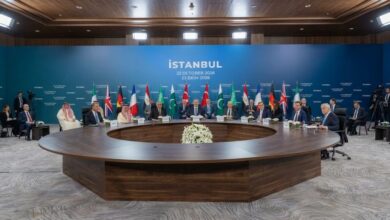
In a rapidly escalating regional crisis, Ursula von der Leyen and António Costa convened a high-level video conference with leaders from across the Middle East to address the widening war involving Iran and its regional repercussions.
The meeting included leaders from Egypt, Jordan, Saudi Arabia, United Arab Emirates, Qatar, Türkiye, Iraq, Kuwait, Oman, Bahrain, Lebanon, Syria, and Armenia, reflecting a rare moment of collective consultation between Europe and a geographically diverse regional bloc.
The gathering signals that the conflict involving Iran is no longer viewed as a localized confrontation but rather as a systemic geopolitical crisis affecting global energy flows, maritime security, and the stability of the international order.
2. Europe’s Diplomatic Message: Condemnation and Containment
The European leadership delivered a strong condemnation of what it described as “indiscriminate attacks by Iran.” This language reflects the EU’s attempt to frame the conflict within the broader discourse of international law and regional security.
At the same time, the European position reveals a dual strategy:
- Political pressure on Iran, particularly regarding its nuclear and ballistic missile programs.
- Diplomatic engagement aimed at restoring negotiations.
This approach mirrors the EU’s longstanding doctrine: contain escalation while preserving diplomatic channels.
By reiterating calls for Iran to halt its nuclear program, Brussels is effectively reinforcing its alignment with the broader Western security agenda, while attempting to maintain its reputation as a mediator rather than a military actor.
3. The Energy Shock: Hormuz as the World’s Pressure Valve
One of the most critical issues discussed during the conference was the potential closure of the Strait of Hormuz, the narrow maritime corridor through which nearly one-fifth of the world’s oil supply passes.
Any disruption in this waterway would have cascading consequences:
- Global oil price spikes
- Supply chain disruptions
- European energy insecurity
- Inflationary pressure on global markets
This explains why the EU highlighted its maritime missions:
- Operation Aspides
- Operation Atalanta
Originally designed to protect shipping lanes from piracy and militia threats, these missions may now evolve into strategic energy security operations.
4. Lebanon: The Humanitarian Fault Line
Among the most alarming humanitarian consequences of the war is the destabilization of Lebanon, already struggling with severe economic collapse and political paralysis.
The EU announced an emergency humanitarian initiative through ReliefEU, aiming to support approximately 130,000 displaced civilians.
This move reflects a broader European concern:
Lebanon could become the first civilian epicenter of the regional war, triggering mass displacement and potentially another refugee crisis affecting Europe.
5. Europe’s Hidden Concern: Strategic Relevance
Beyond humanitarian and diplomatic rhetoric lies a deeper geopolitical motivation.
The war risks reshaping the balance of power in the Middle East, where Europe has increasingly struggled to maintain influence compared with:
- the United States
- Russia
- and China
By convening this large regional consultation, Brussels is attempting to reassert itself as a diplomatic anchor between Gulf states, Mediterranean countries, and the international system.
In essence, Europe is signaling:
If war reshapes the Middle East, Europe intends to remain part of the equation.
6. The Larger Geopolitical Meaning
This joint statement reflects three major geopolitical realities:
1. The Iran conflict has become a global energy crisis.
Control of maritime chokepoints and energy infrastructure now sits at the center of international diplomacy.
2. The Middle East remains the hinge of the international order.
From energy flows to refugee movements and security alliances, the region continues to shape global stability.
3. Europe is attempting a diplomatic comeback.
Faced with a fragmenting world order, Brussels is trying to revive multilateral diplomacy before the crisis spirals into a broader regional war.
Final Insight
The video conference was not merely a diplomatic exchange—it was a signal of geopolitical alarm.
As tensions with Iran deepen and the threat to the Strait of Hormuz looms larger, the European Union is positioning itself as both mediator and guardian of global energy stability.
But the ultimate question remains:
Can diplomacy still restrain a conflict that is rapidly transforming into a struggle over the future balance of power in the Middle East?