✍️ Ashraf AboArafe
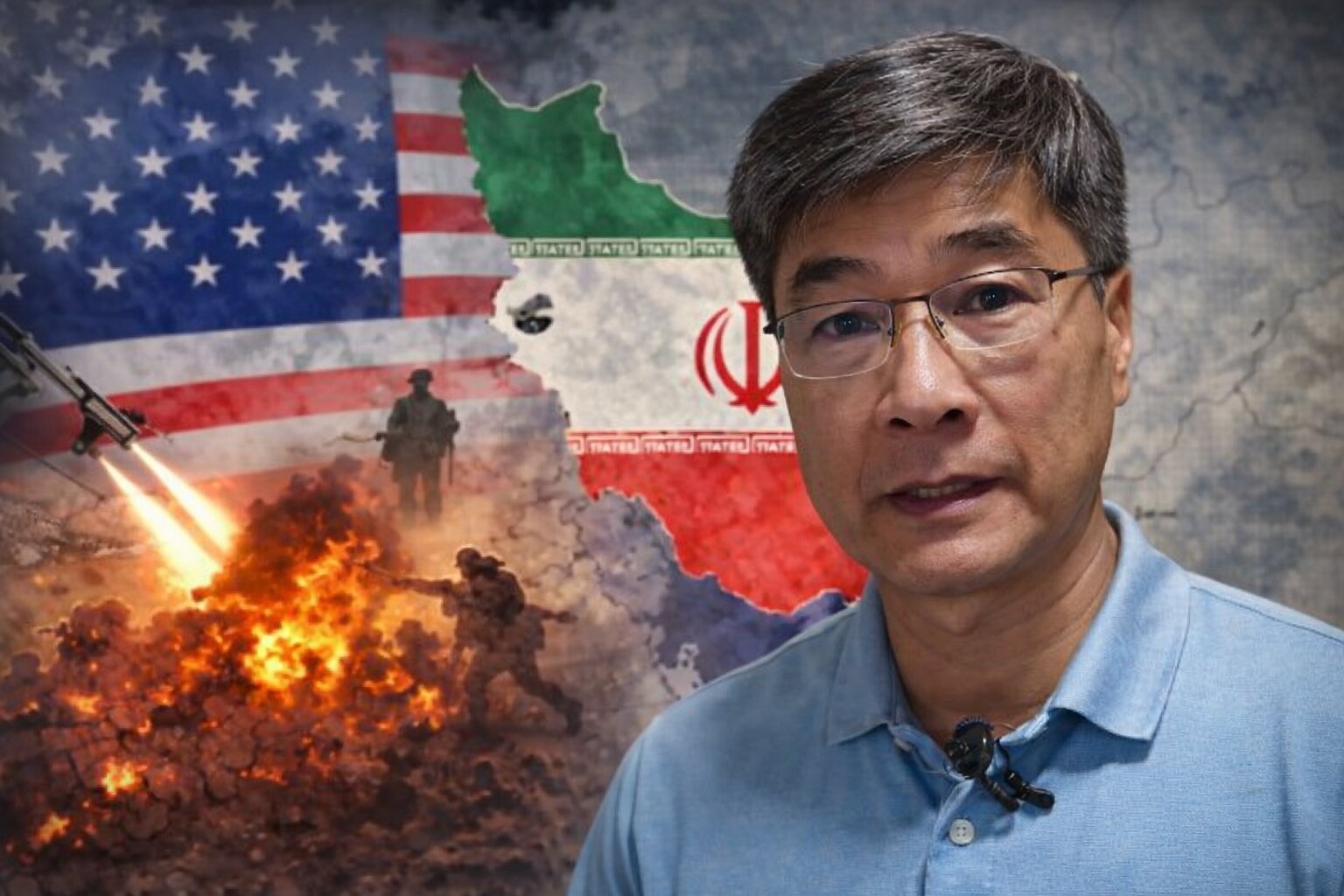
SPEAKING in a televised interview on the political program **Breaking Points**, Jiang argued that such a conflict could “reshape the global balance of power and accelerate the emergence of a multipolar world order”..
A Viral Prediction Sparks Global Debate
A striking television interview has ignited intense geopolitical discussion after Professor Jiang Xueqin, a Chinese-Canadian historian and geopolitical analyst, warned that the United States could ultimately lose a war with Iran—an outcome he believes could reshape the global order.
The prediction was made during an appearance on the independent political program Breaking Points, where Jiang outlined what he described as three major geopolitical forecasts based on his analysis of long-term historical patterns.
According to Jiang, the three predictions were:
- Donald Trump would return to power in the United States.
- The United States would enter into a military confrontation with Iran.
- The United States would ultimately lose that war, triggering a historic shift in the balance of global power.
While the first two predictions have already generated wide debate, it is the third forecast that has drawn the most attention across international media.
A War of Attrition, Not a Short Conflict
During the interview, Jiang argued that the conflict between Washington and Tehran would likely evolve into a prolonged war of attrition rather than a quick military campaign.
According to his assessment, Iran possesses several strategic advantages:
- Two decades of preparation for a potential confrontation with the United States.
- A network of regional allies and proxy forces capable of expanding the battlefield.
- Experience in asymmetric warfare, designed to counter technologically superior militaries.
He emphasized that Iran’s military doctrine is built around endurance, economic disruption, and strategic patience, rather than conventional battlefield dominance.
The Economic Battlefield
One of Jiang’s most striking claims was that the conflict would extend far beyond traditional warfare.
He argued that Iran’s strategy could involve targeting the global economic infrastructure connected to the Gulf region, including:
- Energy production facilities
- Oil export routes such as the Strait of Hormuz
- Critical infrastructure in Gulf countries
- Water desalination plants that sustain urban populations
According to Jiang, disrupting these systems could create massive economic ripple effects, threatening both regional stability and global markets.
The Asymmetry of Modern Warfare
Another key argument raised during the interview concerns the economic imbalance between offensive and defensive military technologies.
Jiang pointed to examples where:
- Relatively inexpensive drones costing tens of thousands of dollars
- Can force the deployment of interceptor missiles costing millions
This imbalance, he argued, makes prolonged conflict financially unsustainable for technologically advanced militaries.
In his view, such asymmetry is one of the defining characteristics of 21st-century warfare.
The Petrodollar and the Global Financial System
Jiang also linked the potential conflict to broader economic dynamics, arguing that the Gulf region plays a central role in the global financial system.
He highlighted that Gulf oil revenues—often referred to as “petrodollars”—have historically been recycled into international financial markets, including investments in the United States.
According to his analysis:
- Energy markets support the global financial architecture.
- Gulf investments contribute significantly to Western financial ecosystems.
- Any major disruption in Gulf stability could therefore impact global economic balance.
A Possible Shift Toward a Multipolar World
Perhaps the most consequential element of Jiang’s analysis is his belief that such a conflict could accelerate the transition toward a multipolar global system.
For decades, international relations have largely been shaped by American geopolitical dominance following the end of the Cold War.
However, Jiang argues that prolonged geopolitical and economic disruptions could weaken this structure and open the door for emerging powers to reshape the international order.
In his words, such developments would represent “a reordering of global power not seen in generations.”
The Ground Troops Dilemma
The interview also addressed a major strategic question: whether air power alone could achieve political objectives such as regime change.
Historical precedent suggests that major political transformations in wartime have rarely occurred without ground operations.
This raises a difficult dilemma:
- Deploying ground forces could significantly escalate the conflict.
- Avoiding such a step could limit the strategic effectiveness of military operations.
The debate remains hypothetical for now, but analysts agree that such decisions would carry immense geopolitical consequences.
A Forecast That Is Fueling Global Discussion
Professor Jiang’s comments have since spread widely across social media and geopolitical forums, with supporters and critics alike debating his conclusions.
While some analysts consider his predictions provocative but speculative, others believe his arguments highlight real structural vulnerabilities in modern geopolitical systems.
Regardless of the outcome, the interview has added momentum to a growing global discussion about the future balance of power in the 21st century—and whether the world may indeed be moving toward a new geopolitical era.
*** Who Is Professor Jiang?
The analyst behind the controversial forecast is Professor Jiang Xueqin, a scholar known for applying historical patterns to modern geopolitical developments.
Key personal and professional data:
Full name: Jiang Xueqin
Year of birth: 1976
Place of birth: Guangdong, China
Citizenship: Canadian
Education: Bachelor’s degree in English Literature from Yale University (1999)
Profession: Educator, historian, and geopolitical commentator based in Beijing
Jiang has been involved in international education initiatives and has collaborated with projects linked to the Harvard Graduate School of Education. He is also known for his analytical platform “Predictive History,” where he discusses global trends and strategic forecasting.
His work often focuses on power transitions in international politics, economic structures, and the historical cycles of empires.