Ashraf AboArafe
Asyad Group has announced a series of qualitative leaps in trade exchange between the Sultanate of Oman and the Republic of India over the period from 2020 to 2024—gains that reflect the direct impact of the group’s strategic vision and advanced logistics initiatives. Through its integrated asset network, Asyad has worked to stimulate bilateral trade and streamline the flow of goods between the two friendly nations.
According to statistical indicators released by the group, trade growth has followed a steady upward trajectory, underscoring the operational efficiency of direct maritime shipping routes. India’s direct imports via Omani ports recorded a compound annual growth rate (CAGR) of 19.8%, while Omani exports to India through Omani ports achieved a 16% CAGR over the same period.
Direct imports from India into Oman also rose markedly—from 75% in 2020 to 88% in 2024—highlighting the growing reliance of both Omani and Indian business communities on the direct shipping channels provided by Asyad, in cooperation with its strategic partners among global shipping lines.
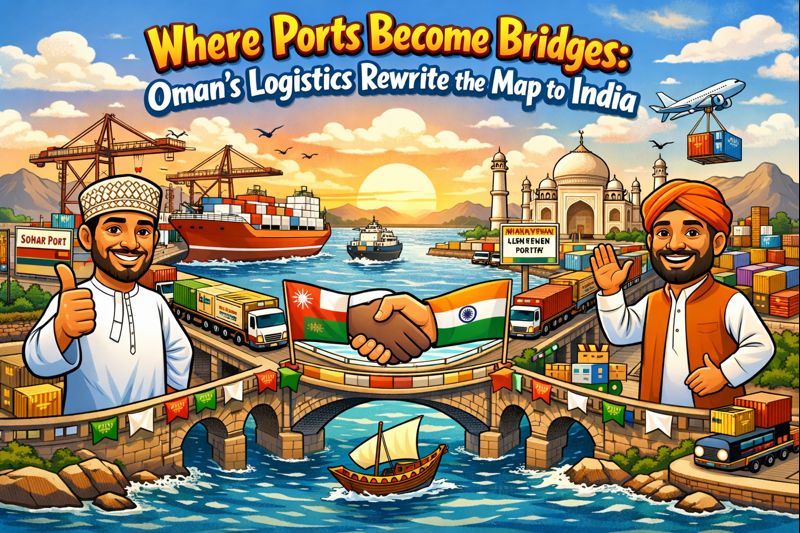
This momentum is largely attributed to a suite of high-impact logistics initiatives launched by Asyad to enhance supply chain resilience and efficiency. These include the introduction of regular, direct maritime services linking Omani ports—Sohar, Duqm, and Salalah—with key Indian ports such as Mundra, Nhava Sheva, Hazira, and Jawaharlal Nehru Port. These routes have significantly reduced transit times and costs, strengthening the competitiveness and appeal of direct trade between the two countries.
Further reinforcing this ecosystem, Asyad established international consolidation centers and unified purchase order management operations in India, anchored by its main hub at Nhava Sheva Port, alongside branch centers in Chennai, Ahmedabad, Mumbai, Delhi, and Bengaluru. These facilities deliver integrated, efficient logistics solutions that streamline supply chains and consolidate procurement, leveraging Asyad’s expanding international asset base following its acquisition completed last year.
The role of Khazaen Dry Port has also been activated to facilitate direct imports for Oman’s business community, offering partial-load (LCL) shipping solutions from India. This has accelerated cargo arrival times and invigorated both domestic and cross-border trade flows.
Through the full deployment of its logistics assets—including seaports, maritime transport, free and economic zones, integrated logistics services, and cold-chain solutions—Asyad Group continues to enable direct trade via Omani ports and support the sustained growth of Omani–Indian trade relations.
This strategic trajectory directly contributes to the objectives of Oman Vision 2040, advancing economic diversification, expanding strategic trade partnerships, and consolidating the Sultanate of Oman’s position as a leading regional hub connecting India with global markets.