The Arabic-language al-Akhbar newspaper reported on Saturday that Blackwater, along with other security firms, has returned to Iraq since the start of 2018 after Washington’s heavy pressures on Baghdad to issue a relevant license.
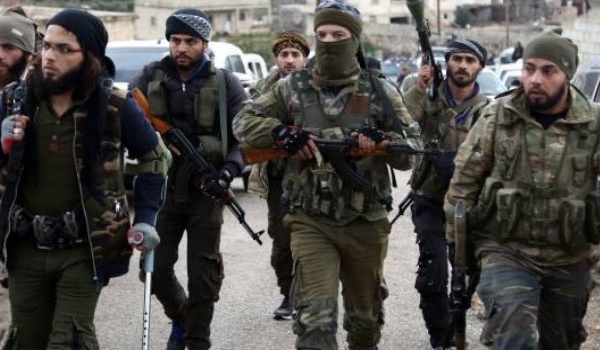
According to the report, a source close to the US charge de affairs in Iraq Judy Hood said that Blackwater has transferred the US military equipment from Jordan to Western al-Anbar province in full coordination with Ein al-Assad base, adding that the company is now training the ISIL terrorists in the base.
Meantime, al-Akhbar quoted field sources as saying that trucks carrying ISIL militants, escorted by the US vehicles, were transferred from the town of Baqouz in Deir Ezzur to Ein al-Assad amid clashes in Baqouz region.
Iraq’s security experts had earlier accused the US of training hundreds of ISIL terrorists in Al-Anbar province after relocating them from Syria to Iraq to prepare them for a new round of insecurity in the country.
“Between 700 to 1,000 ISIL militants are being trained by the US troops in al-Anbar province,” the Arabic-language al-Maloumeh news website quoted Head of Badr Organization’s Office in Al-Anbar Province Qusai al-Anbari as saying in March.
He pointed to the special conditions considered for the ISIL militants, and said that the US troops have specified redlines for third parties to avoid approaching the region.
This is while the Arabic-language Arabi Post recently disclosed that the US troops had been intensively training the ISIL terrorists in two military bases of Ein al-Assad and al-Habanieh in al-Anbar province under name of desert ghosts.
The sources said the US Army troops had equipped the ISIL terrorists with 200 military and non-military vehicles.