By dr. Ahmed Mostafa
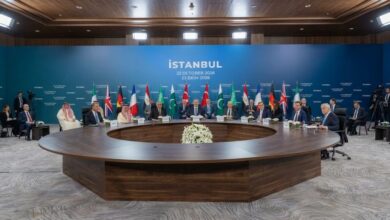
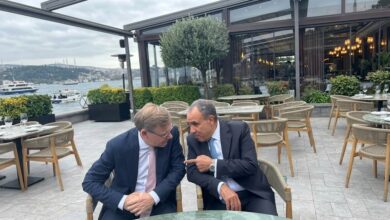
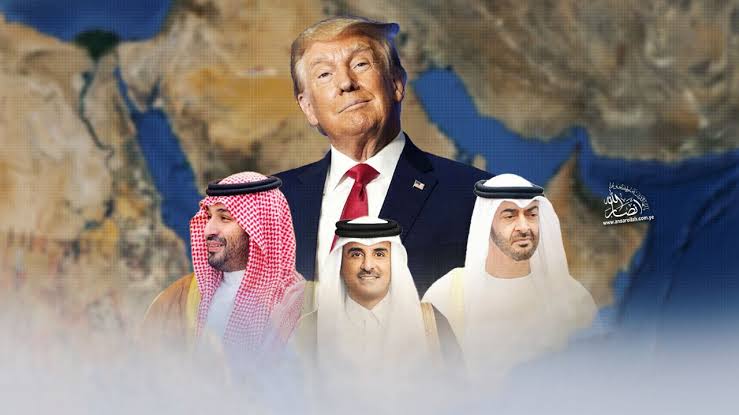
Donald Trump’s recent visit to the Gulf states—Saudi Arabia, Qatar, and the UAE—comes at a critical geopolitical juncture. It coincides with sensitive U.S.-Iran nuclear negotiations in Muscat, and the potential for a high-stakes trilateral meeting with Vladimir Putin and Volodymyr Zelenskyy in Istanbul. This convergence of events signals Washington’s attempt to reassert its influence amid rising regional and global instability.
The Gulf tour underscores the strategic importance of oil-rich Gulf states in counterbalancing Iranian influence and securing energy stability. Yet, the Gulf’s current geopolitical stature is markedly different from what it was in 2008. Today, these states maintain diversified alliances with powers like China and Russia, reducing their historical dependence on Washington. However, despite their growing clout, Gulf leaders have failed to leverage their economic influence to pressure the U.S. into adopting a more just stance on the Palestinian issue—a stark contradiction that continues to raise questions about priorities and political will.
In economic terms, the $2 trillion rescue package reportedly offered by the GCC to support a debt-ridden United States (now burdened with nearly $40 trillion in debt) mirrors the financial assistance extended in 2008. Yet the dynamics have shifted. Back then, the U.S. held unrivaled global supremacy; today, it grapples with internal division and international pushback. Gulf officials argue that the bailout is not a betrayal of Palestine, but rather a pragmatic move to avoid a financial collapse akin to the 2008 crisis, protecting their own investments and regional stability.
Meanwhile, Egypt’s resolute stance on the Palestinian cause stands in sharp contrast. Under President Abdel Fattah El-Sisi, Egypt has rejected all attempts to forcibly displace Gazans, even at the expense of diplomatic friction with the U.S. El-Sisi’s decision to decline two invitations from Trump—one to Washington and another to Riyadh—demonstrates a commitment to sovereignty and regional justice over transactional diplomacy. His attendance at Russia’s Victory Day in 2025 alongside Putin and Xi Jinping also signals Egypt’s strategic pivot toward a multipolar global order.
Trump’s controversial suggestion to relocate Gaza’s population to Libya has further fueled outrage. Critics, including Russian Foreign Ministry spokeswoman Maria Zakharova, likened his erratic approach to that of impulsive European leaders. While some speculate—unconfirmed—that Trump’s behavior may be influenced by substance use, the broader concern is his apparent detachment from geopolitical realities.
Recent military setbacks for Trump’s regional allies, notably the successful Houthi strike on Israel’s Patriot and THAAD defense systems near Ben Gurion Airport, have exposed critical vulnerabilities in defense strategies long promoted by Trump. These failures not only undermine his credibility but also question the effectiveness of U.S. defense exports as tools of strategic influence.
Globally, Trump faces mounting opposition. His Gaza relocation proposal has been strongly rejected by a bloc of countries including Russia, China, Indonesia, Malaysia, Brazil, South Africa, Egypt, Iran, and Pakistan—highlighting both the humanitarian risks and the geopolitical destabilization such a move would trigger. This unified front reflects the U.S.’s increasing isolation under Trump’s leadership.
Additionally, the Gulf’s financial support for Trump’s broader agenda has ignited ethical and political concerns. Critics argue that this backing enables Netanyahu’s continued aggression in Gaza, fueling a humanitarian crisis under the guise of targeting Hamas. The Gulf’s alignment with Trump, they warn, risks moral complicity and regional fallout.
Finally, Trump’s return to Washington offers little comfort. He faces three strategic adversaries: China in Geneva over trade disputes, Russia in Istanbul over Ukraine, and Iran in Muscat regarding the nuclear deal. Each of these powers is diplomatically agile, economically stable, and strategically aligned. In contrast, the U.S. appears disjointed and reactive, often undermined by internal discord and strategic inconsistency.
In essence, Trump’s Gulf visit does not signal renewed American leadership but rather underscores the challenges facing a waning superpower in a world rapidly shifting toward multipolarity.