Dr. Ahmed Mostafa ✍️
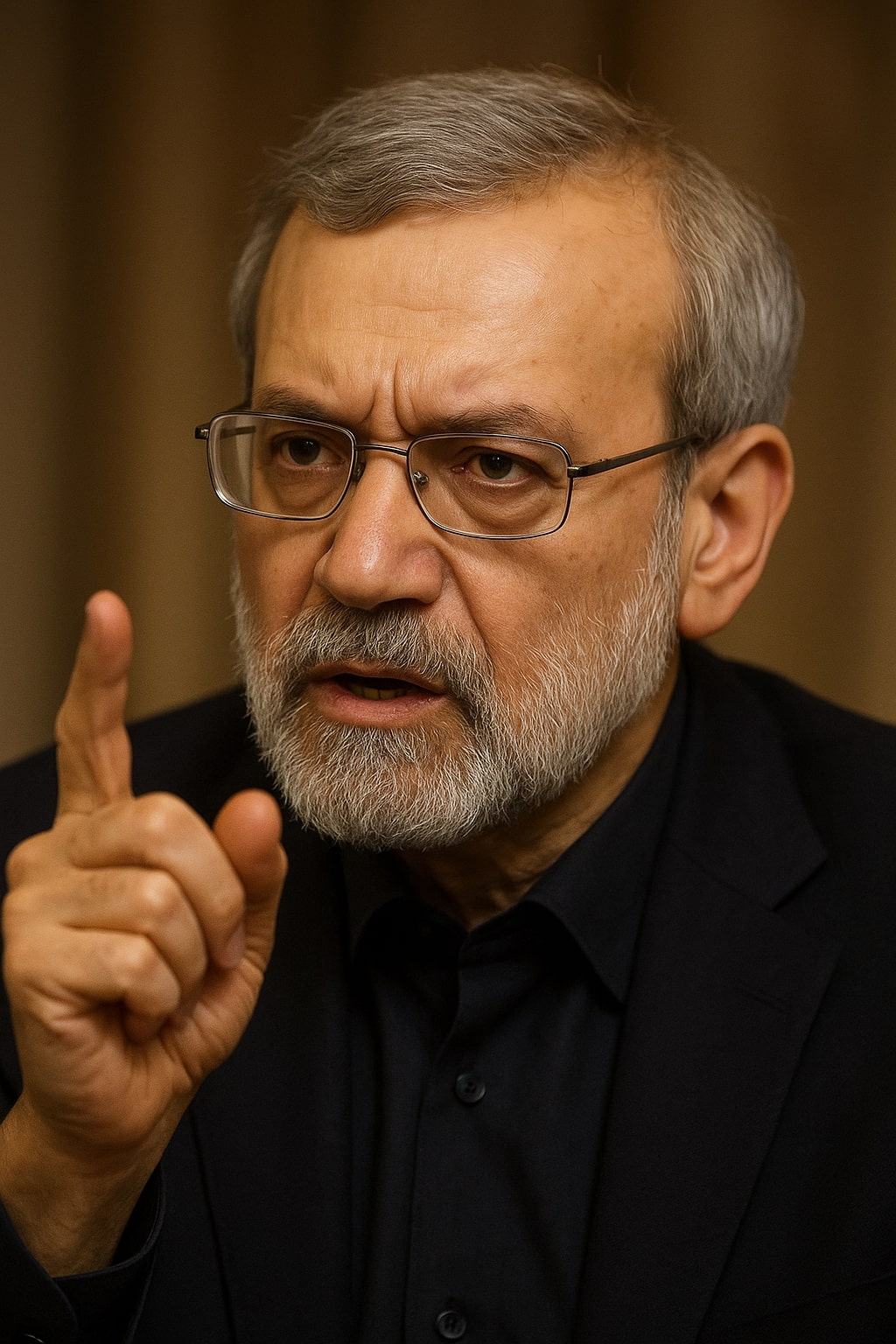
In a political scene hinting at major shifts in the regional balance of power, the visit of Dr. Ali Larijani, Secretary of Iran’s Supreme National Security Council, to Iraq and Lebanon underscored Tehran’s determination to cement its influence and build a unified resistance front—despite Western pressure and attempts to impose new realities following Israel’s recent military setbacks against Iran.
In Baghdad, Larijani directly confronted U.S. and Israeli demands to disarm resistance factions, calling the move a capitulation to Zionist aggression. In Beirut, he met with senior Lebanese leaders, reaffirming Iran’s non-interference policy and blaming Israel and its allies for destabilizing Lebanon, citing over 1,000 Israeli airspace violations since the start of 2024.
The visit carried strong symbolic weight, coinciding with the Arbaeen commemoration of Imam Hussein, drawing parallels between historic Karbala and the current tragedy in Gaza, reinforcing Iran’s narrative of resisting oppression and foreign domination.
In an interview with Al Mayadeen, Larijani dismissed any prospect of nuclear negotiations without written guarantees from Washington, citing the U.S. withdrawal from the JCPOA in 2018 and demanding compensation for damages sustained during recent Israeli attacks.
He also recalled Iran’s recent 12-day confrontation with Israel as proof of its resilience, noting that Tehran’s network of alliances—from Iraq to Lebanon and Yemen—remains intact and effective. With 80% of Iranians supporting the government’s resistance policy, he emphasized the need for Islamic and Arab unity, praising improving ties with Egypt despite American interference, and calling for an Arab–Islamic alliance to counter Israel and balance Western influence.
Larijani’s criticism of the West was scathing: he accused the U.S. and Europe of double standards, demanding the disarmament of resistance forces while providing Israel with $3.8 billion in annual military aid. He also highlighted strategic partnerships with Russia and China as a cornerstone for a multi-polar world order that challenges U.S. hegemony.
Concluding his trip, Larijani urged the formation of a united Arab–Islamic resistance front, arguing that Gaza’s humanitarian catastrophe—with over 60,000 Palestinian casualties since 2023—should serve as a rallying point against oppressive power structures. Despite the strength of his message, the interview’s delivery by Ghassan Ben Jeddou drew debate over media neutrality and its role in shaping geopolitical narratives.