Ashraf AboArafe writes ✍️
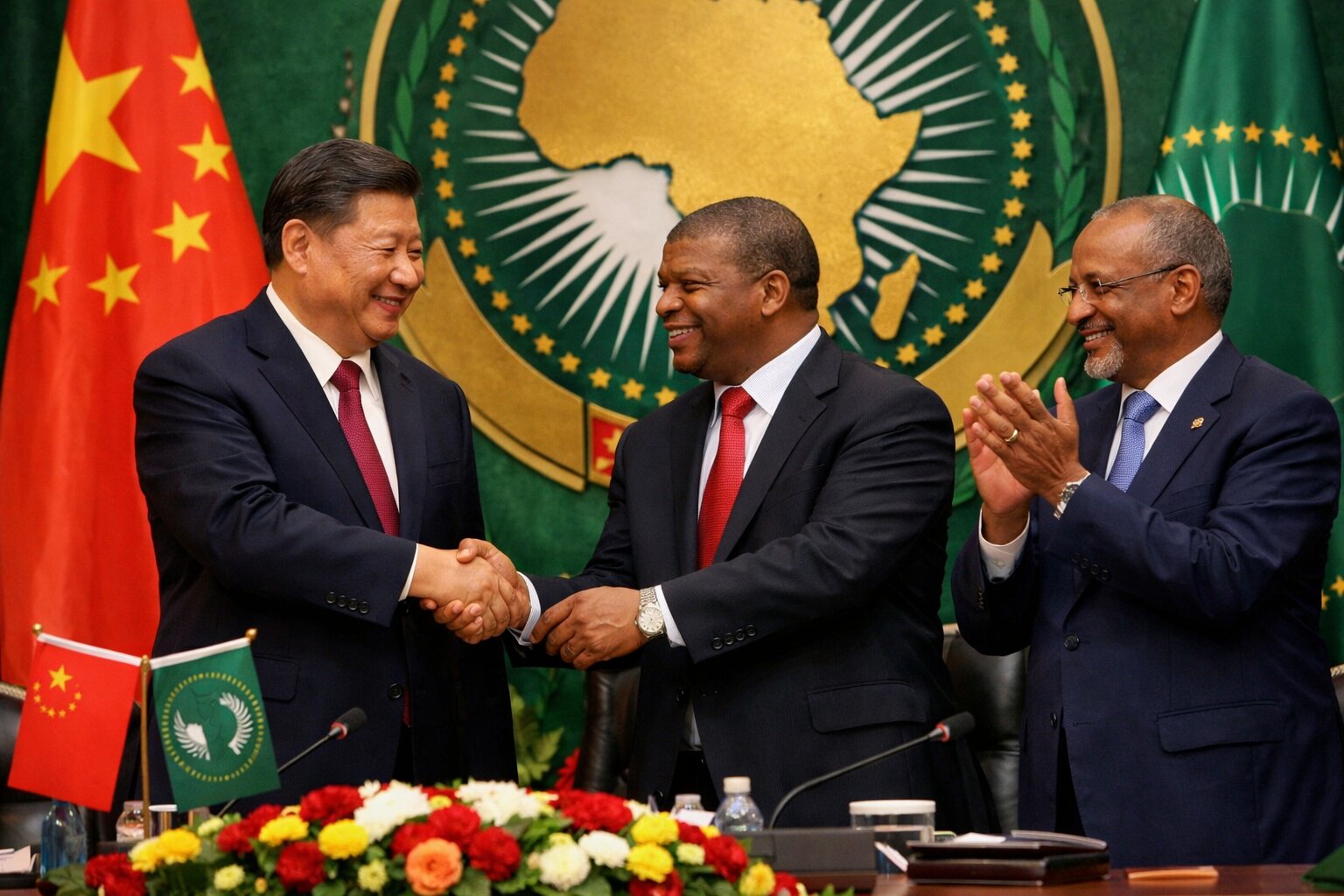
COMMENTING on a report published by Xinhua News Agency, Chinese President Xi Jinping marked the 39th African Union Summit with a congratulatory message that was far more than ceremonial. Addressed to Joao Lourenco, the rotating chairperson of the African Union, and to Mahmoud Ali Youssouf, the note reflects a broader geopolitical recalibration—one in which Africa is no longer peripheral, but central to the architecture of the emerging global order.
The Global South Ascendant
Xi’s message situates Africa within the rising momentum of the Global South, emphasizing that “accelerated changes unseen in a century” are reshaping international dynamics. This framing aligns with Beijing’s narrative that Western dominance is waning while multipolarity gains ground. Africa, in this vision, is not a passive arena of competition but an active pole of influence.
By praising the AU’s unity and its assertive defense of Africa’s rights, China signals endorsement of continental integration as a stabilizing and empowering force. It is a subtle but important reinforcement of African agency at a time when global turbulence—from economic fragmentation to geopolitical rivalries—demands cohesive regional blocs.
Zero Tariffs, Maximum Symbolism
The headline announcement—zero-tariff treatment for 53 African countries beginning May 1, 2026—carries both economic and symbolic weight. Economically, expanded access to the vast Chinese market promises diversification opportunities for African exporters, particularly in agriculture and manufactured goods.
Symbolically, it reinforces China’s positioning as a development partner rather than a hegemonic actor. By coupling tariff elimination with enhanced “green channels” and economic partnership agreements, Beijing underscores its narrative of “shared modernization”—a phrase that resonates strongly in African policy circles seeking industrial transformation without dependency.
Seventy Years, One Narrative
Xi’s reference to the 70th anniversary of China-Africa diplomatic relations is not nostalgic—it is strategic. The shared history of anti-colonial solidarity and South-South cooperation remains a powerful rhetorical anchor. It allows China to frame its current engagement as the continuation of a historic bond rather than a transactional pivot.
The concept of an “all-weather China-Africa community with a shared future” is the culmination of this messaging. It projects permanence, resilience, and ideological alignment in an era of uncertainty.
Between Opportunity and Strategy
For Africa, China’s expanded opening offers tangible opportunities: export growth, infrastructure financing, and technological collaboration. Yet it also raises strategic questions about trade balance sustainability, debt structures, and industrial competitiveness.
For China, the message to the AU is equally clear: as the global chessboard shifts, Africa is not merely a partner—it is a cornerstone.
At the 39th Summit, the diplomatic language may have been congratulatory, but the subtext was unmistakable: the Dragon and the Continent are writing the next chapter of multipolar history together.