Ashraf AboArafe writes
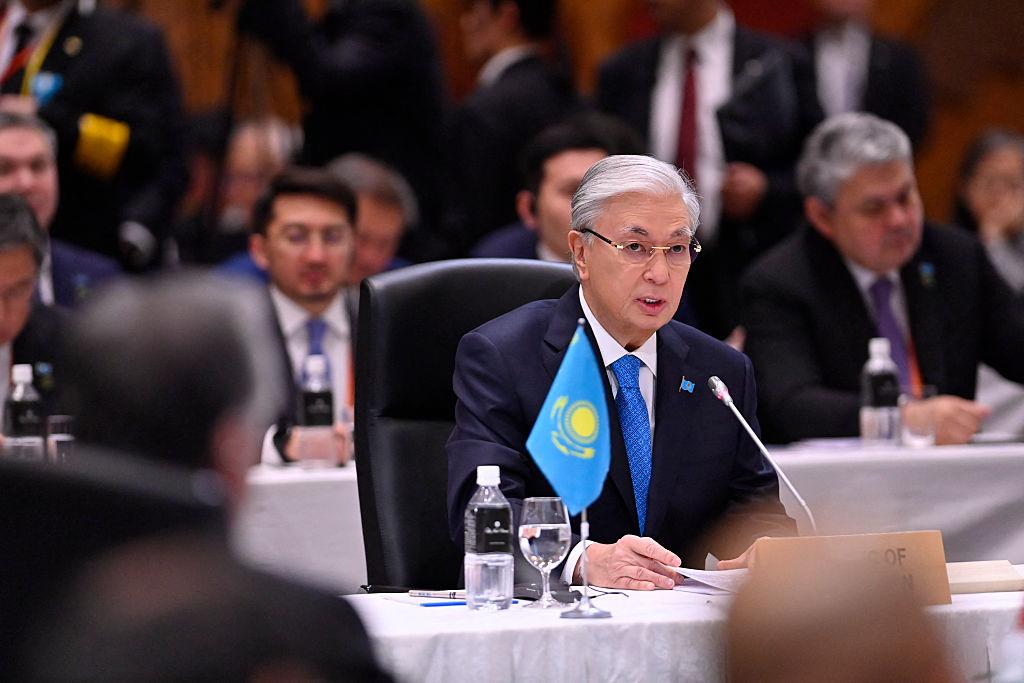
AT a time when the international system is undergoing profound transformation, Kassym-Jomart Tokayev has positioned himself at the center of a new diplomatic narrative—one grounded not in illusion, but in political maturity.
Tokayev’s approach reflects a clear doctrine:
- Order must rest on the rule of law.
- Commitments must be predictable.
- Responsibility must replace ambiguity.
- Cultural and national identities must be respected.
This is not isolationism. It is strategic realism.
From Symbolic Diplomacy to Deliverable Results
For decades, global conflict resolution has been trapped in cycles of negotiations, declarations, and conferences that produced symbolic progress but little tangible change. Peace processes often became processes without peace.
Tokayev recognizes that the world can no longer afford diplomacy without delivery.
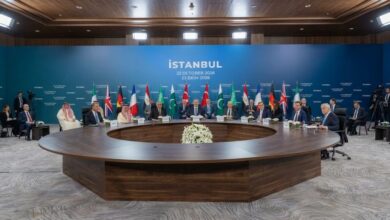
That is why Kazakhstan’s support for the creation of the Board of Peace—initiated by U.S. President Donald Trump—marks more than a procedural endorsement. It represents alignment with a new logic: peace must be built, not merely proclaimed.
The innovative core of this initiative is clear—peace through sustainable economic development:
- Infrastructure
- Investment
- Job creation
- Technology transfer
In this framework, peace is no longer a slogan. It becomes a structured economic project designed to make renewed conflict irrational and counterproductive.
Strategic Balance: Israel, Palestine, and the Abraham Accords
Kazakhstan’s decision to join the Board of Peace follows its broader strategic engagement, including participation in the Abraham Accords.
Yet Tokayev’s diplomacy remains carefully balanced:
- Strong relations with Israel
- Consistent support for the Palestinian people
- Advocacy of the two-state solution as the only sustainable foundation for peace
This equilibrium reflects Kazakhstan’s long-standing diplomatic philosophy: engagement without abandonment of principle.
What Tokayev’s Strategy Signals
1. Kazakhstan as a Bridge State
Situated between major geopolitical centers—Russia, China, the Muslim world, and the West—Kazakhstan under Tokayev seeks to act as a stabilizing intermediary.
2. Economic Security as National Security
Peace initiatives are not symbolic gestures; they are strategic investments in stability that enhance Kazakhstan’s economic prospects and technological advancement.
3. A Return to Political Responsibility
The emerging doctrine emphasizes national sovereignty, traditional values, and practical outcomes over ideological abstraction.
Conclusion
In an era when global confidence in international institutions is fragile,
President Tokayev chooses engagement over hesitation.
He does not treat peace as rhetoric—
he frames it as architecture.
Where diplomacy becomes engineering,
policy becomes calculation,
and stability becomes investment.
Under Tokayev’s leadership,
Kazakhstan is not merely observing global change—
it is helping to design its next chapter.