 Chief editor ✍️
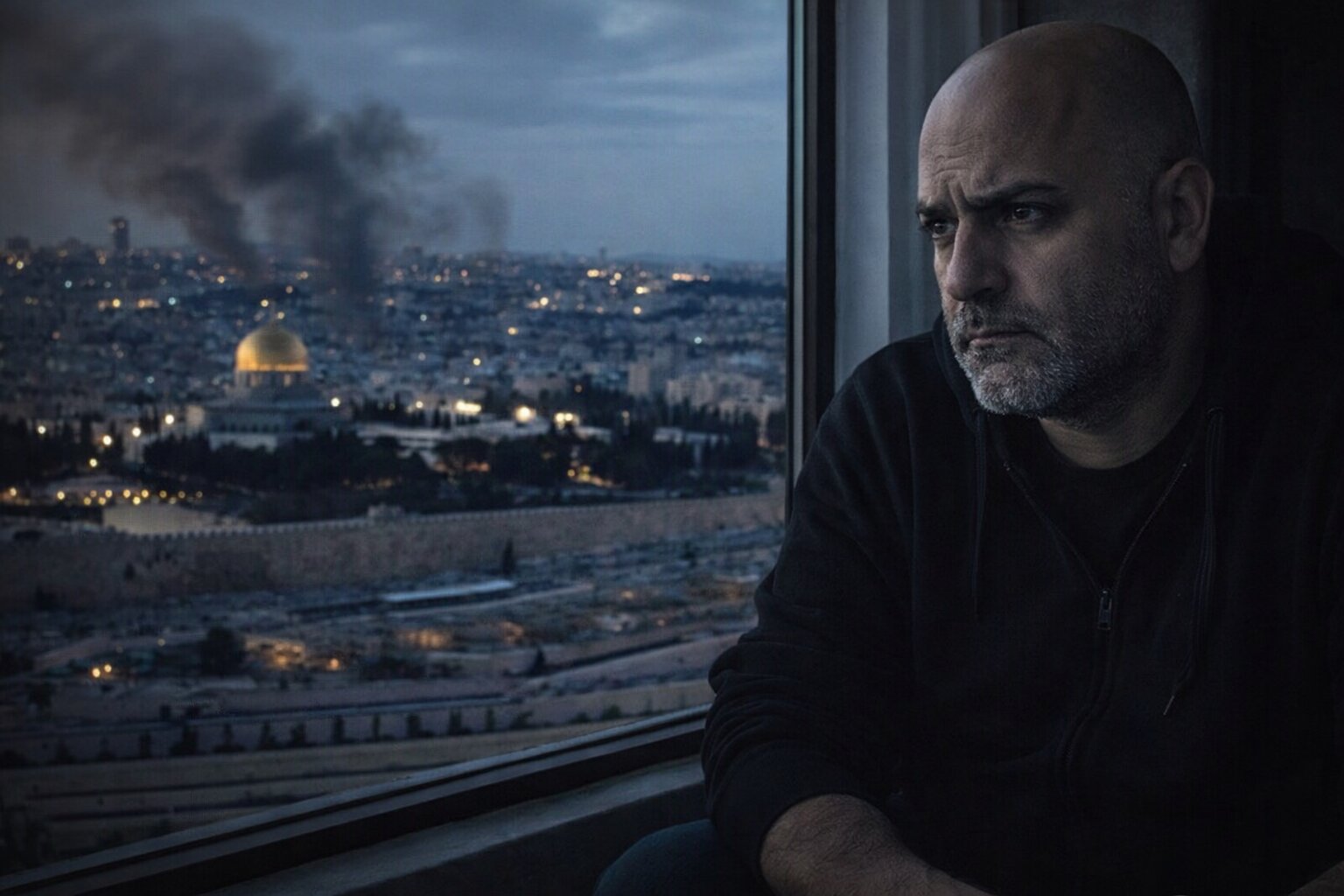
The statement posted by Israeli writer Alon Mizrahi is not merely a passing social media remark. Rather, it reflects a growing psychological and political unease emerging within segments of Israeli society. His words reveal an intuitive sense that something fundamental has shifted—an atmosphere that feels subdued, tense, and uncertain.
1. The Language of Instinct Rather Than Information
Notably, Mizrahi does not rely on specific evidence or intelligence. Instead, he describes a collective feeling. In times of national stress, public sentiment often precedes official acknowledgment.
When he writes, “something is not right,” he is expressing a deeper existential anxiety rather than a conventional political critique.
2. The Leadership Factor
His reference to the possible health or condition of Benjamin Netanyahu carries broader implications. It highlights one of the structural vulnerabilities in Israeli politics today:
- The heavy personalization of political power
- Deep political polarization surrounding leadership
- The perception that the stability of the state is closely tied to its leadership figures
In such circumstances, any perceived weakness at the top can easily be interpreted as a wider institutional fragility.
3. A Shift in the Social Mood
Perhaps the most striking observation in the post is the suggestion that fear and pain have moved closer to the surface of Israeli society.
For decades, Israel has projected an image of resilience and strategic superiority. However, prolonged security crises, political division, and continuous military tensions can gradually produce psychological fatigue within the population.
4. The Idea of “Gradual Fracturing”
The most dramatic line in Mizrahi’s post predicts that the country could begin to “break, piece by piece.”
This does not necessarily imply an imminent collapse of the state. Rather, it points to the concept of gradual erosion—a scenario in which multiple pressures accumulate simultaneously:
- Prolonged military strain
- Leadership controversies
- Social and political polarization
- Questions about long-term strategic deterrence
Conclusion
Mizrahi’s remarks should not be read as a prophecy of state failure, but rather as a window into a growing current of anxiety within parts of Israeli society.
Historically, major geopolitical shifts rarely begin with the fall of armies alone. More often, they begin when confidence within the society itself starts to crack.
If you wish, I can also transform this into a short, publication-ready geopolitical commentary with a sharper headline suitable for an international newspaper or policy outlet.