Ashraf AboArafe
The analysis presented by the Center for Economic Research and Reforms (CERR) reveals a compelling narrative—not merely of trade growth, but of latent economic power waiting to be orchestrated. Beneath the statistics lies a deeper story of regional transformation, where geography, policy alignment, and industrial ambition converge to redefine Central Asia’s economic map.
A Rising Arc—Yet Incomplete
The nearly fourfold increase in bilateral trade—from $238 million in 2017 to $912 million in 2025—signals a remarkable trajectory. This surge reflects not only improved diplomatic ties but also the normalization of economic channels that had long been underutilized.
However, what is most striking is not the growth itself, but the assertion that this progress represents only a fraction of the attainable potential. The projected 30–40% expansion in trade underscores a critical insight: the relationship has matured structurally, but not yet functionally to its fullest capacity.
From Proximity to Productivity
Geography plays a silent yet decisive role. The shared border between Uzbekistan and Tajikistan is more than a line—it is an economic corridor rich with logistical advantages. Efficient transport links and proximity reduce transaction costs, making cross-border industrial integration not just viable, but strategically inevitable.
Yet proximity alone does not guarantee productivity. The real transformation lies in shifting from traditional trade exchange toward industrial symbiosis—a model where both economies co-create value rather than merely exchange goods.
Industrial Cooperation: The Missing Engine
CERR’s emphasis on joint industrial projects introduces a pivotal concept: co-production as a driver of integration. The proposal to establish processing facilities in border regions—especially in agriculture—signals a transition from raw material export to value-added production.
This model carries three strategic implications:
- Value Retention: Instead of exporting raw agricultural goods, both nations can capture higher margins through processing.
- Employment Generation: Border regions, often economically peripheral, could transform into industrial hubs.
- Supply Chain Integration: Shared production networks reduce dependency on external markets.
Import Substitution as Strategic Leverage
One of the most pragmatic insights is the opportunity to replace Tajikistan’s imports from third countries with Uzbek products. This is not protectionism—it is regional optimization. By redirecting existing demand inward, both countries can:
- Strengthen economic sovereignty
- Reduce foreign currency outflows
- Enhance resilience against global supply disruptions
In essence, this approach transforms trade from a passive exchange into an active instrument of regional stability.
Infrastructure: The Silent Multiplier
Transport and transit infrastructure emerge as the invisible backbone of this integration. Enhanced connectivity across Central Asia does more than facilitate trade—it repositions the region as a transit hub between larger global markets.
The involvement of institutions like the International Institute for Central Asia (IICA) further reinforces that this is not merely bilateral ambition, but part of a broader regional vision.
From Partnership to Economic Alliance
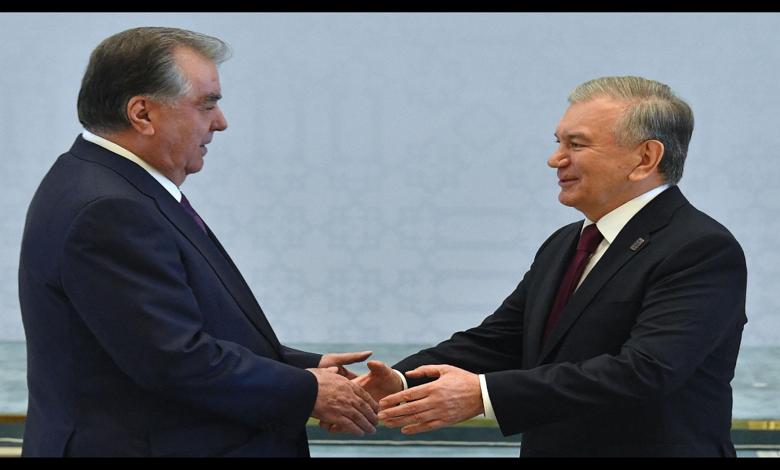
What distinguishes the current phase of Uzbekistan–Tajikistan relations is the shift from diplomatic goodwill to institutionalized alliance. Strategic agreements have laid the groundwork, but the next stage demands execution—joint investments, coordinated industrial policies, and integrated infrastructure planning.
Conclusion: A Region on the Verge of Reinvention
The CERR assessment is less a forecast and more a call to action. The 30–40% growth potential is not an abstract figure—it is a reflection of untapped complementarities waiting to be activated.
If realized, this partnership could evolve into a model of intra-regional cooperation, where neighboring states move beyond historical constraints to build a shared economic future. In doing so, Uzbekistan and Tajikistan may not only deepen their own ties but also illuminate a broader path for Central Asia: from fragmentation to integration, from potential to power.