Ashraf AboArafe
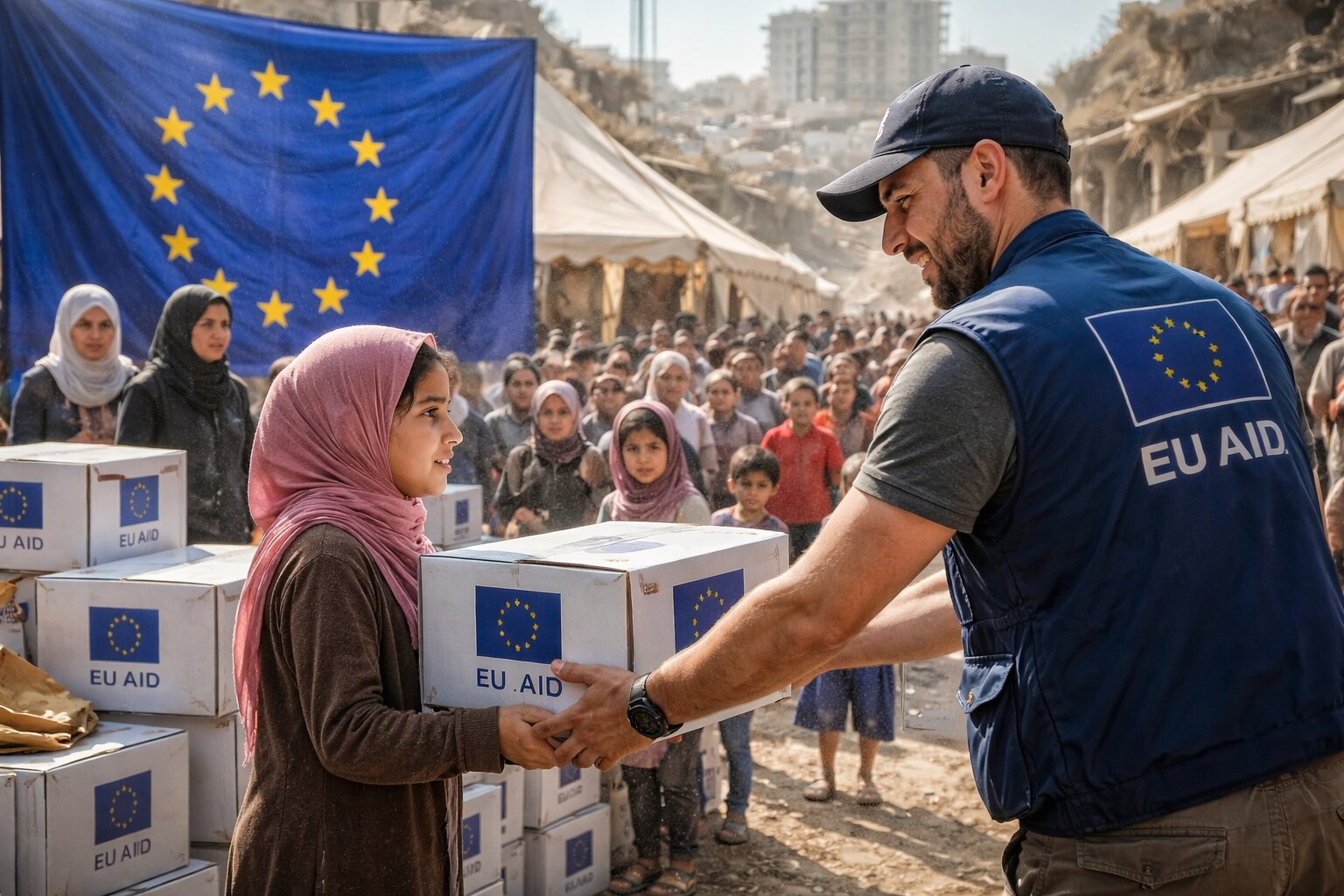
The European Commission has announced a €450 million humanitarian aid package for the Middle East in 2026, targeting some of the region’s most fragile and conflict-affected areas, including Palestine, Lebanon, Syria, Jordan, and Egypt. As major donors scale back their engagement and international humanitarian law faces unprecedented strain, the European Union says it will continue delivering life-saving assistance to millions in need.
Syria: The Largest Share of Aid
In Syria, €210 million will support emergency life-saving responses and protection services across the country. More than a year after the fall of the Assad regime in December 2024, humanitarian needs remain severe. An estimated 16.5 million people still require assistance, including more than 3.2 million returnees who face devastated infrastructure and limited livelihood opportunities.
EU funding will cover food assistance, healthcare, shelter, clean water, and education for children who have dropped out of school.
Palestine: A Deepening Humanitarian Crisis
For Palestine, €124 million will be directed toward food aid, healthcare, protection services, shelter, and education, delivered by humanitarian partners operating under extremely difficult conditions.
More than 3.3 million people require assistance, including 2.1 million in Gaza and 1.2 million in the occupied West Bank. In Gaza, civilians face rising malnutrition, the collapse of healthcare systems, and systematic obstruction of humanitarian aid deliveries.
Lebanon: Escalating Displacement
In Lebanon, €100 million will support emergency healthcare, essential aid for families who have lost everything, protection services, shelter, and education for children forced out of school.
Humanitarian needs were already severe before the latest escalation. Even prior to the current crisis—worsened by regional developments involving Iran—more than three million people required assistance.
In March 2026, Israeli airstrikes triggered the displacement of over 800,000 people. The EU has already activated humanitarian air bridge flights, delivering medical supplies and relief assistance on the ground.
Jordan: Supporting Refugees
In Jordan, €15.5 million will support essential services such as healthcare and protection, addressing the needs of refugees both inside camps and in host communities.
Egypt: Assistance for Vulnerable Communities
In Egypt, €8 million will fund multi-sector humanitarian support for the most vulnerable groups, including education programs for children who have dropped out of school and a regional disaster preparedness initiative.
Egypt currently hosts more than 1.5 million refugees and asylum seekers, most of them from Sudan and Gaza.
EU Commitment to Humanitarian Principles
Commenting on the announcement, Hadja Lahbib said:
“In a war-torn Middle East, the European Union is stepping up while others step back. We are now the largest donor still delivering humanitarian assistance in some of the world’s most severe crises. We stand with people in their darkest moments. International humanitarian law exists to protect them, and Europe will defend it. We will continue delivering life-saving aid for as long as it is needed.”
Background
Across the region, humanitarian operations face major challenges, including operational and logistical restrictions, limited humanitarian access, shrinking operational space, and ongoing violations of international humanitarian law.
The €450 million funding package forms part of the European Commission’s annual global humanitarian decision for 2026, implemented through country-specific humanitarian implementation plans.
EU humanitarian assistance is allocated strictly based on needs, guided by the principles of humanity, neutrality, impartiality, and independence, and in full compliance with international humanitarian law.
Aid is delivered through the European Commission’s extensive network of partners, including UN agencies, international organizations, and non-governmental organizations working on the ground.
The package also includes €67.5 million mobilized from the EU’s emergency aid reserve, subject to approval by the relevant budgetary authority.