 Editor – in – chief writes
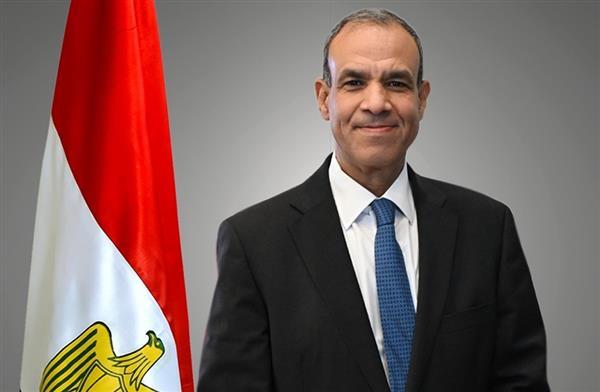
DURING his visit to Washington, Egypt’s Minister of Foreign Affairs, Badr Abdelatty, led an intensive round of high-level meetings that underscored Cairo’s evolving diplomatic strategy—one that increasingly places economic engagement at the heart of foreign policy.
Participating in the Spring Meetings of the World Bank Group and the International Monetary Fund, Abdelatty held discussions with global financial leaders, including Ajay Banga, focusing on expanding development financing, supporting Egypt’s economic reform agenda, and strengthening private sector participation.
The meetings highlighted Egypt’s commitment to structural reforms, fiscal discipline, and investment-friendly policies, alongside efforts to accelerate digital transformation, infrastructure development, and renewable energy expansion.
Beyond economics, Abdelatty engaged with senior members of the U.S. Congress and held talks with U.S. Secretary of State Marco Rubio, addressing key regional developments, including the situation in Gaza, Lebanon, and Sudan, as well as ongoing efforts to reduce tensions across the Middle East.
The visit also included strategic media outreach, with interviews aimed at reinforcing Egypt’s image as a reliable partner and stabilizing force in a volatile region.
Strategic Analysis
1. Economic Diplomacy as a Core Foreign Policy Tool
Egypt’s Washington tour signals a clear shift toward proactive economic diplomacy:
- Engagement with financial institutions is now directly tied to investment mobilization and reform support
- Emphasis on the private sector as the engine of growth reflects a structural economic transition
2. Positioning Egypt as a Regional Economic Hub
Through its dialogue with global institutions, Egypt is reinforcing its role as:
- A gateway linking Africa, the Middle East, and Europe
- A regional hub for infrastructure, logistics, and digital connectivity
This positioning is backed by large-scale national projects and regulatory reforms.
3. Linking Stability to Economic Growth
A central message throughout the visit:
Regional stability is essential for sustainable economic development
Egypt presented itself as:
- A mediator in regional conflicts
- A stabilizing actor whose role directly impacts global trade, energy security, and supply chains
4. Strategic Messaging to Washington
Engagements with U.S. officials and Congress carried layered messages:
- Reinforcing the long-standing Egypt–U.S. strategic partnership
- Encouraging greater American investment in Egypt
- Highlighting Egypt’s indispensable role in:
- Maritime security
- Counterterrorism
- Regional crisis management
5. Digital Transformation and AI: A Forward-Looking Agenda
Egypt’s participation in discussions on artificial intelligence reflects:
- A growing focus on the digital economy
- Investment in human capital and tech capacity
- Support for scalable, low-cost AI solutions, particularly in Africa
Conclusion
This was not a routine diplomatic visit. It was a multi-layered strategic mission aimed at:
- Securing economic resilience amid global uncertainty
- Expanding investment and financing opportunities
- Reinforcing Egypt’s role as a regional anchor of stability and growth
In essence, Cairo is no longer engaging the world solely through politics—
it is actively repositioning itself as a central economic actor in a rapidly evolving global order.