Ashraf AboArafe
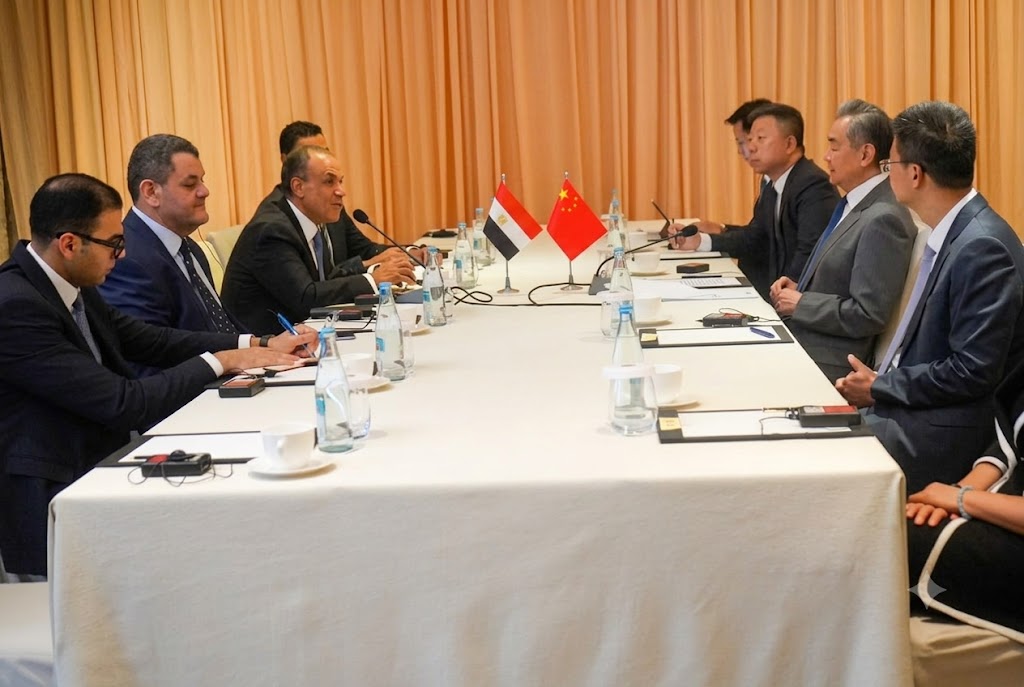
ON the sidelines of the ASEAN Ministerial Meeting in Manila, the encounter between Egypt’s Minister of Foreign Affairs, Emigration, and Egyptian Expatriates, Dr. Badr Abdelatty, and his Chinese counterpart, Wang Yi, was far more than routine diplomatic protocol. It marked a pivotal new milestone in deepening the strategic partnership between two civilizations deeply rooted in history.
Occurring as both nations celebrate the 70th anniversary of establishing diplomatic relations, these high-level discussions reflected a dynamic model of modern diplomacy—one that seamlessly balances economic ambition with strategic political coordination to navigate an increasingly turbulent global landscape.
Tangible Development Landmarks
Egyptian-Chinese relations are no longer confined to joint statements and official communiqués; they are visibly etched across Egypt’s modern geography. Key testaments to this collaboration include the iconic skyscrapers of the Central Business District in the New Administrative Capital, the Light Rail Transit (LRT) network, and expanding Chinese investments within the Suez Canal Economic Zone (SCZone).
The Manila meeting underscored Cairo’s commitment to driving this partnership toward localizing manufacturing and transferring technology, with a sharp focus on high-value-added sectors. Rather than focusing solely on trade volume and tourism flows, Egypt aims to build a robust, shared industrial base that strengthens national economic resilience and generates sustainable opportunities.
A Voice of Reason in a Turbulent Region
On the regional front, the talks delivered firm, unambiguous messages addressing key conflicts across Gaza, Sudan, Lebanon, Libya, and the Horn of Africa. Both ministers highlighted the necessity of immediate de-escalation and diplomatic dialogue, while firmly condemning any attacks that threaten the security and sovereignty of sisterly Gulf nations.
Furthermore, the discussion placed strong emphasis on safeguarding freedom of international navigation in strategic waterways in accordance with international law—a critical requirement to prevent supply chain disruptions from harming the global economy and energy security.
Toward Fairer Global Governance
Looking at the broader international order, the two foreign ministers reaffirmed their commitment to joint efforts in reforming global governance systems. Both sides advocated for a more equitable multilateral framework that better represents developing nations, upholds the principles of the UN Charter, and counters growing global polarization.
Conclusion
The Egyptian-Chinese meeting in Manila demonstrates that relations between Cairo and Beijing have matured into a comprehensive strategic partnership. Grounded in a 70-year legacy of mutual trust and shared strategic priorities, both nations continue to forge a path toward greater stability, resilience, and economic prosperity for their peoples and the wider region.