Editor -in-chief ✍️
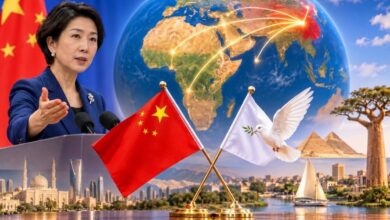
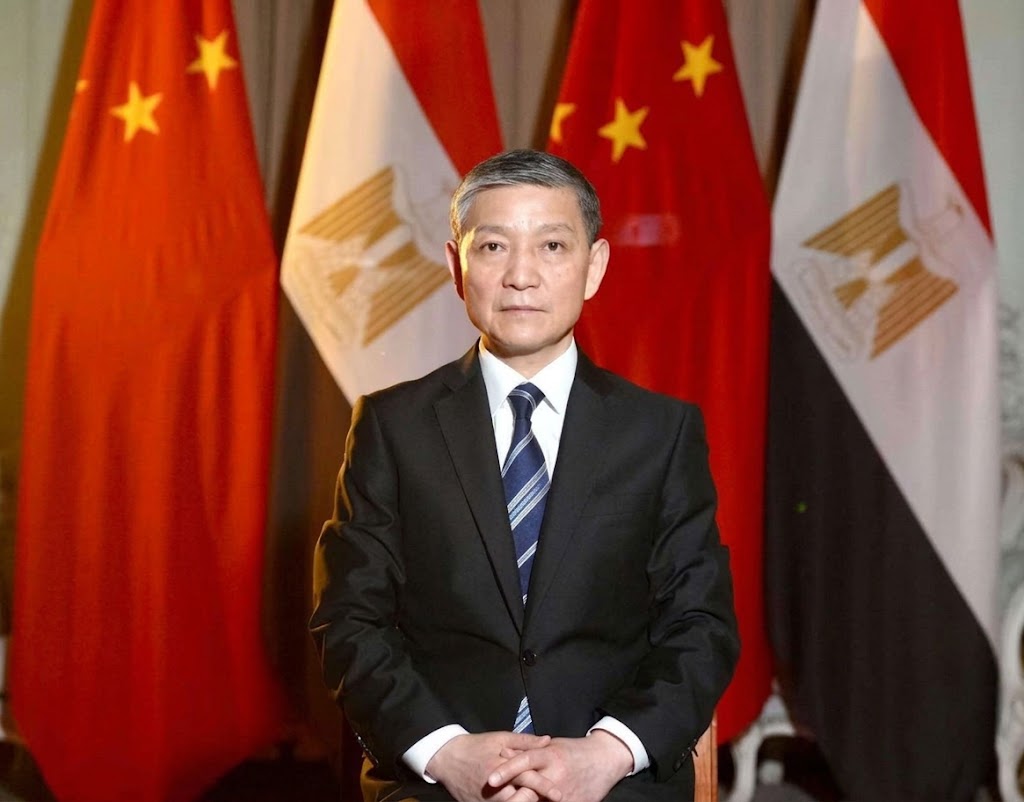
Between two civilizations whose roots run deep into the pages of history, bridges of friendship and cooperation extend from the Great Wall of China to the banks of the Nile, opening new horizons for a strategic partnership that transcends traditional bilateral relations towards a future shaped by shared development and supported by mutual political and economic visions. In this exclusive interview with AldiploMasy, His Excellency Mr. Liao Liqiang, Ambassador of the People’s Republic of China to the Arab Republic of Egypt, discusses the key outcomes of the Fifth Plenary Session of the 20th Central Committee of the Communist Party of China, the prospects for the China-Egypt Investment Forum, and Beijing’s vision for global governance amid accelerating international and regional transformations. The interview also explores the future of the China-Egypt strategic partnership, opportunities to strengthen cooperation in industry, investment, artificial intelligence, and clean energy, as well as Egypt’s role in promoting regional security and stability and China’s approach to resolving conflicts through political and diplomatic means. This is a dialogue between two ancient civilizations, two development-driven visions, and a partnership seeking to make the future a continuation of the greatness of the past. Q: The Fifth Plenary Session of the 20th Central Committee of the Communist Party of China, recently held, attracted widespread international attention. Could you briefly highlight its main outcomes and significance? A: The Fifth Plenary Session of the 20th Central Committee of the Communist Party of China was held in Beijing from October 26 to 29. It focused on ways to continue exercising full and rigorous Party self-governance. This session was a meeting of great importance, convened at a significant historical moment, coinciding with the 105th anniversary of the founding of the Communist Party of China and a critical period in the great rejuvenation of the Chinese nation. Guided by Xi Jinping Thought on Party Building, the session deliberated and adopted the Decision of the CPC Central Committee on Several Major Issues Concerning Further Advancing Full and Rigorous Party Self-Governance. The decision clearly outlined seven principles for further strengthening Party governance, including remaining committed to serving the Party’s mission, making political building the central focus, enforcing discipline comprehensively and rigorously, and concentrating on addressing problems. It also identified seven strategic tasks to enhance the overall effectiveness of Party governance, including strengthening Party members’ awareness of their responsibilities, strictly implementing democratic centralism, continuously improving working practices, and reinforcing discipline. This session represents an important decision by the CPC Central Committee, based on its understanding of the historical position of the Party and the country, as well as its comprehensive vision of Chinese-style modernization. It embodies the Party’s ambitious objectives and sense of responsibility in building a strong country and achieving the great rejuvenation of the Chinese nation through Chinese-style modernization. It also reflects the Party’s firm confidence and strong determination to continue exercising full and rigorous self-governance through higher standards and more effective measures. The international community believes that the session clearly demonstrates the Communist Party of China’s profound awareness and strong determination regarding the importance of strengthening its own development and institutional integrity. Numerous Egyptian media outlets covered the session and praised the CPC’s efforts, as a century-old political party, to maintain rigorous and comprehensive Party governance, strengthen stability and cohesion, and provide valuable experience from which political parties around the world can benefit. I would like to emphasize that this session not only provides a strong political guarantee for implementing China’s 15th Five-Year Plan and advancing Chinese-style modernization, but also creates new opportunities for cooperation between China, Egypt, and other countries around the world. Under the strategic guidance of President Xi Jinping and President Abdel Fattah El-Sisi, China and Egypt have continued to move forward side by side on the path of modernization, achieving fruitful results in high-quality cooperation under the Belt and Road Initiative. China has remained Egypt’s largest trading partner for 14 consecutive years. The China-Egypt Suez Economic and Trade Cooperation Zone continues to flourish, while major landmark projects and smaller, people-oriented initiatives have brought tangible benefits to the Egyptian people. Last September, President Xi Jinping paid a historic state visit to Egypt. The two presidents agreed to further align their development strategies and upgrade bilateral cooperation. In this context, the two sides signed more than 30 cooperation documents covering the Belt and Road Initiative, artificial intelligence, economy and trade, industrial and supply chains, and other areas. These agreements will contribute to deepening mutually beneficial cooperation across various fields. We are committed to working with Egyptian friends from all sectors to earnestly implement the important understandings reached by the two presidents, strengthen exchanges of experience in Party governance and state administration, further highlight the strategic nature of China-Egypt relations, and work together to build a China-Egypt community with a shared future, making greater contributions to the development of both countries and the common prosperity of the region. Q: You have just referred to President Xi Jinping’s historic state visit to Egypt last September and the agreements reached by both sides to deepen practical cooperation. We understand that the second China-Egypt Investment Forum will be held soon. Could you tell us more about this forum and its main priorities? A: The China-Egypt Investment Forum is an important platform for high-level dialogue between the two governments and their companies, promoting precise industrial alignment and the effective sharing of resources. In November 2025, the first edition of the forum was held. It successfully facilitated in-depth matchmaking between more than 200 Chinese and Egyptian companies and contributed to the successful launch of a number of high-quality projects in Egypt. The second edition of the forum will be held in Cairo this month. It will help consolidate and further develop the positive momentum in investment cooperation between our two countries. This edition features three major highlights: First: Drawing a vision for the future based on the understandings reached by the two presidents. This year marks the 70th anniversary of the establishment of diplomatic relations between China and Egypt. President Xi Jinping’s historic state visit to Egypt has injected strong strategic momentum into bilateral investment cooperation in this new phase. To implement the important understandings reached by the two presidents, the Chinese Embassy in Egypt, in cooperation with Egypt’s Ministry of Investment and Foreign Trade, will use the forum as a platform to deepen the alignment between the Belt and Road Initiative and Egypt Vision 2030. Our aim is to help Egypt become a regional hub for industry, logistics services, clean energy, and the digital economy, connecting Asia, Africa, and Europe, and transforming the cooperation plans outlined by the two presidents into practical steps and tangible achievements. Second: Advancing practical cooperation hand in hand. The forum will focus on supporting the localization of industry in Egypt, promoting integrated development between trade and investment, and strengthening cooperation in industrial and supply chains, among other areas. Relevant Egyptian authorities will be invited to explain their policies, while selected Chinese companies operating in Egypt will present their successful experiences. The forum will also facilitate direct communication between companies from both countries. To date, more than 100 Chinese companies have registered to participate. They represent traditional cooperation sectors, including infrastructure, manufacturing, and economic zones, as well as emerging fields such as renewable energy, artificial intelligence, and the digital economy. Participants include internationally renowned corporations as well as outstanding small and specialized companies operating in specific fields. Third: Uniting efforts to address shared challenges. Amid current challenges, including the slowdown of the global economy and geopolitical instability, China and Egypt need, more than ever, to strengthen close cooperation and work together to maintain the stability and smooth operation of global industrial and supply chains, while building a mutually beneficial investment partnership. This edition of the forum has dedicated a special session to high-level comprehensive services, aiming to establish protective mechanisms against risks through deeper cooperation in finance, logistics, and economic zones. This will help companies from both countries respond effectively to external uncertainties and inject positive momentum into regional development and global economic prosperity through stable and sustainable China-Egypt investment cooperation. In the coming period, we will make every effort to complete all preparations to ensure the full success of the forum. On this occasion, I extend a sincere invitation to outstanding Egyptian companies to participate in the forum. I also warmly welcome our friends in the press and media to cover its activities. Q: China hosted another important international event last month, the 2026 Global Governance Forum in Xiong’an. Could you explain the significance of China’s initiatives and visions in this field, particularly amid the regional and international turmoil? A: The 2026 Global Governance Forum was held in Xiong’an New Area, Hebei Province, from October 23 to 25. President Xi Jinping sent a message to the forum, calling on all parties to work with China to implement a vision of global governance based on extensive consultation, joint contribution, and shared benefits; to build strength through confidence; address challenges through cooperation; advance the implementation of the Global Governance Initiative; and move forward hand in hand towards building a community with a shared future for humanity. This forum coincided with the first anniversary of the launch of the Global Governance Initiative. Over the past year, the initiative has gained increasing recognition within the international community, evolving from a Chinese proposal into an area of international practice and demonstrating considerable vitality, influence, and appeal. On the one hand, President Xi Jinping has put forward a series of important visions at multilateral forums, enriching China’s concepts and solutions for global governance. More than 160 countries and international organizations, including Egypt, have expressed support for and responded to the initiative. More than 60 countries have joined the Group of Friends of Global Governance. Furthermore, the initiative’s core principles have been incorporated into documents issued by various multilateral meetings, including the G20, the Shanghai Cooperation Organization, and BRICS, highlighting its contemporary relevance. On the other hand, China has remained an active participant in implementing the Global Governance Initiative. Its efforts range from promoting the establishment of multilateral financial institutions, such as the Asian Infrastructure Investment Bank and the New Development Bank, to establishing the International Organization for Mediation, which has successfully settled its first international maritime dispute, and founding the World Data Organization and the World Artificial Intelligence Cooperation Organization. During the forum, China announced eight practical measures, including successfully hosting this year’s APEC Informal Leaders’ Meeting, continuing its active participation in United Nations reform, issuing the document entitled China’s Position on Strengthening Outer Space Governance, and publishing the Progress Report on Implementing the Comprehensive Plan for Artificial Intelligence Capacity Building. These measures reflect China’s readiness to shoulder its responsibilities and contribute actively to the development of global governance. At present, the regional situation has once again reached a critical crossroads between war and peace. China has consistently called for resolving conflicts through political and diplomatic means and supports the countries of the region in building a common home characterized by good-neighborliness, development, security, and cooperation. In this context, President Xi Jinping has put forward a four-point vision for safeguarding and promoting peace and stability in the Middle East, four principles for advancing a solution to the Palestinian question, a four-point initiative for strengthening common security in the Middle East, and four principles concerning the constructive participation of all parties in resolving pressing issues in Africa. These proposals contribute to China’s efforts to offer solutions aimed at achieving lasting security and peace in the region. The Chinese government’s Special Envoy for the Middle East Issue, the Chinese government’s Special Representative for African Affairs, and the Foreign Ministry’s Special Envoy for the Horn of Africa are scheduled to make successive visits to Egypt and other countries in the region during the first half of November, with the aim of encouraging negotiations and de-escalation. At the same time, Egypt, as an influential regional country, plays a pivotal role in promoting regional security and stability. It has made persistent efforts to achieve comprehensive political solutions to geopolitical crises in the Middle East and to consolidate the principles of good-neighborliness, respect for state sovereignty, and non-interference in internal affairs. China highly appreciates Egypt’s role and is willing to work hand in hand with Egypt to ease regional tensions and achieve security and stability in the region at the earliest possible time. This interview reveals the expanding scope of the China-Egypt partnership, which is no longer limited to trade, investment, and major development projects. It now extends to global governance, technology, artificial intelligence, and regional security. It also highlights the importance of Egypt’s role in building bridges of communication among international powers and utilizing its historic and strategic relationships to serve development and stability in a region facing interconnected political, security, and economic challenges. From the Great Wall of China to the banks of the Nile, the central message remains clear: the friendship of nations is not shaped by geography alone. It is sustained by trust, strengthened through cooperation, and given its true meaning by the promise of the future.First: The Communist Party of China and the Journey Towards National Rejuvenation and Modernization
Second: Investment – Building Economic Bridges from Cairo to Beijing
Third: Global Governance – China’s Vision for a More Cooperative and Stable World
AldiploMasy: A Dialogue of Civilizations and a Bet on the Future