Ashraf AboArafe writes
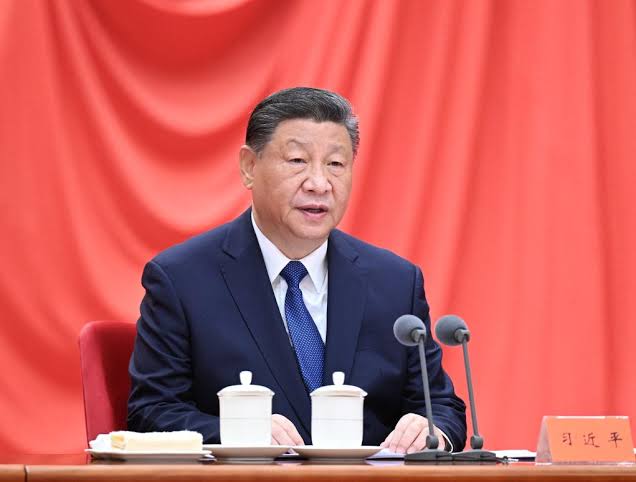
THE strength of nations is not measured solely by the size of their economies, the reach of their armies or the influence of their diplomacy. It is also measured by the ability of their institutions to confront their weaknesses, correct their mistakes and renew themselves before the challenges of history become crises of survival. This is the deeper political message emerging from the Fifth Plenary Session of the 20th Central Committee of the Communist Party of China (CPC), held in Beijing from October 26 to 29, 2026.
Behind the official statements, organizational decisions and disciplinary measures lies a broader question: How can a political party preserve its legitimacy, institutional cohesion and governing capacity while navigating a rapidly changing domestic and international environment?
China’s answer, as reflected in the plenary documents, is encapsulated in a concept that has become central to Xi Jinping’s political philosophy: the Party’s self-revolution. It is a strategy built around continuous self-examination, strict discipline, institutional correction and organizational renewal.
The message is both political and historical: a party that seeks to lead a great nation must also possess the courage to examine itself.
From the lessons of Yan’an to the politics of self-revolution
The CPC’s approach to political longevity draws upon two historical answers to what it describes as the recurring cycle of political rise and decline.
The first, articulated by Mao Zedong during the Yan’an period, was that the people must supervise the government. This principle recognized the importance of popular oversight in preventing the deterioration of political authority.
The second answer, developed under Xi Jinping in the new era, is self-revolution: the willingness of the Party to turn its scrutiny inward, confront internal weaknesses and undertake continuous self-correction.
These two ideas represent different but interconnected dimensions of political accountability. The first emphasizes supervision by society; the second emphasizes institutional discipline from within.
The distinction matters. Internal correction can strengthen administrative discipline and organizational cohesion, but its credibility also depends on effective accountability, transparent procedures and meaningful oversight.
Since the 18th National Congress, the CPC has made comprehensive and rigorous self-governance a defining feature of its political agenda. The latest plenary session seeks to consolidate this approach into a more permanent institutional framework.
The underlying ambition is to transform self-correction from a political campaign into a continuous mechanism of governance.
Discipline as the architecture of political power
The plenary documents present a comprehensive framework grounded in the Party’s established ideological foundations, including Marxism-Leninism, Mao Zedong Thought, Deng Xiaoping Theory and Xi Jinping Thought on Socialism with Chinese Characteristics for a New Era.
Yet the importance of the decisions lies not simply in their ideological references, but in the attempt to translate political principles into organizational practice.
Seven guiding principles shape the framework: serving the Party’s mission, maintaining centralized political leadership, enforcing comprehensive discipline, addressing institutional weaknesses, combining tradition with innovation, requiring senior officials to lead by example, and governing through regulations.
Together, these principles seek to establish a political system in which discipline is not an occasional intervention but a permanent feature of institutional life.
This is particularly important at a time when China faces increasingly complex challenges: geopolitical competition, economic uncertainty, demographic changes, technological transformation and the growing administrative demands of high-quality development.
The Party also acknowledges the continuing pressures associated with governing, reform and opening-up, the market economy and the international environment. Its identified internal dangers include weakening political commitment, insufficient competence, detachment from the people and corruption.
These challenges explain why the plenary session places such emphasis on organizational resilience.
Seven pillars, one strategic ambition
The resolution translates its principles into seven interconnected areas of action.
First, strengthening Party spirit. The emphasis is on ideological education, political loyalty, revolutionary traditions, ethical standards and regular self-examination. The objective is to ensure that organizational discipline is supported by a shared political identity.
Second, reinforcing democratic centralism. The Party seeks to preserve centralized and unified leadership while improving internal consultation, collective decision-making and the regulation of official responsibilities. The challenge is to maintain coordination without weakening the quality of institutional feedback.
Third, building a capable leadership cadre. Political integrity and professional competence remain central criteria for selecting officials. Training, supervision, leadership development and the fight against bureaucratic inertia are intended to improve administrative performance.
Fourth, strengthening grassroots organizations. Particular attention is given to rural revitalization, urban governance, state-owned enterprises, non-public businesses and emerging digital sectors. This reflects the recognition that the Party’s organizational structures must evolve alongside China’s changing economy.
Fifth, improving work conduct. The continued enforcement of the CPC Central Committee’s Eight-Point Regulation targets formalism, bureaucracy, hedonism and extravagance. The broader objective is to make public administration more disciplined, responsible and effective.
Sixth, advancing the anti-corruption campaign. The familiar three-part formula remains central: officials must not dare to engage in corruption, must not be able to do so, and must have no desire to do so. This combines punishment with prevention and institutional safeguards.
Seventh, strengthening regulations and supervision. The resolution calls for improved internal Party rules and closer coordination among disciplinary supervision, state oversight, auditing and inspection mechanisms.
The significance of these pillars lies in their interdependence. Political education without accountability risks becoming rhetoric; discipline without institutional reform risks becoming temporary enforcement; and regulations without consistent implementation risk losing their authority.
China’s challenge is therefore to make all seven pillars work as one coherent governance system.
Anti-corruption: From individual accountability to institutional reform
Among the most consequential elements of the plenary session is the continued emphasis on combating corruption across civilian, financial and military institutions.
The Party’s approach increasingly links individual accountability with the wider institutional conditions that permit corruption to emerge. It seeks not only to punish those who abuse authority, but also to strengthen the systems that regulate power and prevent misconduct.
The importance of this approach should not be underestimated. Corruption damages administrative efficiency, weakens public confidence and distorts economic decision-making. It can also undermine the credibility of institutions at precisely the moment when national development requires competence and public trust.
However, the ultimate measure of anti-corruption policy is not the number of investigations or disciplinary announcements, but whether corruption is reduced sustainably and whether accountability is applied consistently, regardless of rank or institutional influence.
This is where the effectiveness of China’s self-revolution will face one of its most important tests.
Leadership renewal and the road to 2027
The plenary session also produced significant organizational decisions.
Zhang Shengmin was elected to the Political Bureau of the CPC Central Committee, while ten alternate members were promoted to full membership to fill vacancies. The session also reviewed and confirmed disciplinary decisions involving senior officials, reflecting the continuing reach of the Party’s internal accountability system.
These decisions should be viewed within a broader political context: the preparation for the 21st National Congress, scheduled to convene in Beijing during the second half of 2027.
The period leading to that congress will be important for assessing the implementation of the new governance framework, the development of future leadership cadres and the consolidation of the Party’s institutional priorities.
The 2027 congress will therefore be more than a political milestone; it will provide an opportunity to evaluate how effectively the current leadership has translated its principles into sustainable institutional results.
China’s international message: Strength begins at home
The implications of the plenary session extend beyond China’s domestic political system.
In a world increasingly shaped by strategic competition, economic fragmentation, technological rivalry and uncertainty, Beijing is emphasizing political continuity, administrative discipline and institutional resilience as essential components of national strength.
This approach also intersects with China’s growing engagement with the Global South.
For developing countries, including Egypt, China’s experience offers important subjects for dialogue on modernization, infrastructure, digital transformation, administrative reform and economic development.
Nevertheless, each country must approach these experiences according to its own national circumstances, institutional traditions and development priorities. International cooperation is most productive when it encourages the exchange of successful practices rather than the mechanical transplantation of political models.
For Egypt and China, whose diplomatic relations date back to 1956, the evolving Chinese development experience remains particularly relevant to discussions about economic modernization, investment, technological cooperation and the future of South-South partnerships.
The wider lesson is that political stability and economic progress must reinforce one another. Neither can be sustained indefinitely at the expense of the other.
The real test: When discipline becomes development
The Fifth Plenary Session of the 20th CPC Central Committee sends a clear message: the Party intends to strengthen its governing capacity through institutional discipline, organizational renewal and continuous self-examination.
Yet the real test begins after the resolutions have been adopted.
Can tighter supervision produce better public services? Can anti-corruption measures create a more predictable economic environment? Can centralized coordination coexist with effective institutional feedback? Can grassroots organizations translate national priorities into tangible improvements in people’s lives?
These are the questions that will ultimately determine the success of the strategy.
A strong political institution is not defined merely by its ability to exercise authority, but by its ability to make that authority serve development, justice, institutional integrity and the public interest.
China is entering another important stage in its political and economic journey, with the 21st National Congress approaching in 2027. Its leadership is presenting self-revolution as an essential instrument for preserving the Party’s vitality and preparing the country for future challenges.
History, however, does not judge institutions by the grandeur of their declarations. It judges them by the durability of their achievements.
The true furnace of political renewal is not where power demonstrates its strength, but where institutions prove their capacity to correct themselves, earn confidence and deliver progress.
That is the central question behind China’s latest political decisions—and the measure by which their historical significance will eventually be judged.