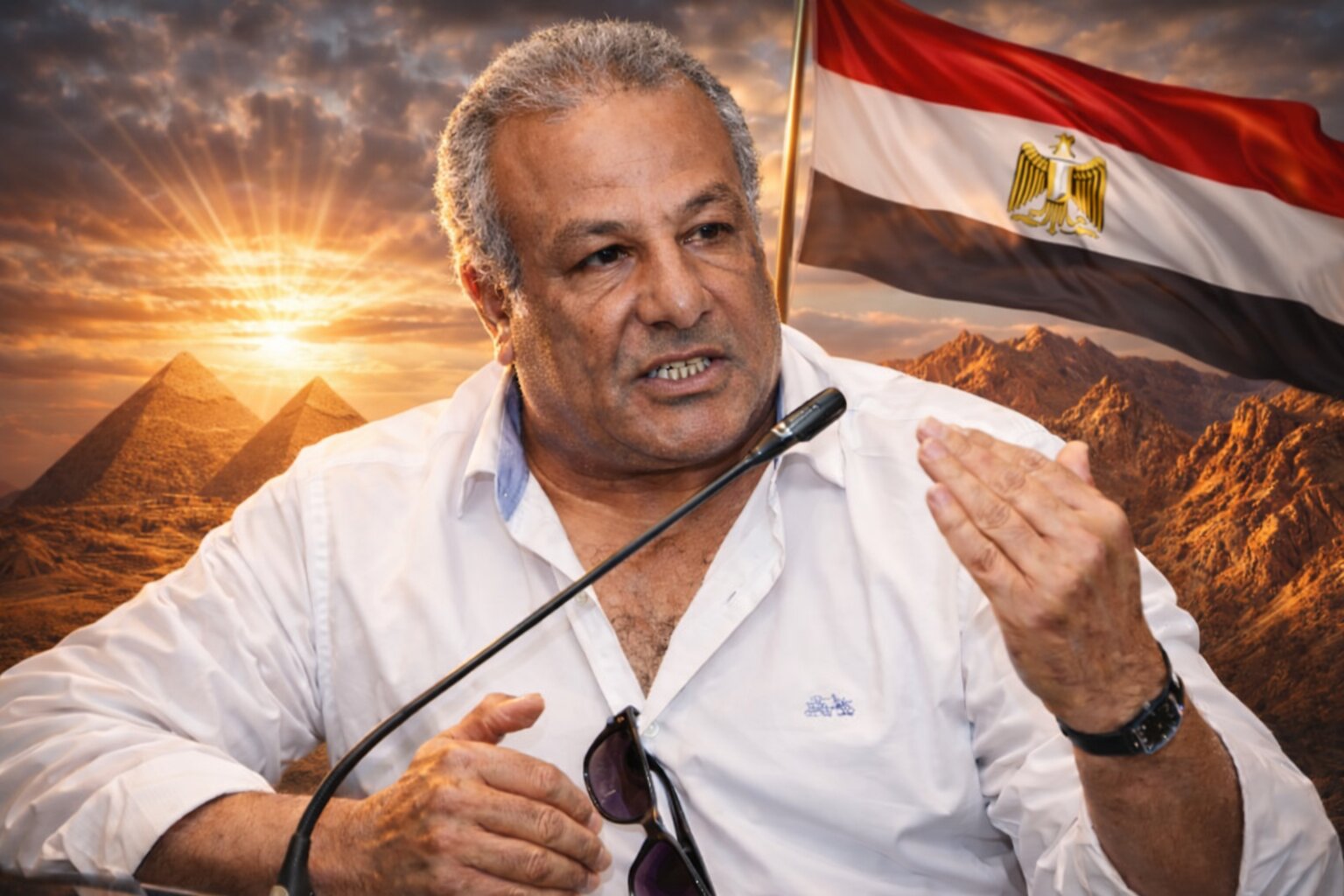
 Ashraf AboArafe ✍️
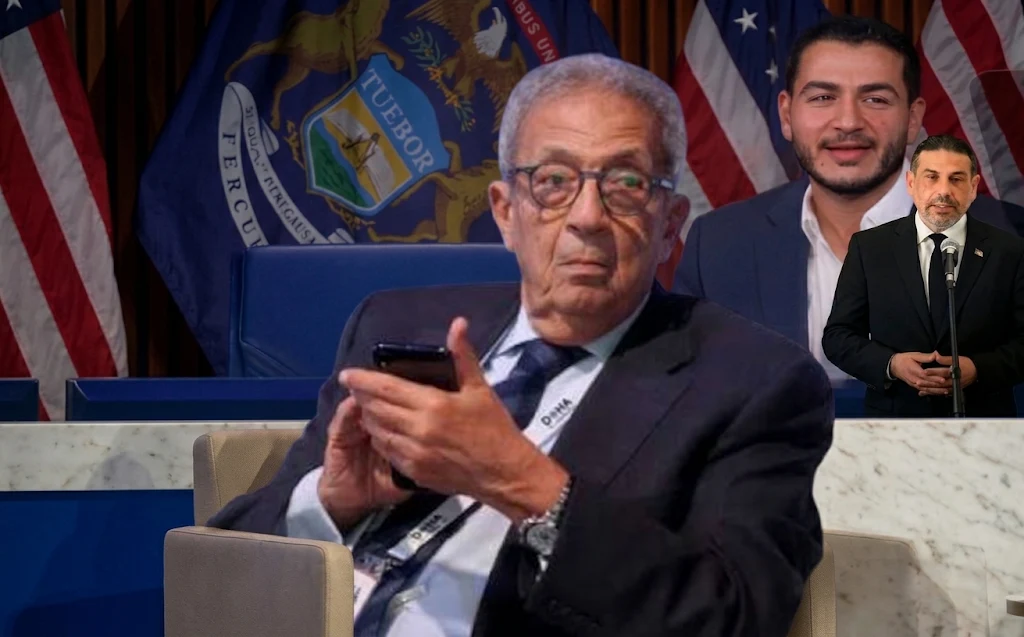
THE recent American electoral victories carry implications that extend beyond the boundaries of domestic political competition. Amr Moussa, Egypt’s former Foreign Minister and former Secretary-General of the Arab League, congratulated Dr. Abdulrahman El-Sayed (Abdul) and Dr. Adam Hamawy, both Americans of Egyptian descent, on their election to the United States Senate and House of Representatives, respectively. He also extended his congratulations to Americans of Arab descent elected to the U.S. Congress, state legislatures, and local governments.
Moussa’s message is more than a congratulatory gesture to Egyptian and Arab Americans who have reached the corridors of legislative power. It offers a broader reading of emerging developments in the American political landscape and the opportunities they may create for reconsidering Washington’s approach to the Middle East.
From the Nile to Washington, Arab roots are no longer merely a cultural identity or a family legacy; they are increasingly represented in political participation and the institutions where decisions are made.
From Political Representation to Redefining the Middle East
The significance of Amr Moussa’s message lies in its movement beyond celebrating the victories of candidates of Egyptian origin to raising a much broader question: the need to redefine what is meant by “changing the Middle East.”
According to the vision outlined by Moussa, this concept should not remain confined to Arab countries, as though the region were merely an open space for reshaping its political and economic arrangements, while Israel and other non-Arab regional powers, particularly Iran, remain outside any serious reconsideration of regional security and stability.
Changing the Middle East cannot be a one-directional project, nor should it become an exercise in reorganizing the region according to the interests of a single party. It must instead rest on balanced principles that respect state sovereignty, safeguard the legitimate rights of peoples, and restore the authority of international law.
This is why Moussa’s reference to both Israel and Iran is significant. Regional stability cannot be achieved by overlooking the roles of regional powers or treating some as exempt from accountability. It requires a regional security framework that includes all parties and operates within the principles of international law and the legitimacy of United Nations resolutions.
Palestine: The Real Test of Any American Change
The clearest and most consequential element of Moussa’s message concerns the Palestinian cause, which he places at the heart of any serious transformation in the American perspective toward the region.
There can be no discussion of lasting peace in the Middle East without recognizing the Palestinian people’s right to self-determination, establishing their independent state, ending the occupation, and safeguarding their legitimate national rights.
The Palestinian cause is not a peripheral issue in the Middle East equation, nor is it an item that can be postponed until regional arrangements are concluded. It is the central test of credibility for any American or international initiative claiming to pursue peace.
The arrival of Americans of Arab descent in Congress therefore raises an important question: to what extent can greater diversity within American political institutions broaden the debate on Palestine and bring different voices and experiences into legislative oversight and policymaking?
Nevertheless, Arab American representation does not automatically translate into a change in U.S. foreign policy. American policy is shaped by multiple institutions, party balances, strategic interests, and electoral and economic pressures. Yet the presence of lawmakers with diverse backgrounds and experiences can add new dimensions to public debate and give regional issues greater visibility within American institutions.
Abdulrahman El-Sayed and Adam Hamawy: Egyptian Presence at the Heart of American Institutions
Abdulrahman El-Sayed’s victory carries particular historical significance, as he became the first Muslim elected to the United States Senate, while physician and surgeon Adam Hamawy won election to the House of Representatives from New Jersey.
The significance of their presence extends beyond their Egyptian origins and Arab heritage. It also reflects the evolving nature of political participation among Americans of immigrant backgrounds and their growing ability to reach influential legislative positions.
Hamawy brings a medical background and humanitarian experience, while El-Sayed brings experience in public health and political life. Their different professional paths add new perspectives to the American political landscape and may enrich discussions on both domestic and international issues.
Together with the victories of other candidates of Arab descent, these results demonstrate the expanding political participation of Arab American communities. Their actual influence, however, will depend on their positions, legislative performance, and political alliances within Congress.
International Law: From Rhetoric to Action
One of the most important aspects of Moussa’s message is the connection he draws between redefining the concept of changing the Middle East and restoring respect for and adherence to international law.
The region’s recurring crises have demonstrated that double standards and the prioritization of political calculations over international legitimacy undermine prospects for settlement and prolong conflicts.
International law cannot be strong when applied to one state and weak when another is concerned. Justice cannot be selective, and rights cannot change according to the identity of those who claim them or their position in the balance of power.
Any renewed American vision for the region should therefore be accompanied by a clear commitment to protecting civilians, respecting state sovereignty, implementing United Nations resolutions, and safeguarding the Palestinian people’s right to self-determination.
From Peace to Regional Development
The political dimension of Amr Moussa’s vision is inseparable from its economic and developmental dimension. He points to the need for a broader American perspective that can generate strong momentum toward regional development.
This connection is particularly important. The Middle East needs more than agreements to halt wars; it needs a comprehensive development vision that opens new horizons for cooperation in trade, investment, energy, technology, and infrastructure, transforming its considerable human and economic resources into genuine opportunities for its peoples.
Peace without development remains fragile, while development without stability and justice remains vulnerable to setbacks.
Fair political settlements, respect for international law, and the launch of joint development initiatives are therefore interconnected pillars of any serious vision for the region’s future.
Washington Facing an Opportunity to Broaden Its Vision
Amr Moussa’s message opens an important discussion about the relationship between demographic and political developments within the United States and the future direction of American foreign policy.
Americans of Arab and Egyptian descent are not simply communities preserving memories or historical connections with the homelands of their parents and grandparents. They are citizens participating in public life, reaching legislative institutions, and bringing the concerns of their communities and the aspirations of their constituents into the American political system.
The real test, however, is not the number of seats won or the symbolism of electoral victories. It lies in the extent to which this representation is translated into legislative, oversight, and political positions that support justice, respect the rights of peoples, and advance balanced peaceful solutions.
Perhaps the most important message emerging from Moussa’s perspective is that the Middle East does not need to be reshaped from outside as much as it needs an international partnership that respects the will of its peoples and stops treating the region’s security and stability as extensions of the interests of major powers alone.
From the banks of the Nile to the halls of Congress, a new generation of Egyptian and Arab American political figures may have an opportunity to bring a different voice to Washington: one that recognizes that Palestine is no exception to peace, that international law cannot be a selective slogan, and that the future of the Middle East should be shaped by its peoples rather than imposed upon them.
Will these electoral gains mark the beginning of a new phase in which the American perspective broadens, and just peace, development, and the right to self-determination become genuine foundations of policy toward the Middle East?
That is the test that future positions and actions will reveal, not celebrations and congratulations alone.