 Editor -in-chief ✍️
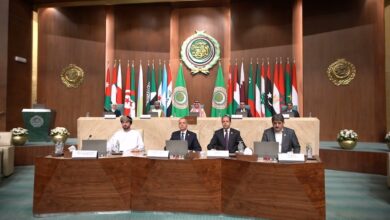
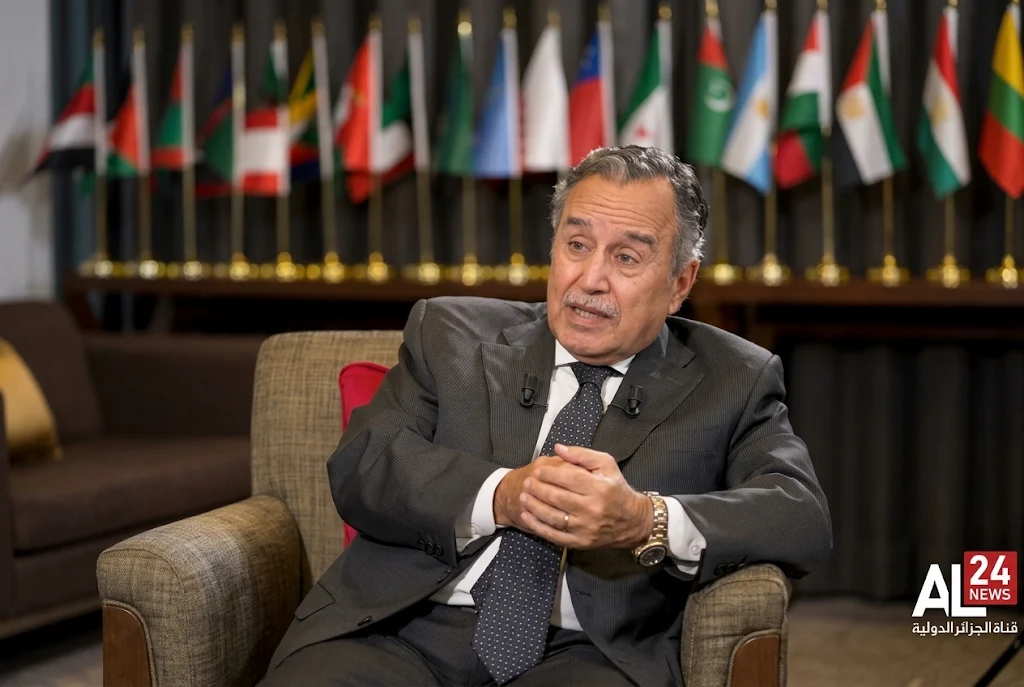
THE Arab world has no shortage of challenges; what it needs is the political will to turn shared interests into a common strategy. In an exclusive interview with Algeria International Channel (AL24), Arab League Secretary-General Nabil Fahmy offered a candid assessment of the region’s crises, the future of joint Arab action, and the reforms needed to restore the League’s ability to shape events rather than merely respond to them.
His message was both a diagnosis and a call to action: the Arab League must move from reaction to initiative, from managing crises to preventing and addressing them, and from political declarations to tangible results.
Algeria: A Historic Partnership and a Renewed Arab Vision
Fahmy’s official visit to Algeria, his first in his capacity as Secretary-General of the Arab League, carried political and symbolic significance. His meetings with President Abdelmadjid Tebboune and Foreign Minister Ahmed Attaf provided an opportunity to discuss regional developments and Algeria’s role in strengthening Arab collective action.
The visit also reflected Fahmy’s appreciation of Algeria’s historic contribution to the Arab world. His visit to the Martyrs’ Memorial, coinciding with the anniversary of the Algerian Revolution, was a tribute to a nation whose identity was shaped by the struggle for freedom, sovereignty and dignity.
Algeria, in Fahmy’s assessment, is not simply another Arab capital. It is a country with a historic revolutionary legacy and an important role to play in shaping the future of the Arab region. The discussions also addressed Palestine, Libya, Sudan, Yemen and Gulf security, underscoring the need for stronger political coordination and peaceful solutions.
Three Pillars for a New Arab League: Confrontation, Development and Progress
At the heart of Fahmy’s vision are three interconnected priorities: proactive engagement, institutional development and economic development.
The first is to confront challenges before they escalate, rather than wait until crises become irreversible. The second is to develop the Arab League’s institutions and mechanisms so they can respond more effectively to the changing regional and international environment. The third is to advance economic cooperation, recognizing that Arab political and security interests are inseparable from economic interdependence.
This vision seeks to transform the League from an institution that primarily reacts to events into one capable of anticipating developments, building initiatives and mobilizing collective resources.
The challenge is not merely to improve the language of Arab diplomacy, but to give it the capacity to influence realities on the ground.
Palestine: The Greatest Test of Arab Collective Action
On Palestine, Fahmy was unequivocal in identifying the central failure of the Arab world: the inability, so far, to enable the Palestinian people to exercise their right to self-determination and establish their independent state.
He stressed that Israeli violations continue without effective accountability, while the Palestinian cause remains at the top of the Arab League’s priorities.
Fahmy commended Algeria’s efforts at the United Nations Security Council and highlighted the importance of diplomatic action across multiple international arenas. Yet his remarks also pointed to a painful contradiction: the Arab world repeatedly declares its support for Palestine, while the Palestinian people continue to endure occupation, destruction and the denial of their most fundamental national rights.
The Arab position, he explained, seeks a peaceful solution rather than war, but peace cannot mean accepting the perpetuation of injustice or sacrificing Palestinian rights.
This is where the credibility of joint Arab action will ultimately be measured: not by the number of statements issued, but by the ability to translate political commitments into meaningful pressure and practical support.
Sudan: One State, One Government and One Set of National Institutions
Fahmy’s remarks on Sudan reflected the urgency of preventing the country’s fragmentation and ending the suffering of its people.
He called for foreign interference to end and emphasized that the solution must be Sudanese-owned and Sudanese-led, preserving one state, one government and unified national institutions.
The Arab League, he said, stands ready to support a Sudanese-led political process and coordinate its efforts with the Quintet Mechanism. The appointment of Ambassador Zaid Al-Sabban as the Secretary-General’s personal envoy for Sudan is part of this effort to intensify contacts, bridge differences and encourage a political settlement.
Fahmy also referred to a proposal for an Arab emergency humanitarian relief network, designed to accelerate the delivery of assistance and improve coordination in response to the immense humanitarian needs.
The underlying message is clear: Sudan’s crisis cannot be resolved through competing external agendas or the normalization of division. Its future must be determined by Sudanese people, through a national process that safeguards the unity of their country and its institutions.
Libya: An Honest Admission and the Need for a Different Approach
On Libya, Fahmy acknowledged frankly that the Arab League has not yet succeeded in helping the country overcome its crisis.
The continuing internal divisions and foreign interference have complicated efforts to restore stability. Egypt, Algeria and Tunisia all have a direct interest in a stable Libya, given the geographical, political and security ties connecting them.
The Secretary-General expressed the League’s readiness to assist whenever conditions become conducive to meaningful progress.
Such an admission matters. Recognizing the limits of previous efforts is a necessary first step toward developing a more effective approach. Libya needs a political settlement that preserves its unity, restores its institutions and prevents the country from remaining an arena for competing regional and international interests.
Syria and Lebanon: Sovereignty, Statehood and the Human Cost of Inaction
Regarding Syria, Fahmy emphasized the importance of preserving the national state, territorial integrity and state institutions. He also stressed the need for internal cohesion and development, while pointing to Israeli incursions and violations as a destabilizing factor.
His remarks on Lebanon carried a particularly human dimension. Referring to his visit to southern Lebanon, he described the destruction of homes, the burning of agricultural land and the displacement of residents from their villages.
These are not merely statistics or diplomatic talking points. They represent the destruction of livelihoods, communities and the foundations of civilian life.
Fahmy’s message was that the cost of inaction can be greater than the cost of taking action. He also noted that international perceptions of Israeli policies have changed, creating an opportunity for more determined diplomatic engagement.
The lesson extends beyond Lebanon: defending sovereignty requires more than expressing concern. It demands sustained political action and practical measures to protect people and preserve their ability to remain on their land.
The Gulf, the Strait of Hormuz and the Wider Regional Security Equation
Fahmy also addressed the dangers of escalating tensions between Iran and the United States, particularly in relation to the Strait of Hormuz.
The issue cannot be viewed as a narrow confrontation between two powers. The security of maritime routes, regional stability and the economic interests of Arab states are deeply interconnected.
He pointed to the importance of Arab initiative and regional engagement, emphasizing that the Arab countries must not remain passive observers while developments threaten their security and strategic interests.
The same principle applies to the Red Sea and the Horn of Africa, where maritime routes, sovereignty and regional security form part of a single strategic equation.
Somalia and the Horn of Africa: Sovereignty Must Be More Than a Declaration
On Somalia and the Horn of Africa, Fahmy reaffirmed the Arab principle opposing the seizure of territory and violations of national sovereignty.
However, his assessment also revealed a gap between principle and practice: the Arab response to developments surrounding Somaliland has not yet reached the level of a strong, unified and effective position.
This is a critical issue because the Horn of Africa is not geographically or strategically distant from the Arab world. Its stability is closely linked to the security of the Red Sea, international shipping lanes and the interests of countries on both sides of the waterway.
The Arab League, therefore, must turn its declared commitment to sovereignty into coordinated diplomatic action.
Reforming the Arab League: The Problem Is Political Will as Much as Institutions
Perhaps the most revealing part of Fahmy’s interview concerned reforming the Arab League itself.
He acknowledged that some existing mechanisms are not functioning effectively enough, while maintaining that they can be better utilized. Yet he emphasized that institutional reform alone will not be sufficient.
The political climate among Arab states must improve alongside any changes to the League’s structures and procedures. Without trust, coordination and a genuine willingness to compromise, even the most sophisticated institutional mechanisms will remain limited in their impact.
Fahmy revealed that on 1 July 2026, his first day in office, he sent official proposals to Arab countries outlining ideas for reform and strengthening collective Arab action. He expressed regret that these proposals had not received the responses he had hoped for, including the absence of replies from some capitals.
This silence is more than an administrative matter. It raises a fundamental question about the willingness of Arab governments to engage seriously with the reform of their common institution.
The Secretary-General can propose, convene and coordinate, but the effectiveness of the Arab League ultimately depends on the political commitment of its member states.
Egypt and Algeria: Complementarity in the Service of Arab Stability
The interview also highlighted the importance of coordination among Arab countries with significant political and regional weight.
Egypt and Algeria share a direct interest in the stability of Libya, the security of the wider region and the strengthening of Arab collective action. Their cooperation can contribute to a more balanced regional approach, particularly at a time when external interference and geopolitical competition are intensifying.
The Arab world needs partnerships that transform shared interests into coordinated policies, rather than leaving each country to confront regional challenges in isolation.
Three Messages to the Arab Peoples
Fahmy concluded with messages that go beyond diplomatic language and address the deeper challenge facing the Arab world.
First: what unites Arab peoples is far greater than what divides them.
Second: action is far better than reaction. The region cannot continue to wait for crises to erupt before attempting to contain them.
Third: there is no such thing as partial action in times of profound instability. Political, security and economic challenges are interconnected and must be addressed through a comprehensive vision.
These messages bring his three priorities together: proactive engagement, institutional development and economic progress.
The Arab League at a Crossroads: From the Weight of History to the Responsibility of the Future
Fahmy’s interview with Algeria International Channel (AL24) presents a vision for an Arab League seeking to recover its political relevance and strengthen its capacity to act.
His frank assessment of Palestine, Sudan, Libya, Syria, Lebanon and the Horn of Africa reveals the scale of the challenges. His call for institutional reform, better Arab political relations and economic integration points toward the tools needed to confront them.
But the decisive question remains: Will Arab governments respond to this call with the political will required to turn the Secretary-General’s vision into collective action?
The Arab League does not lack history, geography, resources or common interests. What it urgently needs is a shared determination to use them.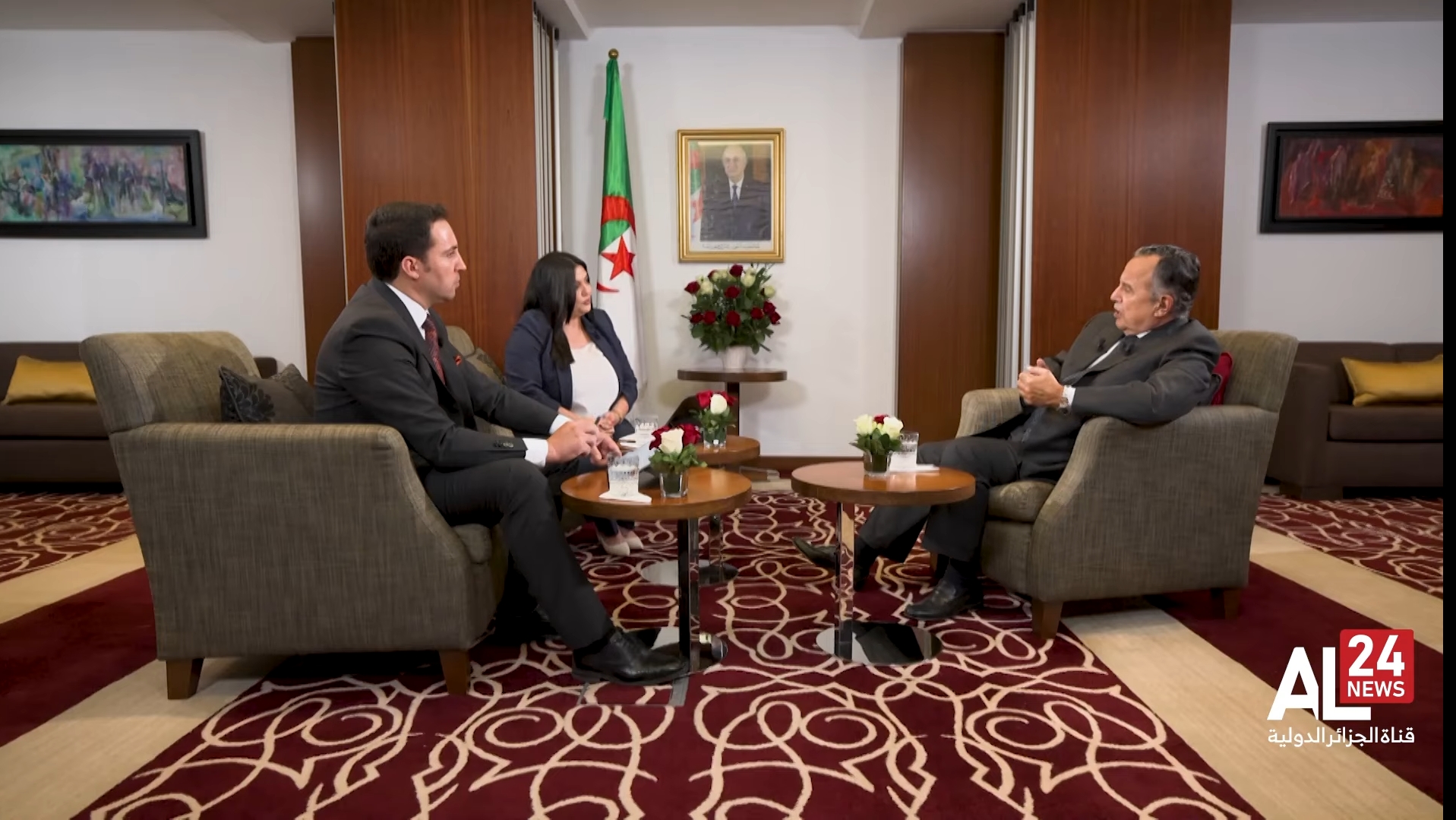
The revival of the Arab League will not be achieved by changing its procedures alone. It will begin when Arab capitals decide that their common future deserves more than statements, more than meetings and more than reactions to crises.
For the Arab world, the choice is increasingly clear: remain a spectator to the shaping of its future, or reclaim the initiative and become an active partner in shaping it.