Editor -in-chief writes
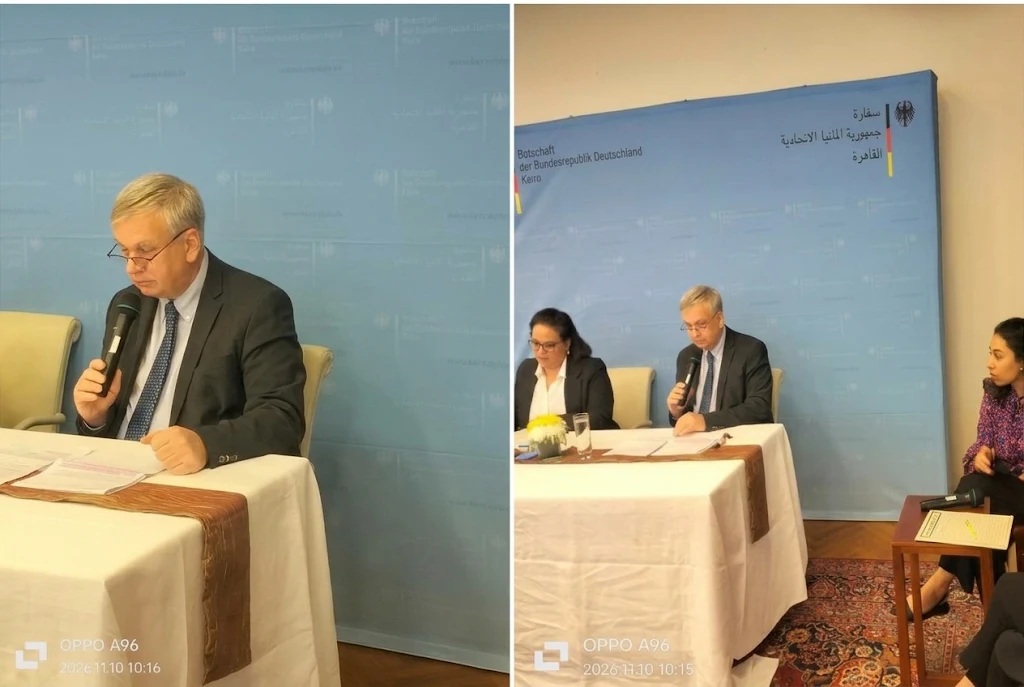
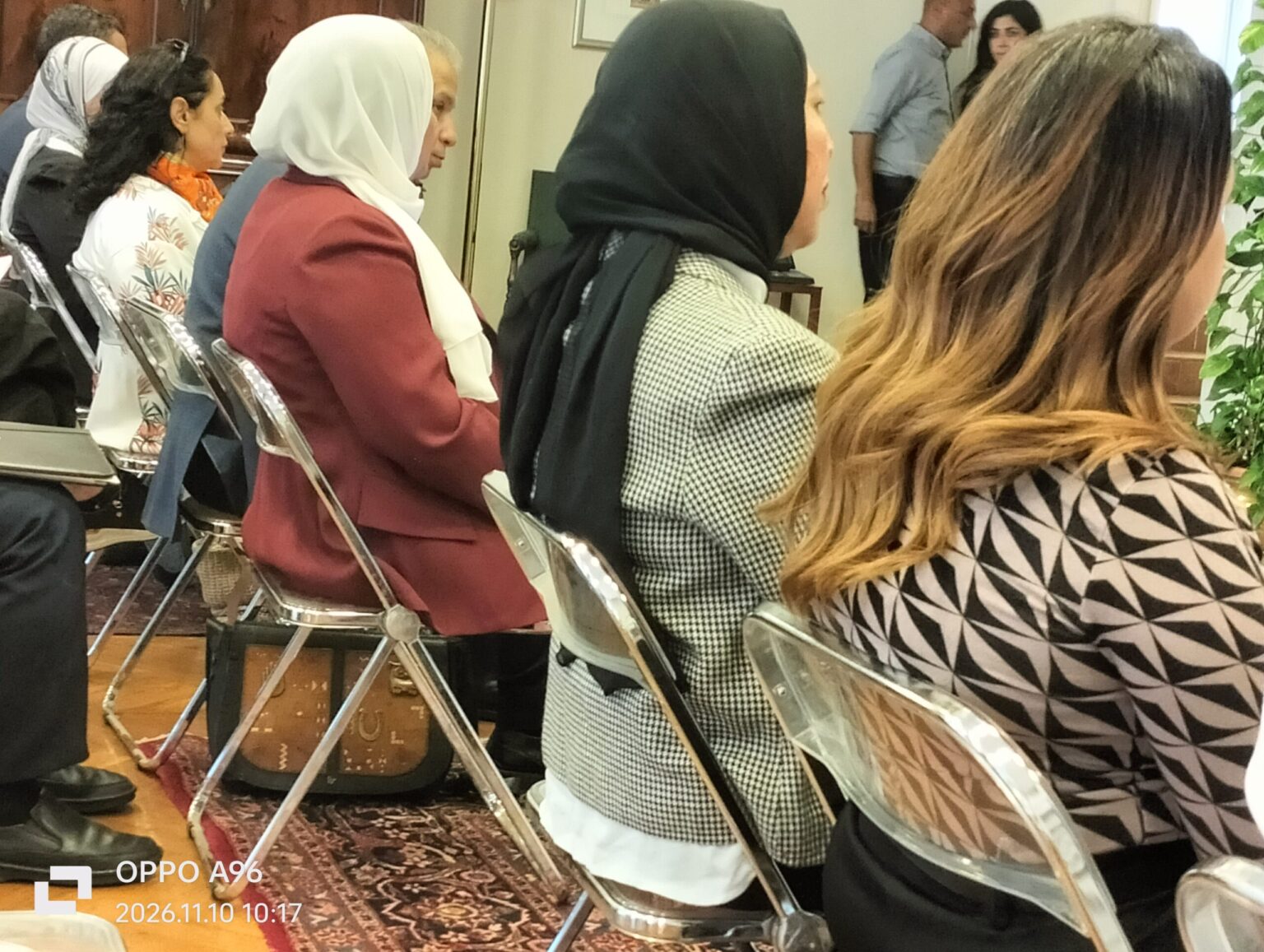
THE press conference held by German Ambassador to Egypt Jürgen Schulz went beyond a conventional presentation of bilateral relations. While highlighting the growing partnership between Cairo and Berlin, it also provided an opportunity to examine some of the most consequential contradictions in contemporary international politics.
From Gaza and Sudan to Iran and Ukraine, the discussion raised a fundamental question: Can international principles be applied consistently when the victims are Ukrainian, but become subject to political selectivity when the victims are Palestinian?
Egypt and Germany: A partnership extending beyond trade
Ambassador Schulz highlighted the strength of Egyptian-German political, diplomatic, economic and educational cooperation.
Bilateral trade has exceeded €6 billion, while approximately 1,600 German companies operate in Egypt.
Germany’s development cooperation portfolio includes approximately 80 ongoing projects and additional initiatives under preparation, with a total value approaching €1.1 billion.
Renewable energy, water management, agriculture, transportation and vocational training are among the principal areas of cooperation.
One notable example is German support for connecting a wind power project in the Gulf of Suez to the electricity grid, potentially providing green electricity equivalent to the needs of approximately 1.7 million Egyptian households.
The ambassador also highlighted agricultural programmes intended to assist approximately 300,000 small farmers in improving water efficiency and agricultural practices.
Tourism remains another important pillar, with approximately 1.7 million German visitors travelling to Egypt during the previous year.
These achievements demonstrate the mutual benefits of the partnership, but they also raise the question of shared political responsibility in addressing regional crises.
Gaza: Why should Hamas’s disarmament be the only demand?
In discussing Gaza, Ambassador Schulz addressed the implementation of the peace arrangements and the issue of Hamas’s disarmament as part of the proposed political and security framework.
However, this position raises an essential question about the balance of international demands.
If the disarmament of Hamas is explicitly demanded, where is the equally clear demand to confront extremist Israeli settlers who attack unarmed Palestinian civilians, destroy homes and property, threaten communities and seize Palestinian land?
Where are the equally decisive measures to hold those responsible accountable?
Security cannot be reduced to disarming one party while settler violence and the protection of Palestinians under occupation remain secondary considerations.
Israel, as the occupying power, has obligations under international humanitarian law to protect the population under occupation. The protection of civilians is not optional, nor can it depend on political or military alliances.
The European Union itself has repeatedly condemned violent settler attacks and called for accountability and effective preventive measures.
The real question, therefore, is whether these declarations will translate into sufficient political pressure and practical action.
Peace cannot be genuine if Palestinians remain exposed to violence, displacement and dispossession without effective protection or accountability.
AldiploMasy’s question to Ambassador Schulz: Can Europe make an independent decision on Iran’s frozen assets?
During the press conference, AldiploMasy directly questioned Ambassador Jürgen Schulz about the frozen Iranian assets and the European Union’s ability to exercise independent political judgment in relation to American decisions.
The question addressed whether the European Union, of which Germany is a leading member, could take an independent position in the coming period and support the release of Iranian assets frozen under American measures, rather than simply following Washington’s political direction, while respecting applicable international and European legal obligations.
The question carries particular significance following the September 2026 decision by Russia and China to veto a US-sponsored Security Council proposal concerning the continuation of UN monitoring of sanctions against Iran.
It is important, however, to distinguish between vetoing a monitoring mechanism and releasing frozen assets. The Russian and Chinese veto did not itself release Iranian funds.
Assets frozen under US jurisdiction cannot simply be released by a unilateral European decision. Assets within European jurisdiction, meanwhile, are subject to the EU’s own legal and institutional procedures, alongside applicable international obligations.
The broader political question remains: To what extent can Europe exercise genuine strategic autonomy when its diplomatic interests differ from those of the United States?
European independence should be measured not by political declarations, but by the ability to make independent decisions grounded in international law rather than geopolitical pressure.
Ukraine and Gaza: Germany’s historical responsibility and the problem of selective principles
The issue becomes even more sensitive when Germany’s extensive support for Ukraine is compared with its position during Israel’s military campaign in Gaza.
Germany has provided Ukraine with substantial military, financial and political assistance, including weapons, military equipment and air-defence capabilities.
Chancellor Friedrich Merz has repeatedly reaffirmed Germany’s commitment to Ukraine, invoking the country’s responsibility for European security and the historical legacy of Nazi aggression against Ukraine and other European peoples.
This historical dimension raises an uncomfortable but legitimate question:
If Germany invokes its Nazi past to explain its responsibility toward Ukraine, why should the Palestinian tragedy be approached with a less demanding interpretation of historical responsibility?
Germany authorized military equipment exports to Israel worth approximately €326.5 million in 2023. The majority of these export licences were granted in the aftermath of the October 7, 2023 attacks.
This figure represents more than an economic statistic. It forms part of a political and legal record that deserves serious scrutiny, particularly in light of the enormous civilian suffering in Gaza.
For chronological accuracy, Israel’s current war on Gaza followed the October 7, 2023 attacks, not October 22, 2022.
Germany’s military support for Israel subsequently became the subject of international legal proceedings. Nicaragua brought a case against Germany before the International Court of Justice, alleging violations of obligations under the Genocide Convention and international humanitarian law through its military assistance to Israel.
These allegations must not be presented as a final judicial finding: the proceedings have not produced a final judgment establishing Germany’s complicity in genocide. Nevertheless, the case raises serious questions about arms transfers, state responsibility and the obligation to prevent international crimes.
Politically and morally, the question remains unavoidable: How can a country whose historical memory is built around the promise of ‘Never Again’ ignore the risks associated with supplying weapons to a state conducting a devastating military campaign against a civilian population?
Historical responsibility cannot be selective. Its ultimate purpose must be the protection of human life, regardless of nationality, religion or geography.
Extremist settlers: Another test of Europe’s credibility
The situation in Gaza cannot be separated from escalating violence in the occupied West Bank.
Palestinian communities continue to face attacks involving physical violence, destruction of property, damage to agricultural land, intimidation and forced displacement.
The European Union has condemned these attacks, demanded accountability and called on Israel to protect the Palestinian population under occupation. In May 2026, it also adopted additional restrictive measures against individuals and entities linked to extremist settler activity.
Germany, as one of Europe’s most influential powers, should therefore move beyond expressions of concern and support meaningful political and economic accountability.
The protection of Palestinians must become a practical criterion in European relations with the Israeli government.
Sudan, Iran and Ukraine: The need for a consistent diplomatic approach
Ambassador Schulz also addressed the humanitarian catastrophe in Sudan, referring to the Berlin conference, which mobilized approximately €1.5 billion in humanitarian pledges.
On Iran, he emphasized the importance of resolving tensions through negotiations rather than military confrontation.
The continuing Russia-Ukraine war was also discussed, particularly its implications for European security and the international order.
These crises demonstrate the importance of a diplomatic approach based on consistent principles: respect for sovereignty, protection of civilians, rejection of attacks on civilian infrastructure and compliance with international law.
Conclusion: No peace through double standards, no historical memory without accountability
There is no question about the importance of Egyptian-German relations or the need to expand economic, technological and development cooperation.
However, the true strength of this partnership cannot be measured exclusively through trade figures, investment flows and development projects. It must also be measured through the political responsibility both countries demonstrate in confronting major humanitarian crises.
Germany, which invokes its historical responsibility in supporting Ukraine, must apply the same moral lessons when addressing Palestine.
The European Union, which repeatedly declares its commitment to international law, must ensure that these principles apply consistently, without excluding Israel from accountability.
Weapons cannot be treated as an unacceptable instrument when civilians are killed in Europe, yet receive political justification when Palestinian civilians become their victims. The protection of civilians cannot be an absolute obligation in Kyiv and a negotiable consideration in Gaza.
Egypt, with its diplomatic influence, strategic geographical position and central role in regional affairs, remains an indispensable partner in any serious effort to achieve stability.
The real value of Egyptian-German cooperation will ultimately depend on its contribution to a just peace, the protection of Palestinian rights, respect for national sovereignty and the preservation of human dignity.
Between the Nile and Berlin, genuine partnership is ultimately a test of conscience before it is an agreement of interests. History cannot absolve those who forget its lessons, and peace cannot emerge from selective justice.