Analysis| M.General Mohamed Hussein
1st Undersecretary _ SIS
Netanyahu: When the Devil Preaches
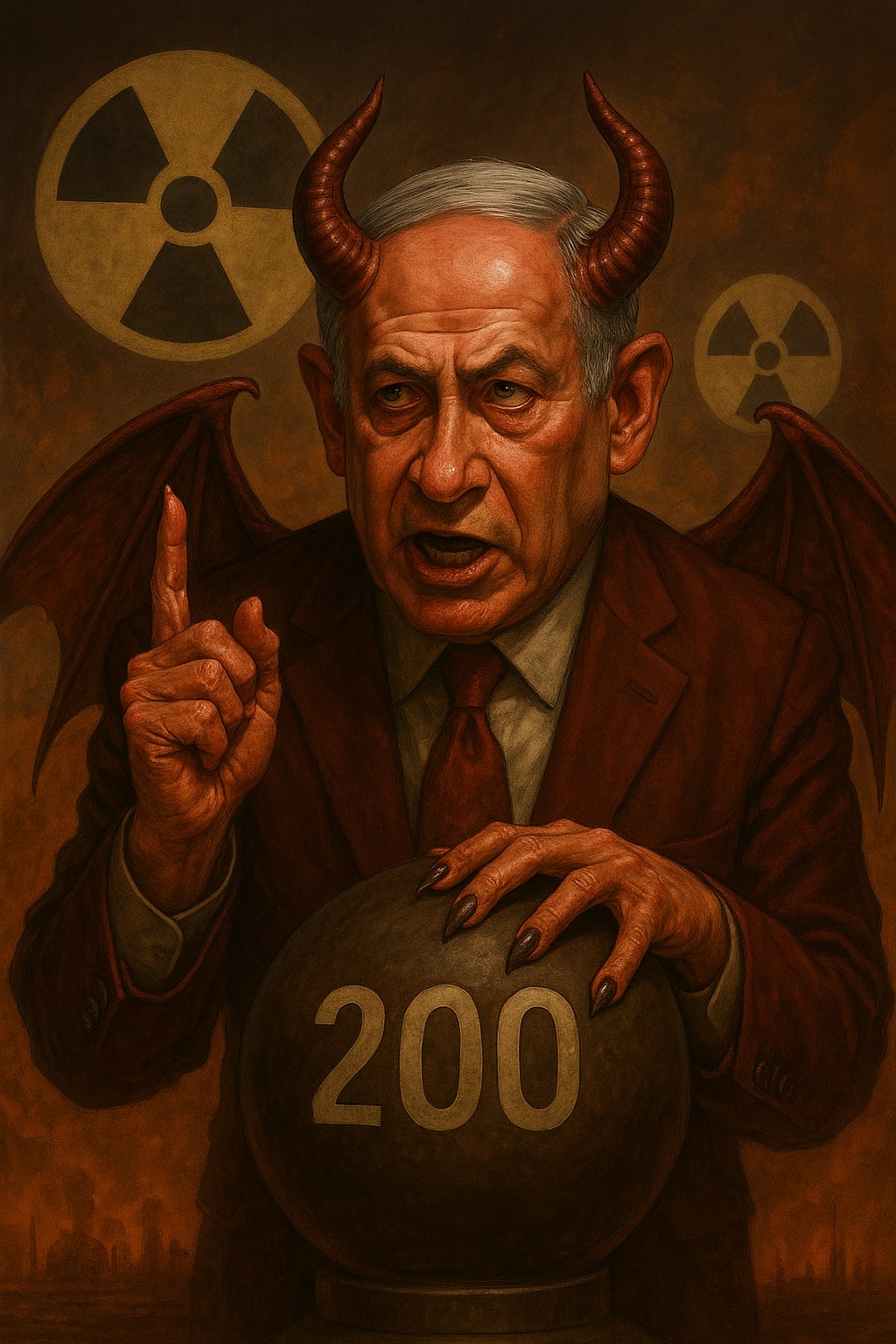
In a scene steeped in irony, Benjamin Netanyahu steps onto the global stage cloaked in moral authority, promoting his war on Iran under the banner of “security and peace.” He presents himself as the guardian of regional stability against the “Iranian nuclear threat”—all while his hands drip with blood from Gaza to Tehran. It is as if the devil himself has taken the pulpit, declaring a holy war in the name of virtue.
Israel has dubbed its latest offensive against Iran “Rising Lion,” a name heavy with symbolism. In Jewish tradition, the lion represents power and divine authority. Interestingly, it was also the emblem of imperial Iran under the Shah. Israel’s message is clear: this is not just a strike against a nuclear program, but an attempt to resurrect pre-revolutionary Iran and bury the Islamic Republic.
While Israel insists its goal is to prevent Iran from acquiring nuclear weapons, and Iran claims its nuclear pursuits are purely peaceful, a deeper reading reveals more complex and self-serving motivations behind Netanyahu’s escalation:
1. Stirring the Iranian Interior
Immediately after the initial strike, Netanyahu openly called on the Iranian people to rise up against their government. His intention is not hidden—he seeks to replicate the model of “creative chaos” seen elsewhere in the region. By fueling internal unrest, Israel hopes to destabilize Iran from within.
2. Disruption, Not Destruction
Netanyahu is well aware that Israel lacks the military capabilities to eliminate Iran’s nuclear infrastructure entirely. Without access to strategic bombers like the American B-2 and B-52—which Washington refuses to export—Israel’s strike is designed to disrupt, delay, and confuse, not to decisively destroy.
3. Dragging the U.S. into War
A key aim is to entangle the United States in a wider military confrontation. Netanyahu has repeatedly argued that Iran poses a greater threat to American interests in the Middle East than to Israel itself. By inflaming tensions, he hopes to compel Washington to act—not out of alliance, but out of perceived self-preservation.
4. Distracting the World from Gaza
As global outrage mounts over the humanitarian catastrophe in Gaza, Israel’s strike on Iran serves another purpose: to shift international attention. With pro-Palestinian sentiment spreading across continents, opening a new front provides convenient cover for atrocities that continue in the besieged strip.
5. Political Survival through War
Netanyahu faces immense domestic pressure: the hostage crisis with Hamas, a faltering military campaign in Gaza, economic instability, and a crisis of legitimacy. In response, he rallies under the slogan: “No voice is louder than the sound of war,” hoping that even a symbolic victory might bolster his crumbling political standing—especially since the Al-Aqsa Flood operation of October 7, 2023 shattered the myth of Israeli invincibility.
Nuclear Hypocrisy: Dimona’s Silent Arsenal
Perhaps the most glaring contradiction lies in Netanyahu’s justification for war: stopping a so-called Iranian nuclear threat, while Israel itself maintains a clandestine nuclear arsenal. Experts estimate that Israel possesses between 80 to 200 nuclear warheads, centered around the Dimona reactor in the Negev desert.
Israel has never signed the Nuclear Non-Proliferation Treaty (NPT), nor does it allow International Atomic Energy Agency (IAEA) inspectors into its facilities. How, then, can a state with an undeclared and unmonitored nuclear arsenal claim the moral authority to wage war against a nation still under inspection and—by its own account—pursuing civilian energy?
It is a case of strategic double standards, where the preacher lectures from atop a hidden stockpile of weapons.
Conclusion: A War Cloaked in Righteousness
When Netanyahu preaches, his words don’t emerge from a pulpit—but from the mouth of a cannon. He postures as a savior while leaving destruction in his wake. His war is not for the peace of the region, but for the survival of his premiership.
He does not fight evil—he manufactures it, to fight it.
This is what happens when the devil dons the robes of a reformer.