AETOS WIRE – All signs point to Asia leading the gas demand and continuing this upward trajectory for at least the next decade. Natural gas is still showing strong signs of becoming the world’s second most important source of energy over the next decade according to Majid Jafar, CEO of Crescent Petroleum, the Middle East’s oldest private oil & gas company.
Examples of this trend are seen in both India and S. Korea. India’s Prime Minister Narendra Modi, whose medium-term goal for gas is a rise from 6.5% to 15%, has consulted industry CEOs on how to increase the role of gas in India. In a break from previous administrations, S. Korea’s new policy of phasing out coal and nuclear power in favor of more costly natural gas means it could see gas rise from 18% to 37% of the power mix by 2030.
According to Jafar, “Not only is the Middle East the source of c.42.5% of the world’s proven gas reserves, but it is also becoming a key consumer with the fastest growth in the region in both oil (3.4% CAGR) and gas (5.6% CAGR) demand over the last ten years.”
Mr. Majid Jafar, who is also managing director of the board of Dana Gas, the leading publicly listed natural gas company in the Middle East, adds, “Prosperity of the region depends on managing geopolitical risks, efficiently delivering the energy needs of the region, and maximising recovery of resources, all of which require good policy and a thriving private sector.”
When asked about oil, Mr. Jafar says, “Oil markets are showing signs of recovery as 2018 has already seen prices of $68, however the drastic cut in upstream investment over the last 3 years has sowed the seed for a potentially significant price spike.”
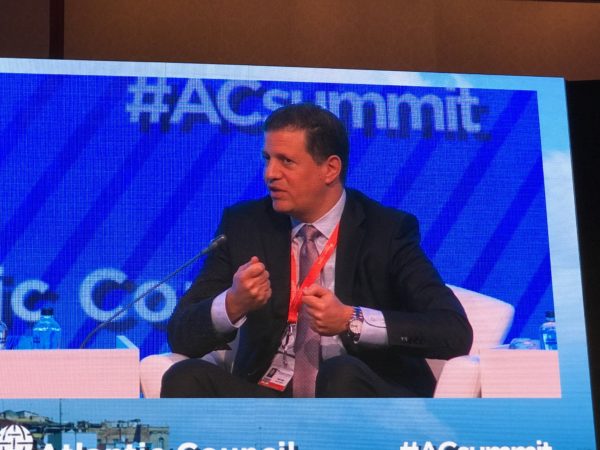
Mr. Majid Jafar is one of the featured speakers at the second Atlantic Council Global Energy Forum in Abu Dhabi, the premier international gathering of government, industry, and thought leaders to set the global energy agenda for the year and anticipate and respond to the dramatic changes in the world of energy.
The Atlantic Council Global Energy Forum in Abu Dhabi is scheduled for two days, beginning on Friday January 12 and will be attended by energy ministers from across the region including from UAE, Iraq, Bahrain, Sudan. The Secretary-General of OPEC and the Director-General of IRENA will also be there.
During the panel discussion, “2018 Energy Market Trajectories – A View from the Top”, CEOs from major global energy firms, including Mr. Majid Jafar, will shed light on the year in energy to come, offering insight into major market developments to follow, and guidance on how to interpret them.
In addition to Majid Jafar, CEO of Crescent Petroleum, other panel participants are Ayman Asfari, Chief Executive Officer, Petrofac, Claudio Descalzi, Chief Executive Officer, Eni S.p.A., Meg Gentle, Chief Executive Officer, Tellurian Inc, Hunter L. Hunt, Chairman and CEO, Hunt Consolidated Energy and Younghoon David Kim, Chairman and CEO, Daesung Group; Chair, World Energy Council.