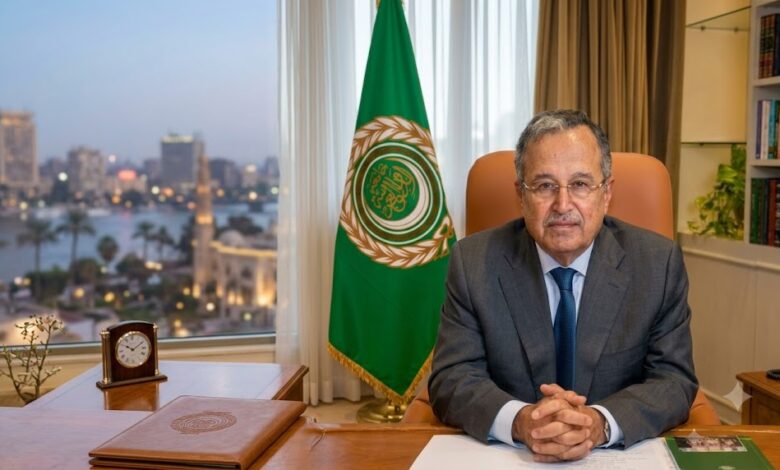
 Editor-in-Chief Writes
IN a commendable diplomatic step, the League of Arab States is moving from condemnation to practical action, calling on Arab and Islamic countries to summon Colombian ambassadors to officially protest Colombia’s opening of an embassy in occupied Jerusalem, in implementation of the Arab League Council’s decision at the level of permanent delegates.
Egypt Implements the Decision.. and Arab Action Continues
In this context, Egypt summoned the Colombian Chargé d’Affaires in Cairo on October 16, 2026, becoming the first to put the Arab decision into actual effect.
Egypt also participated in a joint statement issued by 19 Arab and Islamic countries, condemning the opening of the Colombian embassy and demanding a reversal of the decision. The signatory countries included Jordan, Algeria, Djibouti, Saudi Arabia, Sudan, Syria, Somalia, the Sultanate of Oman, Palestine, Qatar, Kuwait, Lebanon, Libya, and Yemen, in addition to Indonesia, Pakistan, Turkey, and Malaysia.
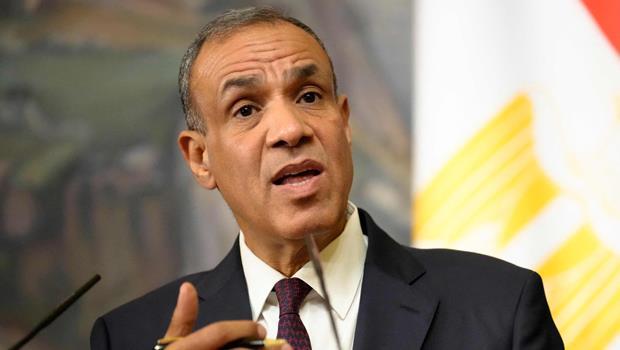
Here, the difference between participating in political condemnation and the actual implementation of diplomatic summoning becomes clear: Egypt remains the country whose execution of this procedure has been confirmed according to available information, while identifying the remaining implementing countries requires official documentation for each case.
Here arises the most crucial question: Will Colombia be the beginning of a broader Arab diplomatic movement, or will the response remain confined to this incident?
The Arab League Moves.. and Completing the Path is Required
The importance of the Arab step lies not merely in renewing political rejection, but in transforming the announced stance into clear diplomatic measures that protect the legal and historical status of Jerusalem, affirming that changing its status unilaterally creates no legitimacy and does not erase the rights of the Palestinian people.
The Arab League condemned the opening of the Colombian embassy, emphasizing that East Jerusalem is an integral part of the Palestinian territories occupied since 1967 and the capital of the envisioned Palestinian state, relying on international legitimacy resolutions, foremost among them Security Council Resolutions 476 and 478 of 1980, and Resolution 2334 of 2016.
Therefore, praising the Arab decision does not mean being satisfied with it; rather, it demands completing and following up on its implementation, so that collective decisions do not turn into statements whose validity expires by the end of the day they are issued.
From Colombia to the Ten States.. Will the Circle of Summoning Expand?
With the opening of its embassy in Jerusalem on October 14, 2026, Colombia became the tenth state to establish a diplomatic mission in the city, according to recent news reports. The list of the nine countries that preceded it includes: the United States, Guatemala, Honduras, Paraguay, Fiji, Papua New Guinea, Somaliland, Kosovo, and Nauru.
Here, the political demand advances clearly: If the Arab decision called for summoning Colombia’s representatives, why not open the file of the other nine countries, review their positions and actions, and explore ways to hold them diplomatically accountable?
What is required is not a fleeting reaction, but a gradual, institutional Arab path that begins with unifying official protests and extends to coordinated legal and diplomatic movements, putting bilateral relations under review in accordance with the requirements of international law and Arab-Palestinian interests.
What About the American Ambassador?
The issue of moving embassies to Jerusalem cannot be addressed without stopping at the United States, which inaugurated this path by moving its embassy from Tel Aviv to Jerusalem in 2018, during President Donald Trump’s first term.
Will the Arab movement extend to broader political and diplomatic accountability for the American precedent, which encouraged other countries to take similar steps?
The consistency of the Arab stance requires that procedures do not turn into an exception applied to one country and ignored before another. What is required is examining the available tools of action toward all concerned countries, including official protests, action at the United Nations, and coordinating bilateral and collective stances, without double standards or selectivity in defending Jerusalem.
Toward a Permanent Follow-Up Mechanism
This collective movement (19 countries) represents a foundation to build upon; the cause does not belong to a single Arab state alone, but relates to the rights of the Palestinian people, the status of Jerusalem, and respect for international resolutions that rejected changing the city’s status by force or through unilateral measures.
The next step worth discussing is establishing an Arab-Islamic follow-up mechanism to monitor the implementation of summoning decisions, identify countries that responded, study possible measures against countries that moved or announced moving their embassies, and present its findings to meetings of the Arab League and the Organisation of Islamic Cooperation (OIC).
Jerusalem is Not an Address on an Embassy Sign
Moving an embassy alone does not alter the legal status of Jerusalem, nor does repeating the step grant it legitimacy. Rights do not lapse through successive unilateral decisions, and occupation does not transform into recognized sovereignty merely by transferring diplomatic missions.
The recent Arab step demonstrated that there is room to move from statements of rejection to practical measures. The challenge remains in maintaining the momentum of this movement, expanding its scope, and applying the same standards to all countries, foremost among them the United States, which inaugurated the path of moving embassies to Jerusalem.
Will Colombia be the beginning of a new phase of organized Arab action, leading to accountability for the ten states and a review of stances toward Washington, in defense of Jerusalem and the rights of the Palestinian people?
That is the true test: for unity of stance to become unity of action, and for Arab diplomacy to become a tool for protecting rights, not merely a logbook of statements and condemnations.