Ashraf AboArafe
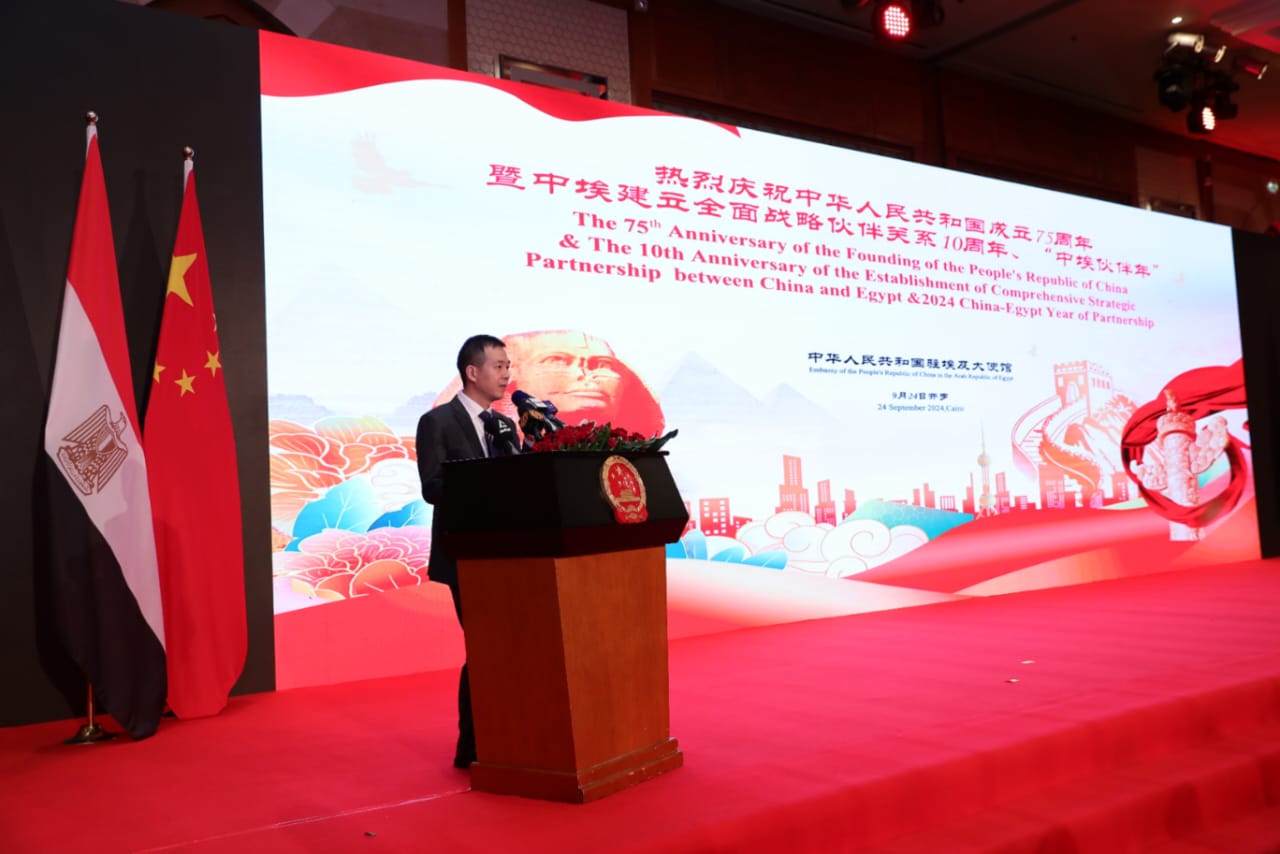
The spokesperson for the Chinese Embassy Zhu Xiaozhong in Egypt issued a statement regarding the high-level economic and trade negotiations between China and the United States, criticizing Washington’s continued imposition of unilateral tariffs on Chinese goods. The spokesperson described these actions as a serious blow to Sino-American economic relations, a blatant violation of the international trade system, and a major threat to global economic recovery.
In response, China has firmly defended its legitimate interests in accordance with international law and relevant domestic regulations. The spokesperson revealed that the U.S. has recently conveyed a willingness to negotiate on tariffs through various channels, prompting China to carefully assess the messages received.
Taking into account global expectations, national interests, and the concerns of American businesses and consumers, China agreed to engage in dialogue. Vice Premier He Lifeng, China’s lead negotiator for U.S.-China economic and trade issues, is set to meet with U.S. Treasury Secretary Scott Bessent during a visit to Switzerland from May 9 to 12.
China’s position remains firm: if the U.S. chooses to continue the tariff war, China will respond decisively; if the U.S. opts for negotiation, China is ready to engage fully. However, the country will not compromise on its developmental interests or principles of international fairness and justice.
The spokesperson emphasized that any negotiations must be based on mutual respect, equality, and mutual benefit. He warned that if the U.S. uses dialogue as a façade for pressure or coercion, China will not back down and will not strike any deal that sacrifices its core principles.
Regardless of shifts in global dynamics, China is committed to expanding openness, supporting the multilateral trading system centered on the World Trade Organization (WTO), and sharing development opportunities with all nations.
In this context, China also expressed its readiness to work closely with Egypt and other Arab countries to deepen mutually beneficial cooperation, resist unilateral protectionism and hegemonic behavior, uphold free trade and multilateralism, and advance inclusive and equitable economic globalization.