Ashraf AboArafe
Cairo – June 2, 2025
The Egyptian Automobile and Touring Club hosted Turkish Ambassador to Cairo, Salih Mutlu Şen, in a special cultural seminar that shed light on the deep historical, cultural, and familial ties between Egypt and Turkey. The event drew an elite audience of writers, artists, journalists, and intellectuals.
The seminar, held under the theme “History, Culture, and Civilization between Egypt and Turkey,” featured the presentation of the Arabic edition of the book “Three Centuries: A Family History in Turkey and Egypt” by Amina Fouad Tugay, a cousin of King Farouk and granddaughter of Khedive Ismail. The ambassador explained that the Arabic translation was published with his support and full consent of the author’s family, and that Selim Tugay, a family descendant, visited Cairo and contributed to the book’s preface alongside him.
From Ibn Tulun to Muhammad Ali Pasha: A Legacy of Shared Civilization
In his address, Ambassador Şen traced the roots of Turkish-Egyptian relations back over 1,000 years, starting with Ahmad ibn Tulun, and highlighted the pivotal role of Turks during the reign of Muhammad Ali Pasha. He noted that thousands of Turks from the Balkans, Rumelia, and Anatolia settled in Egypt to support modernization reforms and made it their homeland.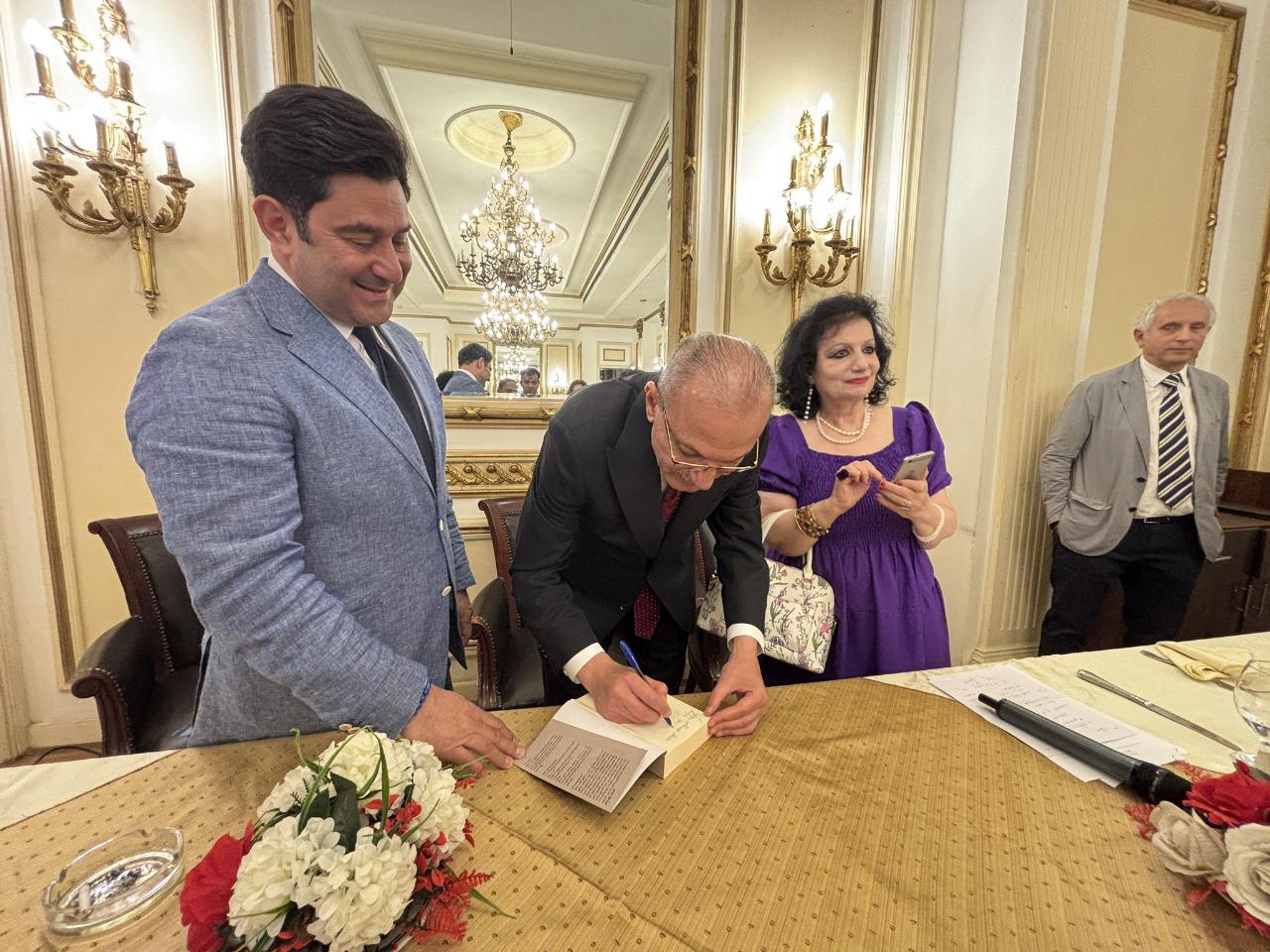
Citing a population census from 1846, the ambassador revealed that 59,000 Turks had settled in Egypt during that era, becoming an integral part of Egyptian society and contributing as “great Egyptian patriots.”
Historical Solidarity and Political Kinship
Ambassador Şen pointed to key episodes of solidarity, including Egypt’s military aid to the Ottoman Empire during the Crimean War (1853–1856), where 30,000 Egyptian troops and numerous warships were dispatched, earning the respect of the Ottoman sultan.
He also emphasized familial bonds between the ruling elites of both nations, such as the cousinhood of Sultan Abdulaziz and Khedive Ismail, and the Ottoman-Egyptian royal intermarriages that deepened mutual affection and trust between Cairo and Istanbul.
Deconstructing Orientalist Narratives
Şen criticized Western historians for shaping modern historical narratives through an orientalist lens, creating artificial rifts between Turkish and Arab identities. He stressed the importance of primary sources to understand the authentic history, referencing key works such as “The Turks in Egypt and Their Cultural Legacy” by Ekmeleddin İhsanoğlu, and “Through Human Beings” by Mohamed Arif Pasha, a former aide to Muhammad Ali.
Cultural Storytelling and Economic Partnership
On a cultural note, the ambassador revealed plans to produce a film based on the life of Zeynep Kamil, daughter of Muhammad Ali Pasha and wife of Grand Vizier Yusuf Kamil Pasha. He noted that her philanthropic legacy remains honored today in Istanbul, where a maternity hospital still bears her name.
Economically, Şen highlighted Turkey as one of Egypt’s leading investors, particularly in textiles, noting the planned launch of at least three new factories in 2025. He emphasized that Turkish investors feel culturally close to Egypt and see it as an attractive destination due to skilled labor, geographic proximity, and favorable market conditions.
“Excellent Relations” Despite Diverging Views
Describing current bilateral relations as “excellent,” the ambassador acknowledged that differing regional perspectives between the two major powers are natural. He downplayed any notion of rivalry, instead portraying the dynamic as constructive competition, particularly in African and Asian markets where Egyptian and Turkish contractors often collaborate.
Şen affirmed that mutual trust between the two countries has now been firmly established. He praised Egyptian President Abdel Fattah El-Sisi as the first modern Egyptian leader to prioritize economic and social development meaningfully, and lauded Egypt’s historical sacrifices in the Palestinian cause, fighting five wars at great societal cost.
A Vision for Regional Co-Leadership
In conclusion, Ambassador Şen called for a strategic partnership rooted in geography, values, and shared destiny. He emphasized that Egypt and Turkey—two strong, sovereign nations—must join forces to address regional challenges and harness their diplomatic and economic strengths.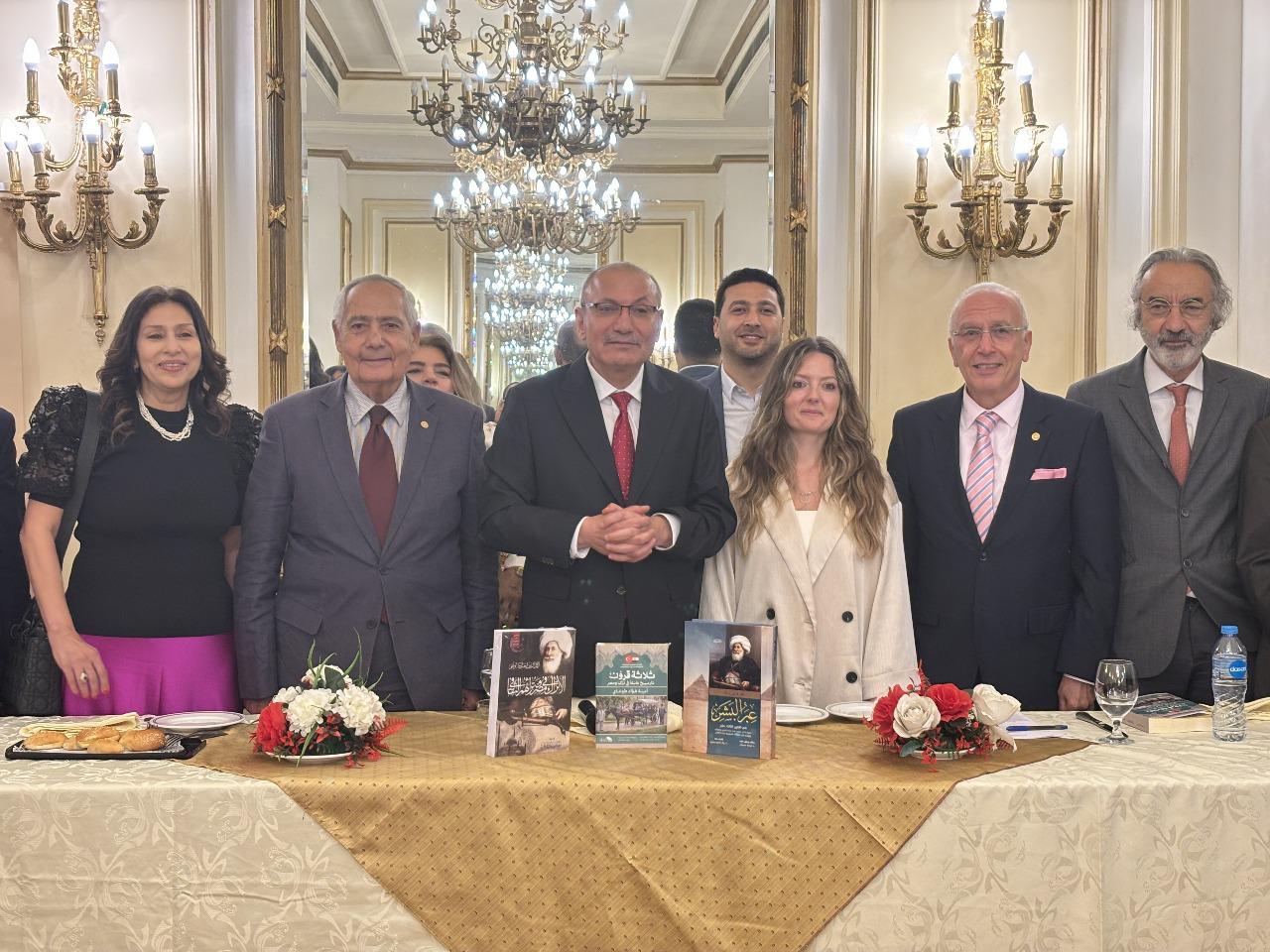
“Together, we can offer powerful contributions to the Arab-Turkish and Islamic worlds,” he said, reaffirming Turkey’s vision for permanent rapprochement and a joint future of stability and development.