By: Zafar Ahmad Abdul Ghani
President MERHROM
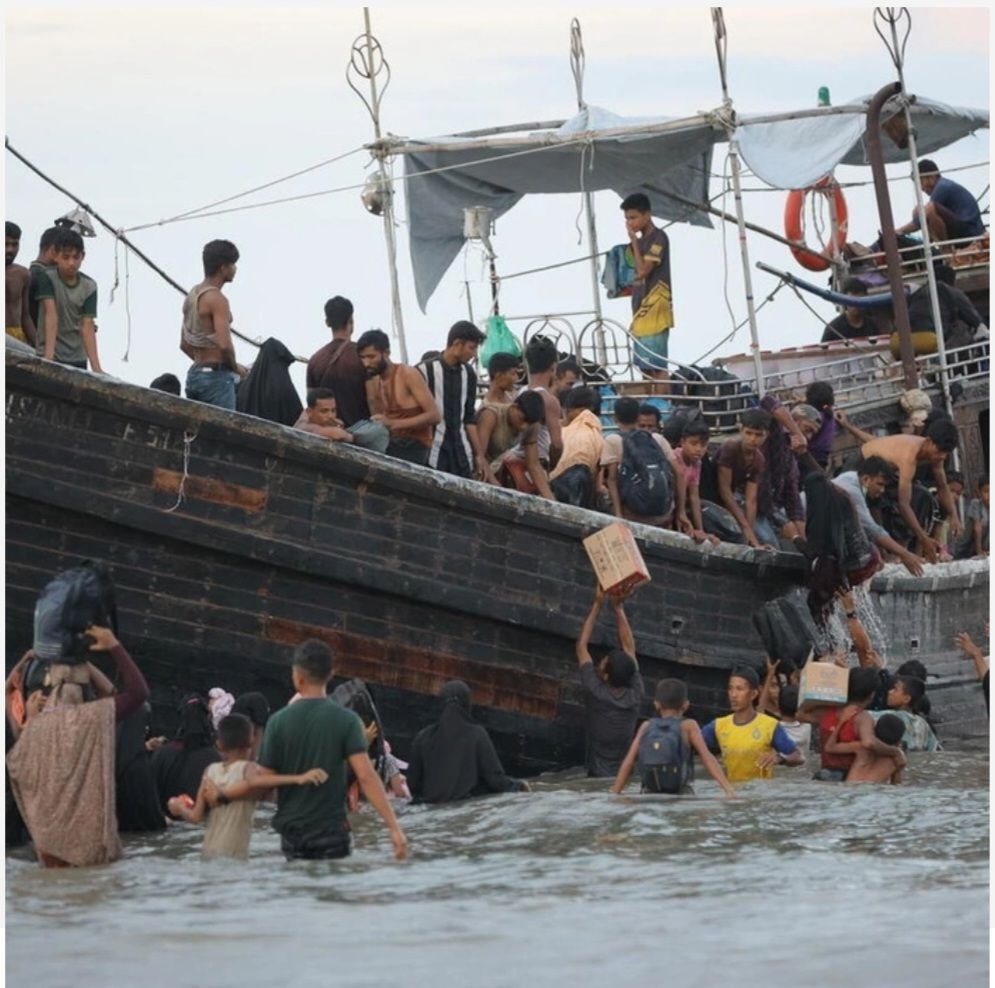
The Myanmar Ethnic Rohingya Human Rights Organization in Malaysia (MERHROM) expresses its profound grief over the tragic deaths of more than 250 Rohingya refugees whose boat capsized in the Andaman Sea after fleeing the camps of Cox’s Bazar in Bangladesh.
This catastrophe is not an isolated incident—it is a continuation of a long, unfolding tragedy. The ongoing Rohingya genocide has relentlessly forced survivors to escape Myanmar, only to encounter new layers of suffering in refugee camps and neighboring countries. Overcrowding, insecurity, and despair inside these camps push many toward perilous sea journeys in search of dignity and survival.
Yet urgent and troubling questions remain unanswered:
How were these refugees able to leave heavily guarded camps?
Who facilitated and profited from their journey?
What false promises were made to them?
And why do trafficking networks continue to operate with such impunity?
The truth is stark: these deaths are not accidents—they are consequences.
The root cause remains the ongoing genocide against the Rohingya. As long as it persists, desperate people will continue to flee, and traffickers will continue to exploit their suffering.
The international community has witnessed this tragedy repeatedly. For a moment, the world mourns—then moves on—while thousands vanish silently beneath the waves, their stories buried with them. This cycle reflects a deeper failure:
- Failure to restore Rohingya citizenship
- Failure to ensure accountability for perpetrators
- Failure to dismantle trafficking networks
- Failure to provide adequate humanitarian protection
The deaths at sea are a direct manifestation of the atrocities in Rakhine State, where Rohingya remain trapped without freedom of movement or access to essential aid. Reports from the United Nations, human rights organizations, and global media have repeatedly documented these abuses, yet violence continues unabated by the Myanmar military and the Arakan Army.
This is not new. The Rohingya have endured decades of persecution—from 1942 to 1978, through the 1990s, and into the devastating waves of violence in 2012, 2016, 2017, and beyond. Each chapter adds to a history marked by systematic exclusion, displacement, and slow destruction.
MERHROM urgently calls upon:
- Association of Southeast Asian Nations (ASEAN)
- United Nations
- Organisation of Islamic Cooperation (OIC)
- European Union (EU)
- Governments, civil society, and the global community
to take decisive and coordinated action to end the genocide, prosecute perpetrators, and dismantle trafficking networks across origin, transit, and destination countries.
We further urge UN member states to fully enforce anti-trafficking laws and treat Rohingya survivors not as offenders, but as victims of a compounded injustice—genocide followed by exploitation.
No genocide should persist in the 21st century. Its continuation represents a profound failure of human rights, international law, and moral responsibility.
Today, every Rohingya carries the weight of trauma without adequate care or support. We call on transit countries to provide humanitarian assistance and protection, ensuring survivors can access essential services without punishment due to their statelessness.
Because in the end, this is not only a humanitarian crisis—
it is a test of our collective conscience.
“Justice delayed is justice denied.”