 Chief editor writes ✍️
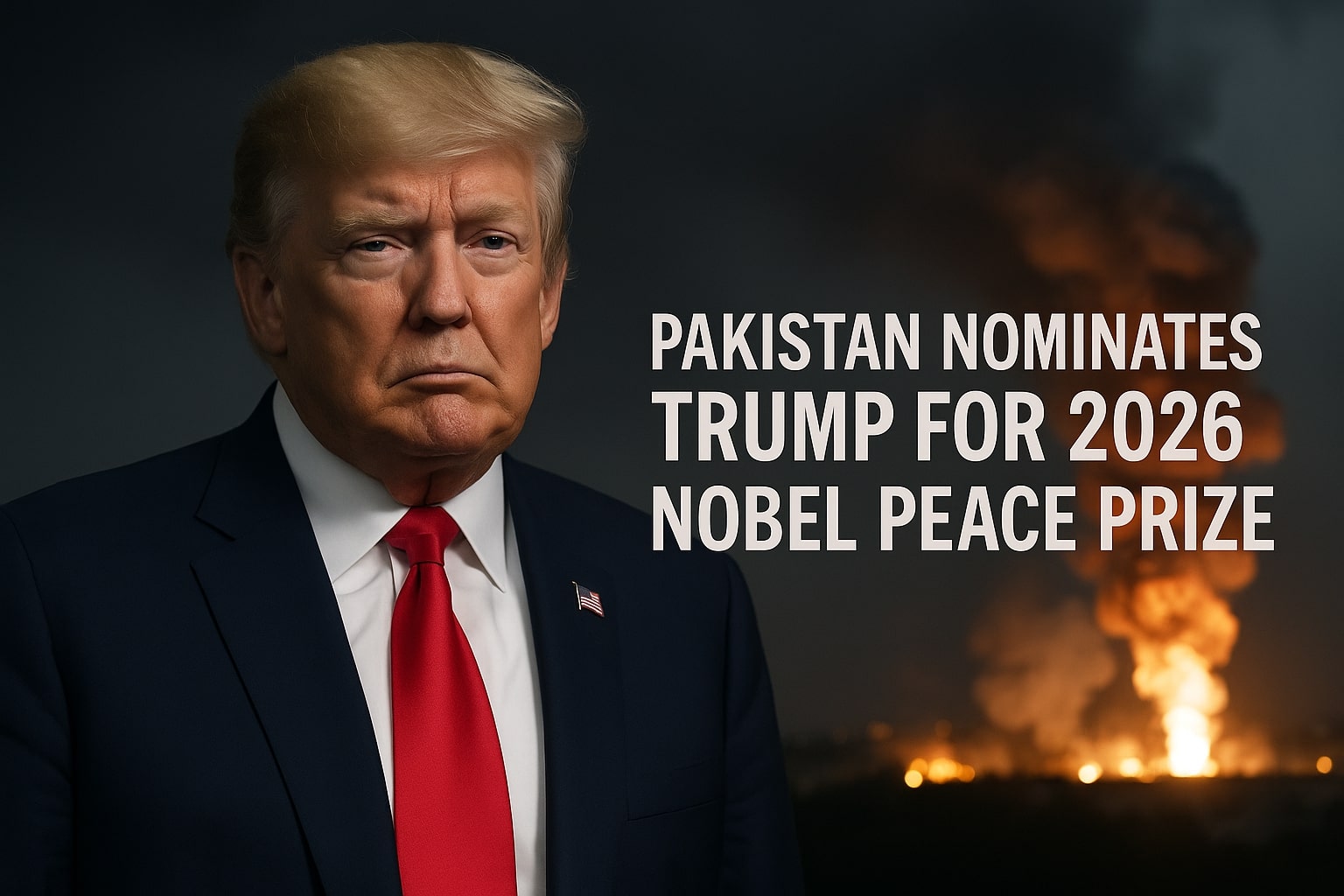
In a move that has raised both eyebrows and questions, the Government of Pakistan has officially nominated former U.S. President Donald J. Trump for the 2026 Nobel Peace Prize, citing his “decisive diplomatic intervention” during the 2025 Pakistan-India crisis.
According to the statement, the nomination is in recognition of Trump’s “strategic foresight and statesmanship,” which allegedly helped de-escalate a potentially catastrophic nuclear standoff between the two South Asian powers. The government praised his role in securing a ceasefire following Operation Bunyanum Marsoos, Pakistan’s military response to what it described as “unprovoked Indian aggression” that claimed the lives of innocent civilians.
Pakistan credited Trump’s engagement with both Islamabad and New Delhi for preventing the region from descending into full-scale war. The nomination also applauded Trump’s “sincere offers” to mediate the long-standing Kashmir dispute, which Islamabad emphasized remains a root cause of instability in South Asia.
📝 Analysis: A Contradiction in Diplomacy?
While the Pakistani government heaps praise on Trump’s peace-making credentials, many observers have pointed to a glaring contradiction in timing and geopolitical messaging.
Just days prior to the nomination, Trump publicly supported or tacitly endorsed a series of U.S. military strikes on Iran’s nuclear facilities—strikes that many analysts warn could ignite a broader regional war. These strikes came in the wake of Israel’s escalating failures in Gaza, where its Iron Dome proved ineffective against sustained resistance—undermining the strategic balance long upheld by U.S. and European backing.
🔥 A Critical Reflection
Today, the world sees Donald Trump for what he truly is:
A face of deception, aggression, and strategic opportunism. After the unexpected collapse of Israel’s deterrent power and the humiliating performance of the Iron Dome, Washington’s rage manifested in direct attacks on Iranian infrastructure.
This act, following years of regional provocation, has opened a new chapter in global power relations—one that may be marked by more caution, self-reliance, and awareness among Eastern states.
Yet in the midst of this fiery climate, Pakistan chooses to honor the very man who authorizes the bombs falling on Tehran—a key partner of Pakistan’s own foreign policy in the Islamic world.
How can Pakistan stand with Iran against Israeli–American aggression, and in the same breath nominate Trump—the architect of the current escalation—for a Peace Prize?
This contradiction reflects more than inconsistency; it reveals the malleability of political alliances in the face of strategic expedience.
⚖️ Conclusion: Between Realpolitik and Moral Clarity
Pakistan’s nomination of Trump may serve a short-term diplomatic purpose:
- Appease segments of the U.S. establishment ahead of the 2026 elections.
- Recast Pakistan as a “moderate regional actor” open to Western engagement.
- Bring global focus back to the Kashmir conflict by riding on Trump’s international profile.
However, in doing so, Islamabad risks alienating public opinion across the Muslim world, where solidarity with Gaza and Tehran runs deep, and Trump is seen not as a peacemaker, but a provocateur.
In the age of instant media and global outrage, symbolism matters.
And nominating a bomber for peace may just be the ultimate diplomatic paradox.