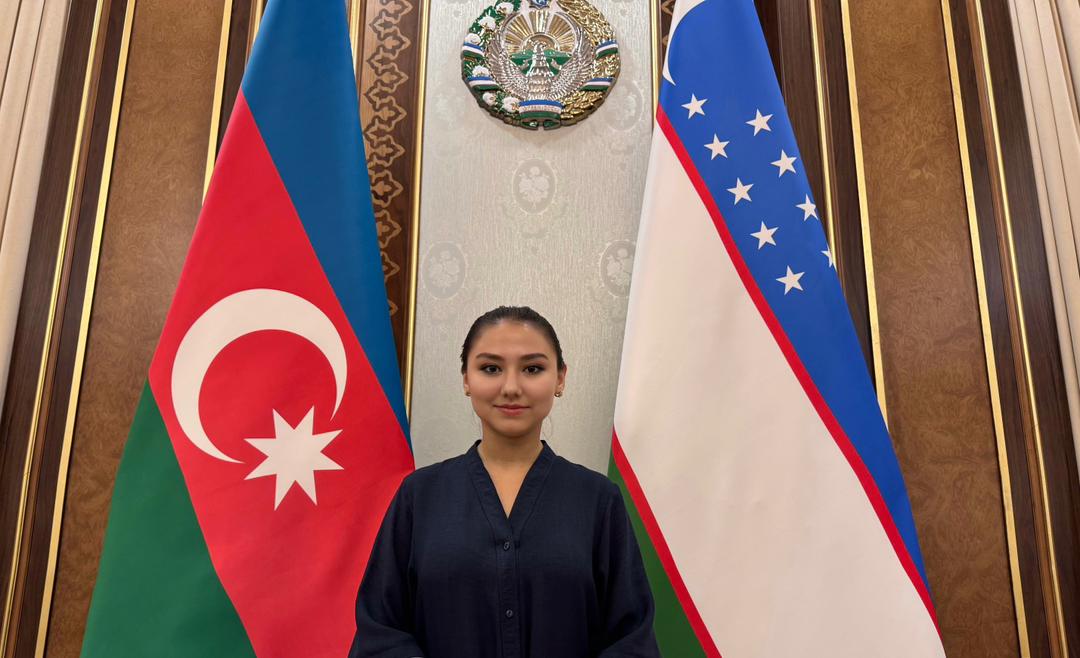
 Rukhshona Abdurazakova
Press Service Specialist, MFA Uzbekistan
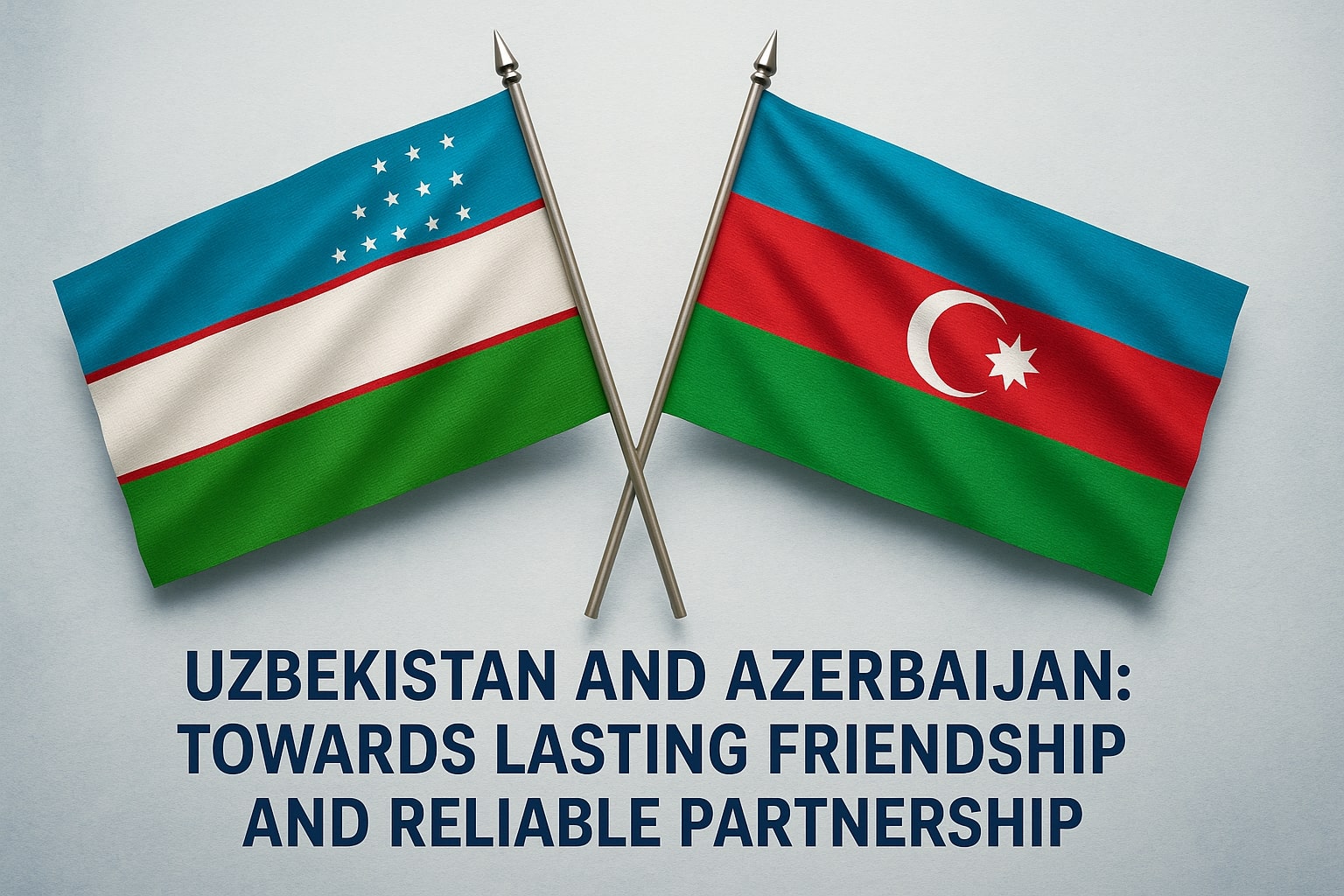
Uzbekistan and Azerbaijan are charting a new path in regional diplomacy—one grounded in shared history, strategic alignment, and an unwavering commitment to forward-looking cooperation. What began as a relationship rooted in cultural and linguistic kinship has evolved into a dynamic partnership marked by deepening economic ties, institutional collaboration, and synchronized policy planning.
Economic Synergy: A Foundation for Strategic Depth
The economic dimension of bilateral relations has become a defining pillar of this partnership. Over the past eight years, trade between the two countries has grown nearly eightfold, reaching $253 million in 2024. Uzbekistan exported $208 million worth of goods to Azerbaijan, while importing $45 million—a clear indication of balanced, complementary trade.
The trade basket has matured, expanding beyond basic commodities to include machinery, transport equipment, textiles, non-ferrous metals, and agricultural produce. This diversification reflects a shared commitment to sustainable economic interdependence, built on stable supply chains and evolving market demand.
Investment: From Concept to Concrete Cooperation
Investment flows have experienced a remarkable surge. Azerbaijani direct investment in Uzbekistan skyrocketed from $142,000 in 2017 to $79.5 million in 2024. A landmark achievement in this domain is the launch of the Azerbaijan–Uzbekistan Investment Company, capitalized at $500 million to support joint ventures across sectors—ranging from household appliance production in Azerbaijan’s Alat Free Economic Zone to green energy collaborations with Kazakhstan.
These are not theoretical frameworks but operational projects that reflect a new generation of pragmatic cooperation—anchored in innovation, co-financing, and industrial integration.
Research-Driven Diplomacy: Bridging Strategy and Practice
Under the initiative of the President of Uzbekistan, a research delegation from the Center for Economic Research and Reforms (CERR) visited Azerbaijan in 2024, holding 20+ meetings across 18 sectors. The resulting roadmap offers detailed recommendations on industrial policy, energy cooperation, digital infrastructure, and logistics.
In a reciprocal gesture, an Azerbaijani expert delegation visited Uzbekistan, drafting follow-up proposals that now inform the joint five-year cooperation strategy. This exchange marks a transition from reactive diplomacy to strategic foresight, where evidence-based policy drives bilateral action.
Agriculture and Logistics: Strategic Assets in Global Trade
Agriculture represents a shared strength and a mutual opportunity. With combined agricultural exports exceeding $3.4 billion, Uzbekistan and Azerbaijan are well-positioned to enter new markets in viticulture, fruit processing, and food security. Drawing from Azerbaijan’s successful model in agricultural risk insurance, Uzbekistan has already drafted a pioneering law in this field.
Logistics is another frontier of integration. Both countries are working to optimize the Trans-Caspian corridor, harmonize transit regulations, and reduce tariffs for critical goods. These reforms will enhance Central Asia’s access to global markets and bolster Azerbaijan’s role as a key node in Eurasian transport networks.
Private Sector & Platform Integration: New Avenues of Growth
The commercial landscape is expanding into new formats. Uzbekistan is seeking access to Azerbaijan’s AzExport digital platform, enabling its SMEs to broaden their reach and tap into regional e-commerce. Meanwhile, Azerbaijani retailers are exploring supermarket chains and logistics centers in Uzbekistan—moves that promise to restructure consumer access and deepen supply chain resilience.
Tourism and Education: Soft Power with Strategic Impact
Tourism, often an understated element of diplomacy, is gaining traction. In 2024 alone, over 16,000 Azerbaijani citizens visited Uzbekistan. To unlock the full potential of this sector, both countries are developing joint tourism brands, integrated tour packages, and cultural forums focused on wellness and winter tourism—targeting not only domestic travelers but also international audiences.
Education and digital capacity-building form a critical foundation for long-term partnership. A dual-degree program has been launched with the Azerbaijan State University of Economics, focusing on engineering and digital science. Notably, Azerbaijan is also spearheading the creation of a large language AI model for the Uzbek language—a strategic move toward digital sovereignty and linguistic preservation in tech ecosystems.
Analysis: A New Model for Regional Integration
The Uzbekistan–Azerbaijan partnership stands out not only for its achievements but for its structure. It is an integrated model where policy-making, business innovation, and scientific research reinforce each other. This is diplomacy not in words but in action—delivering measurable outcomes across economic and social sectors.
This strategic partnership is more than an alliance; it is a vision—one that champions collective growth, regional resilience, and globally-minded development. It offers a replicable model for the Turkic world and broader Eurasian space, grounded in trust, action, and shared values.
Conclusion:
As Uzbekistan and Azerbaijan navigate the evolving contours of global and regional dynamics, their partnership is proving to be more than a bilateral success story. It is a living blueprint for twenty-first-century regional cooperation, fusing tradition with innovation and diplomacy with deliverables.