Xinhua — The drums of history met the pulse of the future in Beijing this weekend. At the opening of the 2025 World Humanoid Robot Games, four robots clad in 3D-printed terracotta warrior armor struck their drums in unison, while five companions moved gracefully in a choreographed dance beside a live performer. The scene created a breathtaking dialogue across millennia — Qin Dynasty grandeur conversing with 21st-century innovation.
“With dexterous hands, these humanoid robots hold drumsticks and strike perfectly in time with the music,” said Gao Qian, deputy head of the Beijing Dance Academy (BDA). The troupe’s performance, inspired by Emperor Qinshihuang’s legendary Terracotta Warriors, won the first gold medal of the Games in the group dance event on Friday.
“We are confident in showcasing Chinese tradition by weaving cultural dance into robotic motion,” Gao added, noting how swiftly humanoid technology is evolving.
For three months, the Beijing Dance Academy collaborated with Optics Valley Dongzhi, developer of the 1.7-meter, 70-kg humanoid robots. The challenge was steep: early prototypes lacked the fluidity of human movement. The solution came through artistry and engineering — a BDA dancer wore a motion-capture suit, transmitting lifelike choreography into the robots’ code, while engineers upgraded motors, components, and algorithms to enhance stability and coordination.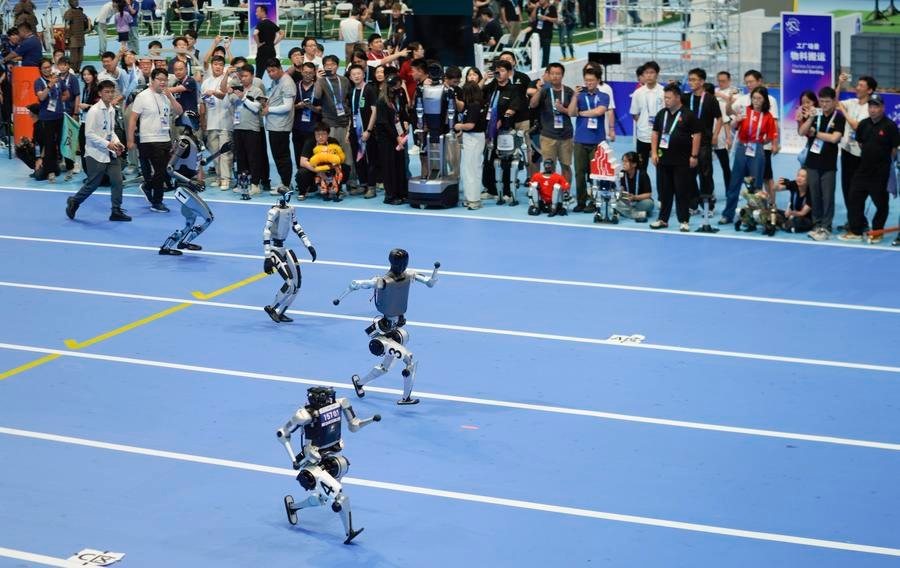
“Our robots can even adjust their paths if they sense they are too close to each other, preventing collisions in real time,” explained Lou Kaiqi, deputy general manager of Optics Valley Dongzhi. “The demands of dance are high, but if mastered, this motion control will unlock applications across industries.”
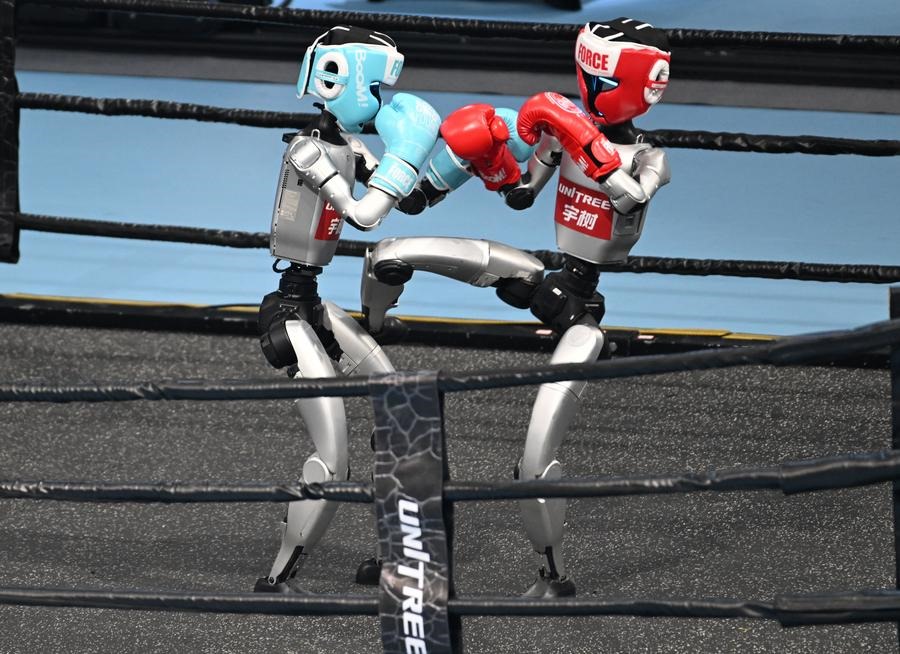
The Games — the first global competition of its kind — drew 280 teams from 16 countries, with 26 events ranging from athletics (running, high jump, football) to cultural exhibitions (dance, Wushu) and practical challenges (drug sorting, material transport, cleaning).
“We aim to move humanoid robots from laboratories into factories, hospitals, homes — into daily life,” said Li Zhiqi of the Beijing municipal government’s counsellors’ office. “This is a crucial step toward large-scale production.”
On Saturday, another highlight unfolded: RobotEra L7, a bipedal humanoid, soared 95.641 cm in the standing high jump, combining straddle and bent-leg techniques to clinch gold. Such feats demand ultra-precise sensors and advanced dynamic control.
“The Games are a proving ground for our robot’s stability and hardware,” said Shi Xuanyang, engineer at RobotEra. “Beyond sports, this model can sort logistics, fold clothes, and carry goods — bridging athletic agility with everyday service.”
Technology also assisted the referees. At the high jump arena, Noitom Limited installed 16 cameras to track competitors’ movements with sub-millimeter accuracy.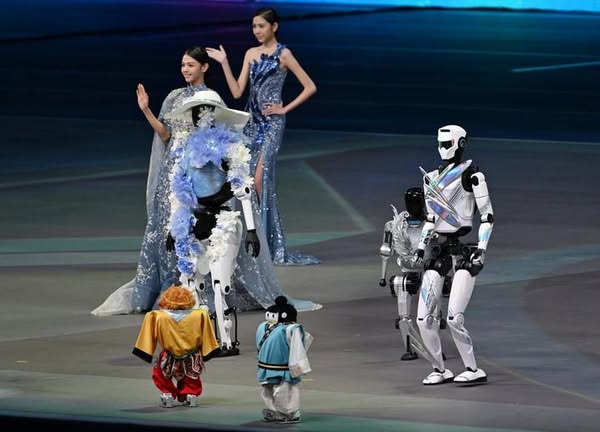
“Robot jumps are too fast for the human eye,” explained Zhou Feng, vice president of Noitom. “Our optical system reproduces every detail, acting as an impartial referee.” Beyond the Games, Noitom applies similar systems to athletic training, serving over 20,000 clients in 50 countries.
For China, the Games were more than a spectacle — they were a statement. “The world has now seen China’s strength in humanoid robot design, supply chains, and user base,” said Zhou Changjiu, president of the RoboCup Asia-Pacific Confederation. “By combining global algorithms with Chinese hardware, we can tackle challenges from emergency rescue to household service.”
He added: “Factories may only need robotic arms, but homes demand human-like presence. Bookshelves, toys, furniture — all are designed for human proportions. It is only a matter of time before humanoid robots walk into our households.”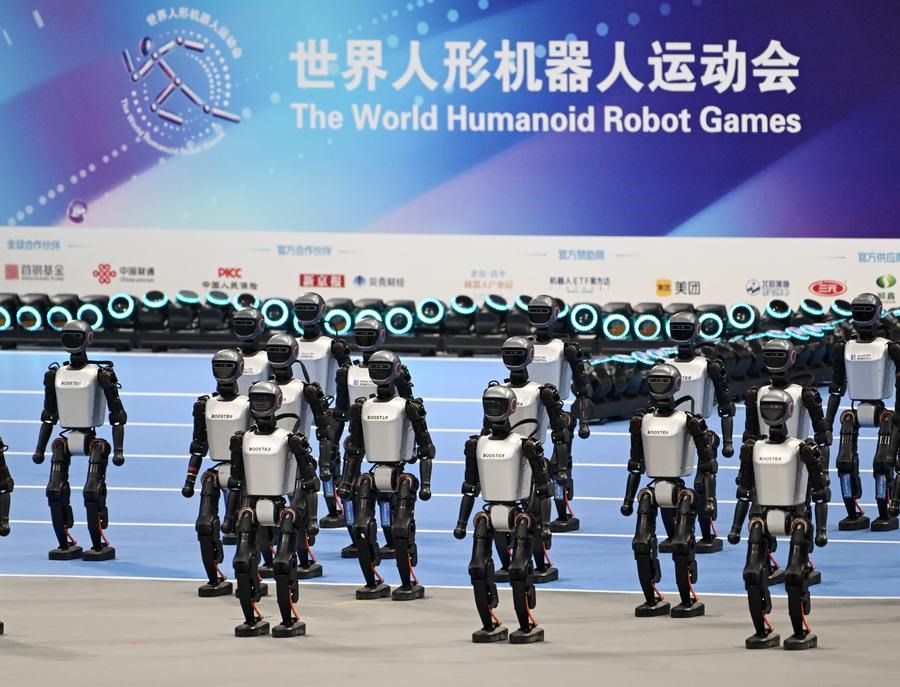
✨ In Beijing, the ancient warriors of Qin drummed once more, their spirit reborn not in clay but in circuits and steel — heralding an era where culture and technology march forward, side by side.