Dr. Ahmed Mostafa ✍️
Director of ACST
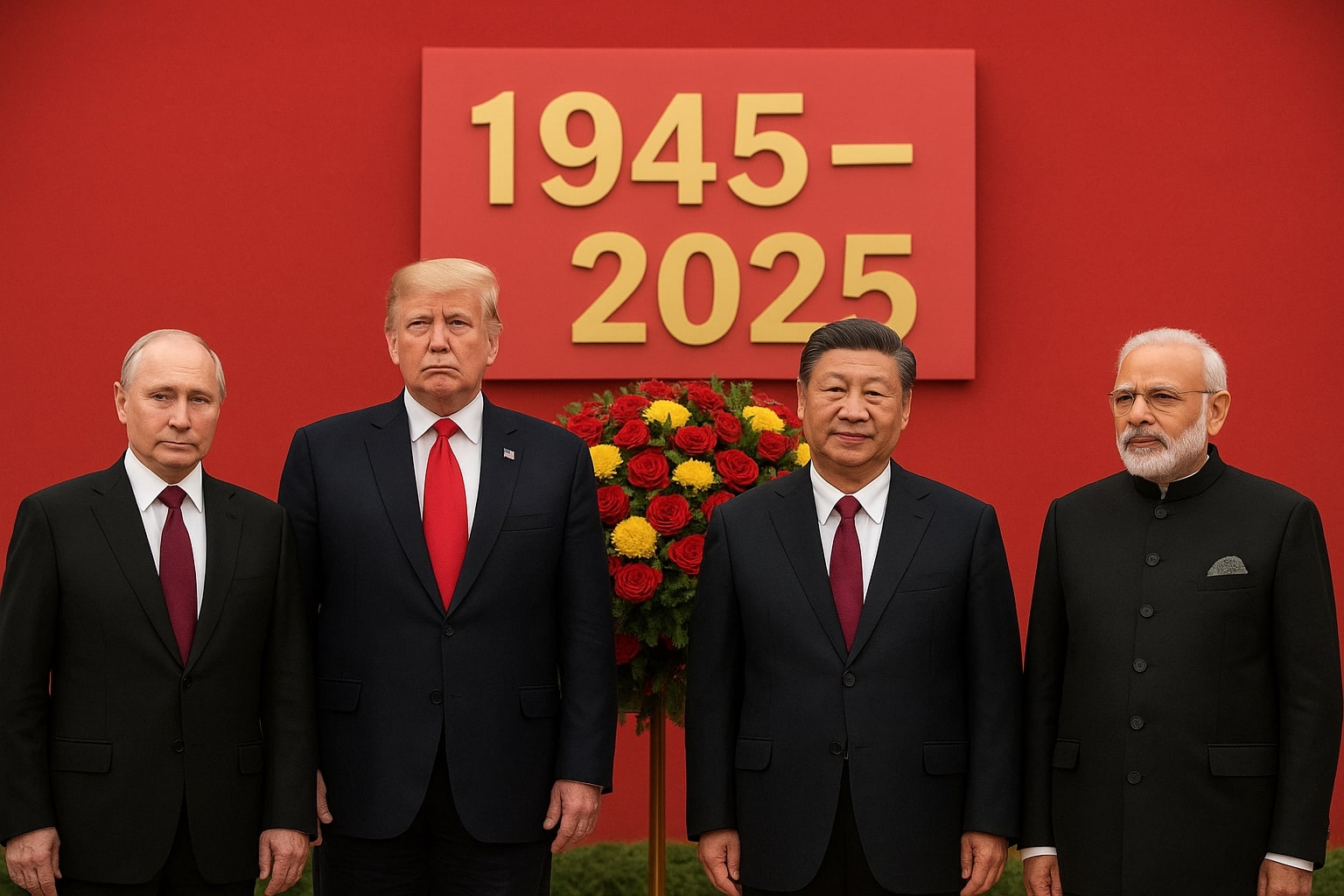
On September 3, 2025, Beijing will host a grand commemoration marking the 80th anniversary of the end of World War II. Invitations have gone out to a roster of world leaders—Xi Jinping, Vladimir Putin, Narendra Modi, and potentially even Donald Trump. Were Trump to accept Xi’s invitation, the event could become more than a ceremonial remembrance; it could evolve into a watershed in 21st-century diplomacy.
A Convergence of Contrasting Worldviews
The gathering would unite leaders embodying divergent global visions:
- Trump with his transactional “America First” pragmatism.
- Putin, champion of revisionist geopolitics.
- Xi, architect of a multipolar order.
- Modi, balancing deftly between East and West.
Such a meeting recalls the Potsdam Conference of 1945, where wartime victors sought to shape a fragile peace. Today, these leaders face even graver challenges—nuclear risks, AI-driven warfare, and economic fragmentation.
Possible Global Repercussions
- Historical Symbolism & Multipolar Messaging
China would leverage the anniversary parade not just to honor WWII’s end but to project itself as the pivot of a multipolar system. Trump’s attendance would tacitly acknowledge this emerging order. - Trump’s Gamble with North Korea
A Beijing stop could open channels to Kim Jong Un, with Xi or Putin as mediators—reviving Trump’s unorthodox diplomacy after the failed 2018–19 summits. - Europe’s Strategic Decline
The EU’s muted response to Trump’s tariffs already reveals diminished leverage. His presence in Beijing would underscore Europe’s marginalization in global decision-making. - Putin’s Balancing Act
For Moscow, participation enhances legitimacy. A potential Trump-Putin side meeting could reshape the Ukrainian conflict into a frozen settlement that fractures transatlantic unity. - China’s Military Messaging
Unveiling hypersonic missiles, stealth drones, and AI-guided systems in front of global leaders signals Beijing’s intent to challenge U.S. dominance in the Indo-Pacific. - Trump’s Pragmatic Symbolism
By attending, Trump would embody a shift from U.S. primacy to deal-making coexistence with rivals. It would echo his 2017 “Forbidden City diplomacy” with Xi. - Ukraine’s Endgame
Trump could offer concessions—recognition of Crimea, NATO pause—in exchange for stability on grain exports and energy, formalizing Russia’s sphere of influence. - The EU’s Irrelevance
Europe risks being sidelined in critical talks, despite its economic weight, due to lack of defense cohesion and energy independence. - Birth of a New Order
This moment could crystallize a post-Western multipolarity, accelerated by BRICS expansion, dedollarization, and Sino-American détente. - The Opportunity of Dialogue
History favors bold gestures. Trump’s presence could transform a military parade into a platform for pragmatic diplomacy, proving that even adversaries can use ceremonial occasions to avert catastrophe.
The Islamic Dimension
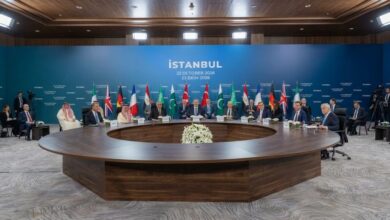
Many attendees will also head to the Shanghai Cooperation Organization Summit in Tianjin, including leaders from the Islamic Group of Eight (D-8) and broader Central and West Asia. Their collective presence offers an opportunity to unify positions on Palestine and assert pressure on the Zionist entity. Should Trump join the Beijing commemoration, it may provide a rare chance to spotlight the Palestinian tragedy within a high-stakes global forum.