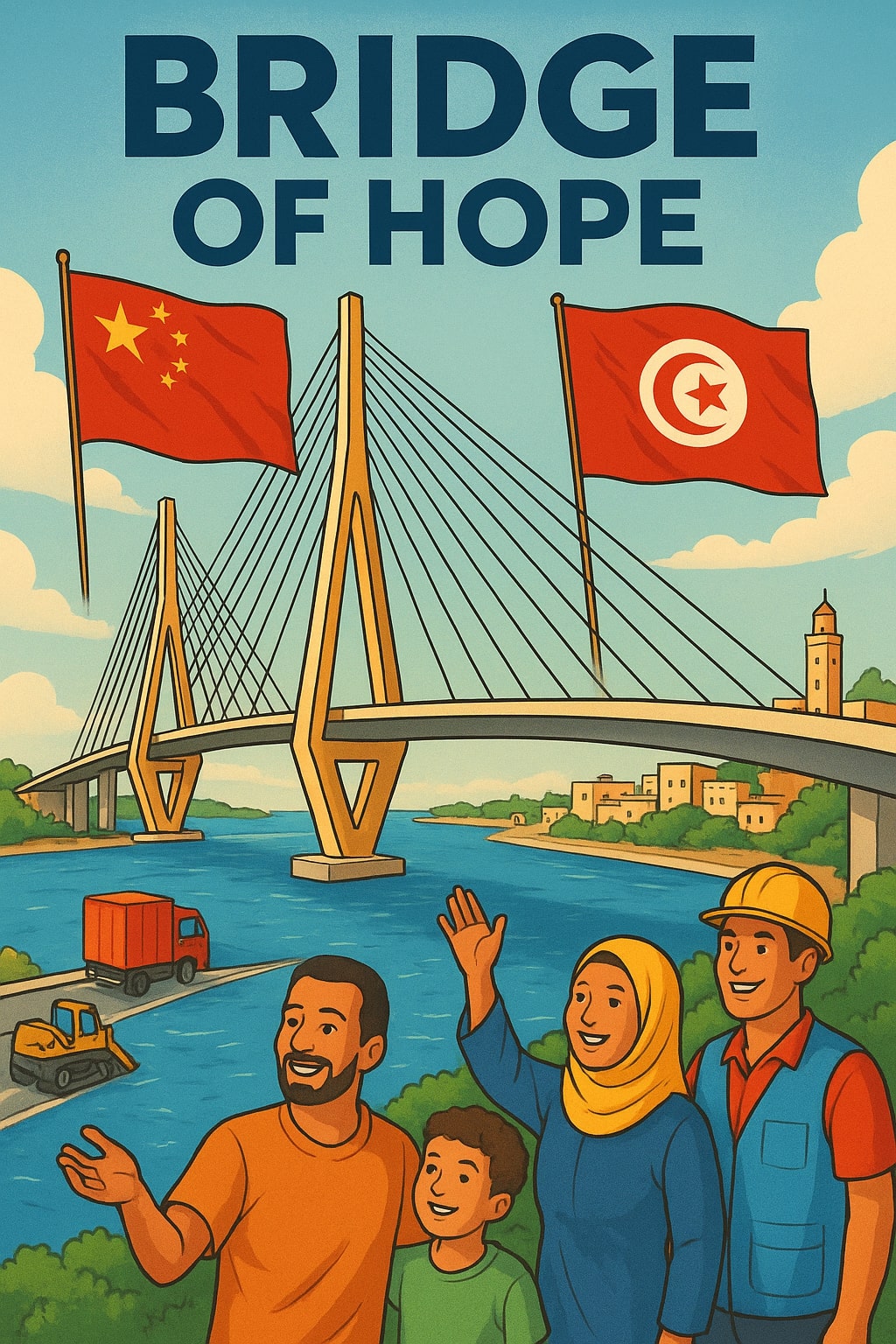
Xinhua — In 2027, when the new Bizerte Bridge opens to traffic, it will do more than span the waters of the northern Tunisian city. It will link communities, end decades of congestion, and turn Bizerte into a long-awaited gateway for residents and tourists alike.
Built by China’s Sichuan Road and Bridge Group (SRBG), the project has quickly become one of Tunisia’s most ambitious infrastructure ventures, sparking nationwide anticipation since its launch in July 2024.
“The project consistently ranks among our most-searched terms,” said Hsan Sousou, head of Tunisia’s largest business and news website Tunisie Numerique. “Articles about the bridge maintain exceptionally high readership, which proves it truly matters to the people.”
For years, Bizerte has lived with a daily dilemma. The only crossing over the canal—the Bizerte Bascule Bridge built in 1980—must close several times each day to allow vessels to pass. This routine has produced traffic jams stretching for kilometers and detours of up to 60 km for what should be a short crossing.
The impact ripples beyond inconvenience. “Bizerte has beautiful beaches, but tourists often avoid them because of the nightmare traffic,” explained local tourism professional Marwan Hamida. “Once the new bridge is complete, visitors will reach the city in under two hours from Tunis airport. Bizerte will finally shine as a tourism hotspot.”
Tunisian Minister of Equipment and Housing Slah Zouari has called the bridge “the most important construction project in Tunisia today,” praising the progress made by Chinese contractors. On-site, concrete pillars already rise on both banks while cranes and welding sparks light up the canal. Foundation work is 14 percent complete, with full delivery scheduled for the second half of 2027.
According to Yu Yeqiang, SRBG’s project general manager, the focus now is completing the foundation and substructure. “This is a matter of great concern in Tunisia,” Yu said. “We are committed to working hand in hand with our Tunisian partners to meet the deadline.”
The bridge is already weaving itself into the city’s daily rhythm. Residents often wave as Chinese project vehicles pass by—gestures of gratitude for a structure expected to transform commutes and industries alike.
Beyond easing traffic, the project introduces advanced engineering and environmental protection technologies to Tunisia. “We hope to leave behind not just an impressive bridge, but also Chinese solutions and standards that will serve local industry for years to come,” Yu added.
When the bridge finally stretches across the canal, it will not only connect two banks of Bizerte—it will symbolize a partnership that unites two nations and paves the way for prosperity.